AI CRM: What Actually Changes When Your CRM Gets Intelligent
An AI CRM turns a static database into a system that ranks leads, drafts outreach, auto-logs activity, and flags at-risk deals — so reps spend time selling, not typing.
Share this article
- Scores and ranks leads. It reads job title, company size, and buying signals, then sorts your list so the best fit sits on top.
- Drafts outreach messages. It writes a first-draft email or note that fits the person. You edit and send in seconds.
- Auto-logs activity. Calls, emails, and meetings get saved on the record without manual entry.
- Flags at-risk deals. When a deal goes quiet or slips, the system raises a hand before it dies.
AI CRM: What Actually Changes When Your CRM Gets Intelligent
An ai crm is a customer system that does more than store names and notes. It reads your data, spots patterns, and tells you what to do next. For years, a CRM was a filing cabinet. You put data in. You dug data out. The tool never helped you sell. That is the real shift. When you add ai in crm, the system starts to think alongside your reps. It reads signals, ranks leads, and drafts the next message. This article skips the hype. It shows what changes on a normal Tuesday.
The old CRM problem
Most reps hate their CRM. The reason is simple. It asks for a lot and gives back little. You log a call. You update a field. You forget three others. Managers chase clean data. Reps feel like data clerks. The pipeline still looks fuzzy.
Plain ai crm software flips that trade. The system does the boring parts. It fills fields for you. It watches emails and meetings. Then it hands you clear, ranked work. You spend less time typing and more time talking to buyers.
A regular CRM records the past. An intelligent CRM shapes your next hour.
6 things an AI CRM actually does
Here is the honest list. No magic. Just useful work the system handles so your team does not have to.
- Scores and ranks leads. It reads job title, company size, and buying signals, then sorts your list so the best fit sits on top.
- Drafts outreach messages. It writes a first-draft email or note that fits the person. You edit and send in seconds.
- Auto-logs activity. Calls, emails, and meetings get saved on the record without manual entry.
- Flags at-risk deals. When a deal goes quiet or slips, the system raises a hand before it dies.
- Suggests the next best action. It tells the rep who to call today and why, based on real behavior.
- Cleans contact data. It merges duplicates, fixes titles, and fills gaps so records stay trustworthy.
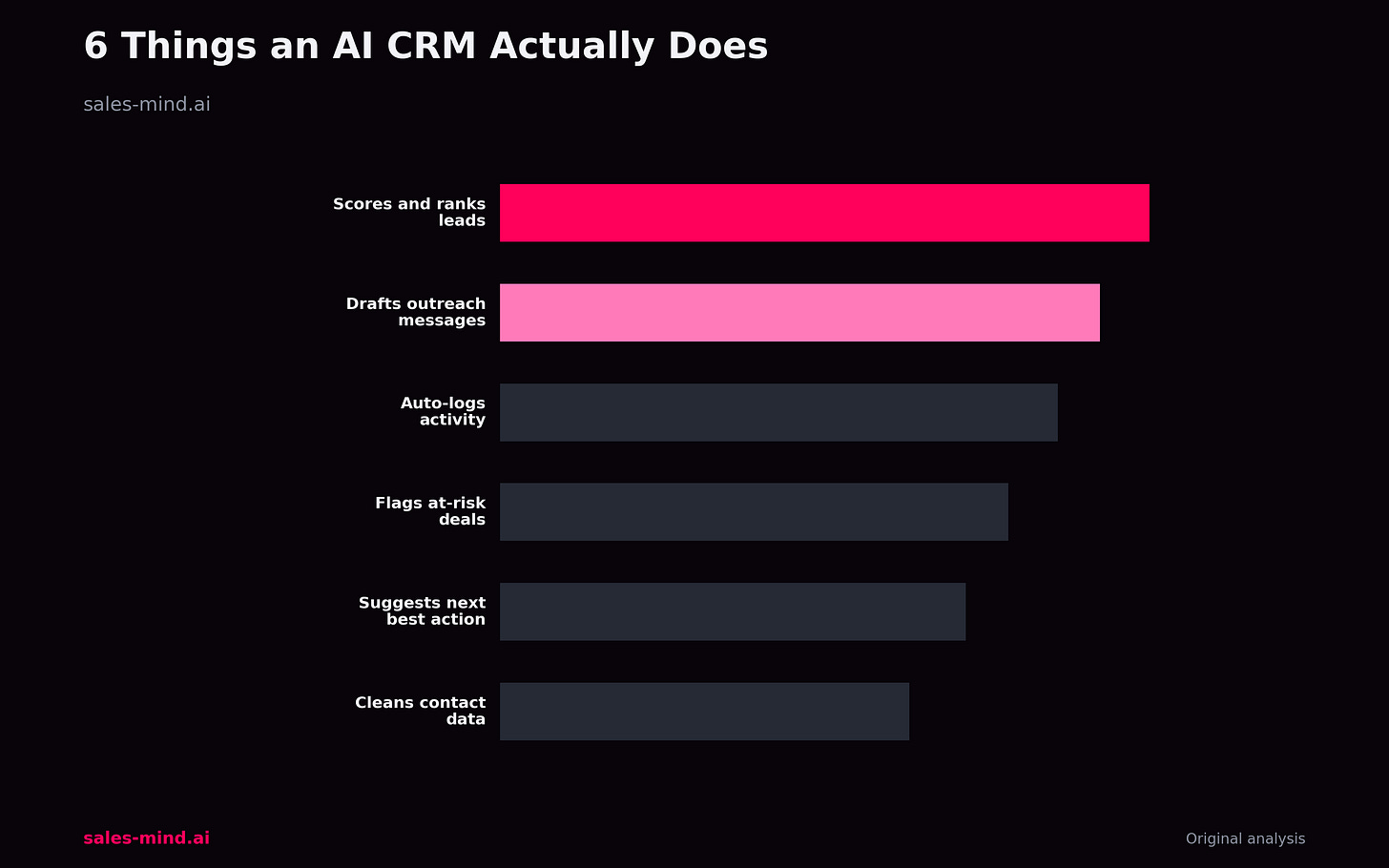
Notice the theme. None of these replace the seller. They remove drag. The rep still owns the relationship. The system just clears the runway.
What a normal day looks like now
Picture a rep named Sara. Before, she opened her CRM to a wall of 400 accounts. She guessed where to start. Now the tie between ai and crm gives her a short, ranked list. Twelve accounts. Each one has a reason next to it. One reopened a product page. One hired a new VP. One replied last week and went quiet.
Sara does not write from scratch. The system drafts a note for each account. She reads it, adds one real detail, and sends. This is where smart lead generation earns its keep. It does not just find contacts. It finds the right contacts at the right moment and lines them up.
By mid-morning, Sara has booked two meetings. Her notes are already logged. She never opened a blank field. The tool did the admin in the background while she sold.
From data entry to decisions
The biggest change is mental. Old CRM work was about recording. New CRM work is about deciding. The system carries the memory. The rep carries the judgment.
That split matters for managers too. A pipeline review used to be a debate about whose numbers were real. With an intelligent system, the data updates itself. The forecast reflects true activity, not wishful thinking. You can see which deals moved and which stalled, with proof.
Some of this runs on its own. An AI sales agent can handle first-touch replies, answer simple questions, and set up a warm handoff. Your reps step in when a human really adds value. That keeps skilled people on skilled work.
The goal is not fewer people. The goal is fewer wasted hours.
Where the real speed comes from
Speed does not come from typing faster. It comes from removing steps. When follow-ups fire on their own, no lead falls through a crack. When outreach runs on a schedule, a quiet buyer still hears from you at the right time. The rep sets the plan once. The system runs it every day.
This is also where teams misread the promise. An intelligent CRM does not sell for you. It makes each rep act like your best rep. It shares the playbook that lived in one person's head and spreads it across the whole floor.
Want to see how this maps to your own pipeline? Book a strategy call and walk through one real workflow with our team.
How to start without a mess
You do not need to rebuild everything. Start small and prove value fast.
- Pick one workflow. Choose lead scoring or auto-logging first. Do not boil the ocean.
- Clean the core data. The system learns from your records. Feed it good inputs.
- Set clear rules. Tell it what a good lead looks like for your team.
- Review the output. For two weeks, check the drafts and scores. Correct them. It gets sharper.
- Then expand. Once reps trust it, add the next task.
Trust is the hidden step. Reps ignore tools they do not believe. Show them the system saves an hour a day, and they lean in on their own.
The signals an intelligent CRM reads
A plain CRM only knows what someone typed into it. An intelligent one watches the live signals around a deal and weighs them for you. That is what turns a static record into a real recommendation.
- Intent signals. Repeat visits to a product page, a demo request, or a reply after weeks of silence all say the buyer is warming up.
- Firmographic fit. Company size, industry, and role decide whether an account even belongs on the short list.
- Engagement history. Opens, clicks, and meeting attendance show how invested a contact really is.
- Timing triggers. A new hire, a funding round, or a tool switch opens a short window where outreach lands better.
On their own, each signal is weak. Read together, they tell a rep exactly where to spend the next hour. The system does that math on every account at once, all day, without getting tired or playing favorites. That is the quiet advantage: consistent judgment applied at a scale no human team could match by hand.
FAQ
Is an AI CRM different from a normal CRM?
Yes. A normal CRM stores and shows data. An intelligent one reads that data and acts on it. It scores leads, drafts messages, and flags risk. The database is the same idea. The behavior is very different.
Will it replace my sales reps?
No. It removes admin and guesswork, not judgment. Reps still build trust and close deals. The system just hands them ranked, ready work so they spend their time on people, not fields.
How long before we see results?
Most teams feel the change in a few weeks. Auto-logging and lead scoring pay off first because they save time on day one. Forecast accuracy and pipeline health improve as the system learns your patterns.
What data do we need to start?
Clean contact records and a clear picture of a good customer. The tighter your definition of a fit lead, the better the scoring. You can improve data as you go, so do not wait for perfect.
The move to an ai crm is less about new software and more about a new habit: let the system carry the memory so your team can carry the deal. See it applied to your pipeline and book a strategy call with SalesMind today.
Get AI Sales Insights Weekly
