Ultimate Guide to AI Sales Automation for B2B SaaS
How B2B SaaS teams use AI to automate lead scoring, LinkedIn outreach, follow-ups and CRM updates—save hours, boost replies and pipeline value.
 Julien Gadea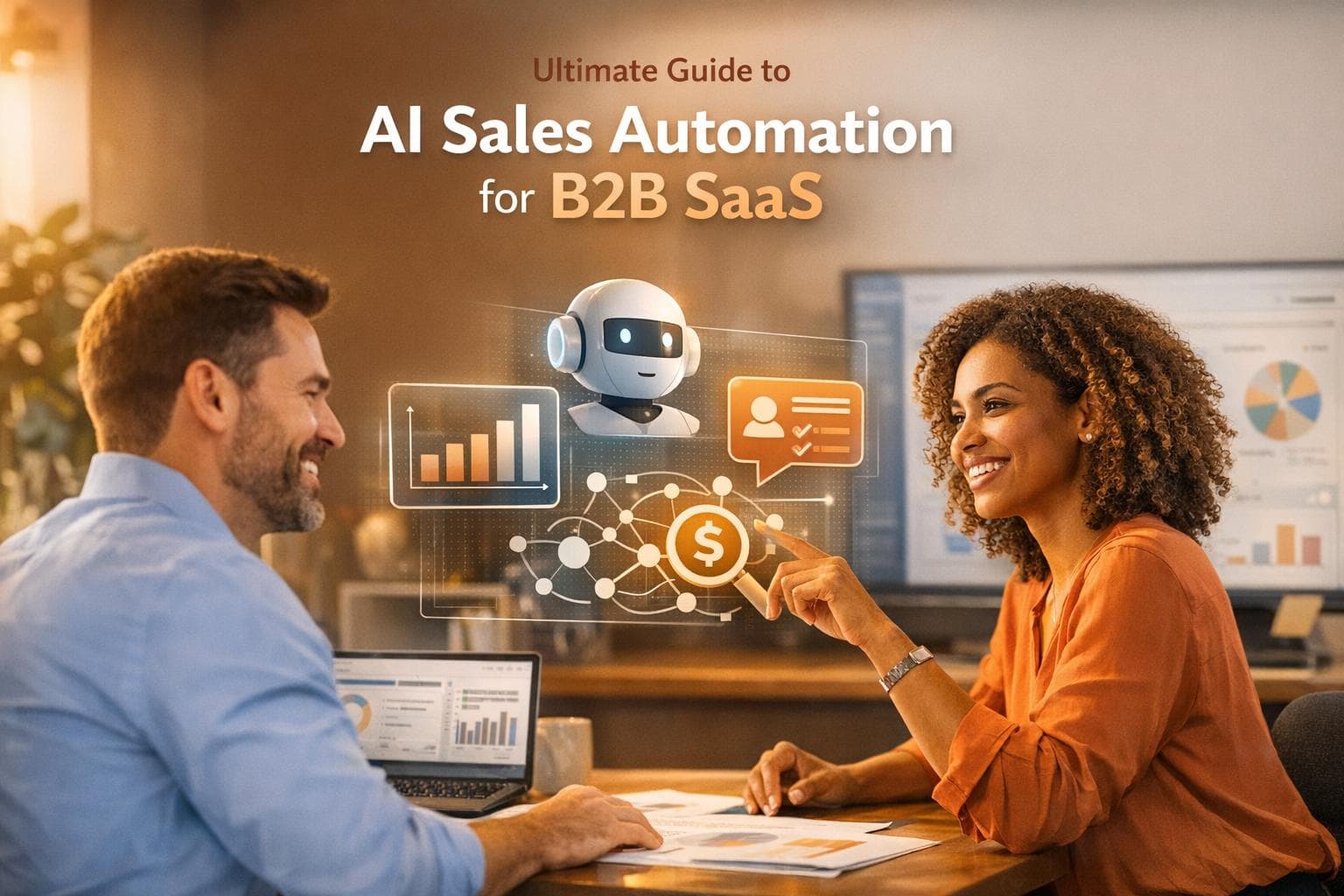
How B2B SaaS teams use AI to automate lead scoring, LinkedIn outreach, follow-ups and CRM updates—save hours, boost replies and pipeline value.
How B2B SaaS teams use AI to automate lead scoring, LinkedIn outreach, follow-ups and CRM updates—save hours, boost replies and pipeline value.
Table of Contents
AI sales automation is transforming how B2B SaaS companies approach sales. By automating repetitive tasks like lead scoring, follow-ups, and CRM updates, it frees up sales teams to focus on closing deals. Key benefits include:
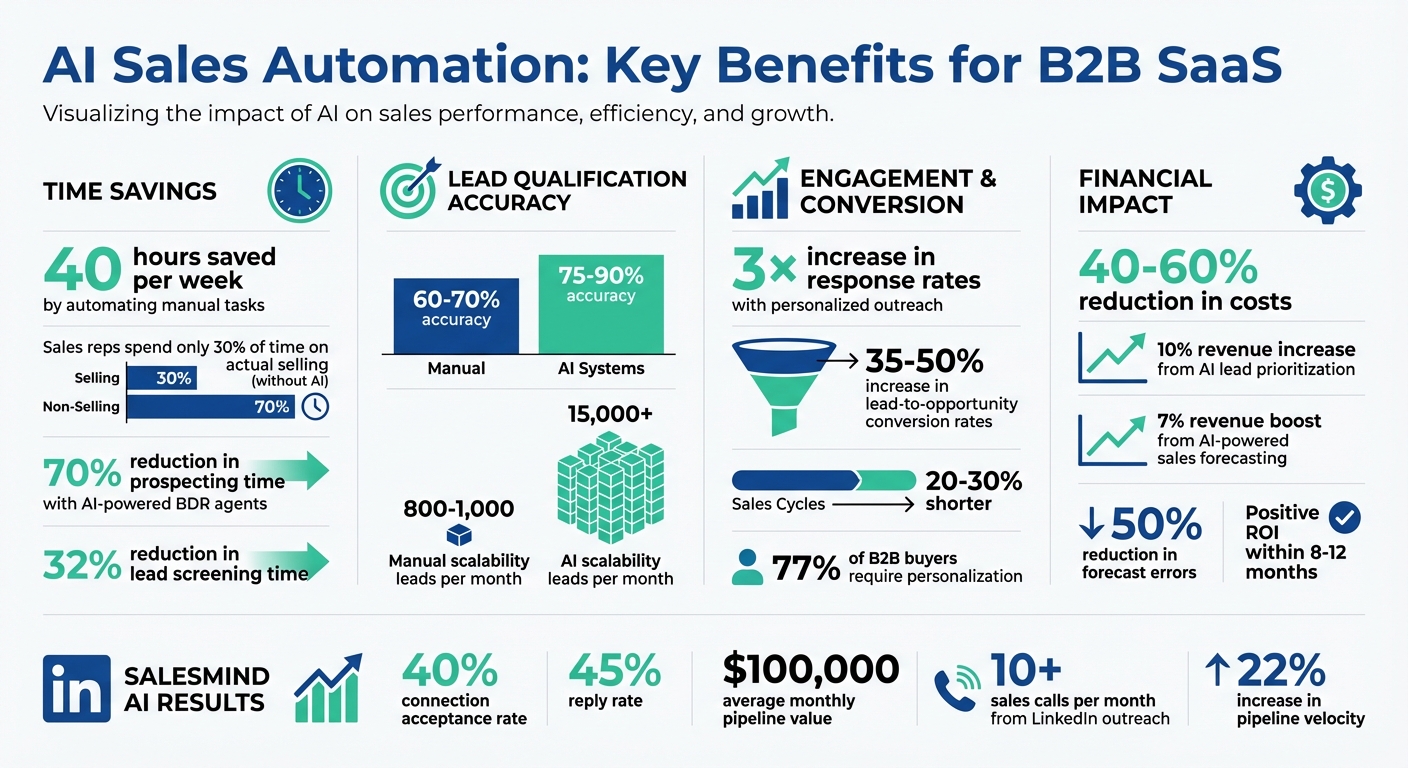
- Time Savings: Sales reps save up to 40 hours per week by automating manual tasks.
- Improved Lead Scoring: AI boosts lead qualification accuracy to 75-90%, compared to 60-70% with manual methods.
- Personalized Outreach: AI crafts tailored messages, increasing response rates by up to 3×.
- Cost Efficiency: Companies report up to a 40-60% reduction in costs and a 10% revenue increase.
SalesMind AI is a powerful tool for LinkedIn outreach, offering features like automated connections, personalized messaging, and CRM integration. Users report a 40% connection acceptance rate, a 45% reply rate, and an average monthly pipeline value of $100,000.
If you're looking to streamline sales workflows and focus on high-value tasks, AI tools like SalesMind AI can deliver measurable results. Start by automating routine tasks and tracking metrics like conversion rates and pipeline velocity to see the impact on your sales strategy.
AI Sales Automation Benefits: Key Statistics for B2B SaaS
5 AI Sales Systems for Every B2B Company
Benefits of AI Sales Automation
AI sales automation is reshaping the way B2B SaaS sales teams operate. By enhancing lead qualification, enabling personalized outreach, and saving time, it equips teams to work smarter and compete more effectively.
Better Lead Qualification and Scoring
One of AI's standout advantages is its ability to identify high-priority leads with impressive accuracy. While manual qualification methods typically achieve 60-70% accuracy, AI systems push this number to 75-90% by analyzing patterns from past successes and failures [4]. These predictive models can detect subtle buying signals that humans might miss.
The difference in scalability is even more striking. Manual processes max out at around 800-1,000 leads per month, whereas AI systems can handle over 15,000 leads monthly without sacrificing accuracy [4]. AI also fills in missing details automatically, appending critical information like company size, revenue, technology stack, and even behavioral intent data to prospect profiles [5][6].
Dynamic lead scoring is another game-changer. AI adjusts scores in real time based on prospect behavior - like boosting a lead's priority after a demo request or lowering it due to inactivity [4]. This precision pays off: companies using AI for lead prioritization report up to a 10% revenue increase and a 40-60% cost reduction [6]. Similarly, AI-powered sales forecasting can boost revenue by 7% while cutting forecast errors in half [6].
But it doesn’t stop there. Once leads are scored, AI takes the reins on personalized outreach, ensuring deeper engagement.
Personalization at Scale
AI excels at turning generic outreach into highly tailored communication. By analyzing public data and company-specific context, it creates thousands of unique, research-backed messages from a single email template [7]. This goes beyond just adding a recipient’s name - AI reviews call transcripts to identify pain points and even uses exact quotes to craft follow-up emails after demos [1].
It also customizes outreach for different stakeholders within a buying committee. For instance, a CFO might receive an ROI analysis, while an IT manager gets detailed technical specifications [1]. This level of personalization is crucial, as 77% of B2B buyers say they won’t make a purchase without it [7].
The results speak for themselves: personalized outreach can triple response rates [7]. And by automating these efforts, sales teams save significant time, allowing them to focus on what they do best - selling.
Time and Cost Savings
Sales reps often spend less than 30% of their time on actual selling [8][9]. The rest is consumed by tasks like drafting emails, updating CRM records, and preparing proposals. AI changes the game by taking over these administrative duties, effectively doubling the time reps can spend with customers [9].
For example, AI-powered BDR agents can cut prospecting time by up to 70% [3]. In 2025, Andrew Romanyuk, Co-Founder and SVP of Growth at Pynest, implemented AI tools to analyze open-source data like publications and job postings. This streamlined the lead screening process, reducing time spent by 32% and increasing pipeline velocity by 22% [1].
SalesMind AI: Features for LinkedIn Outreach and Lead Generation
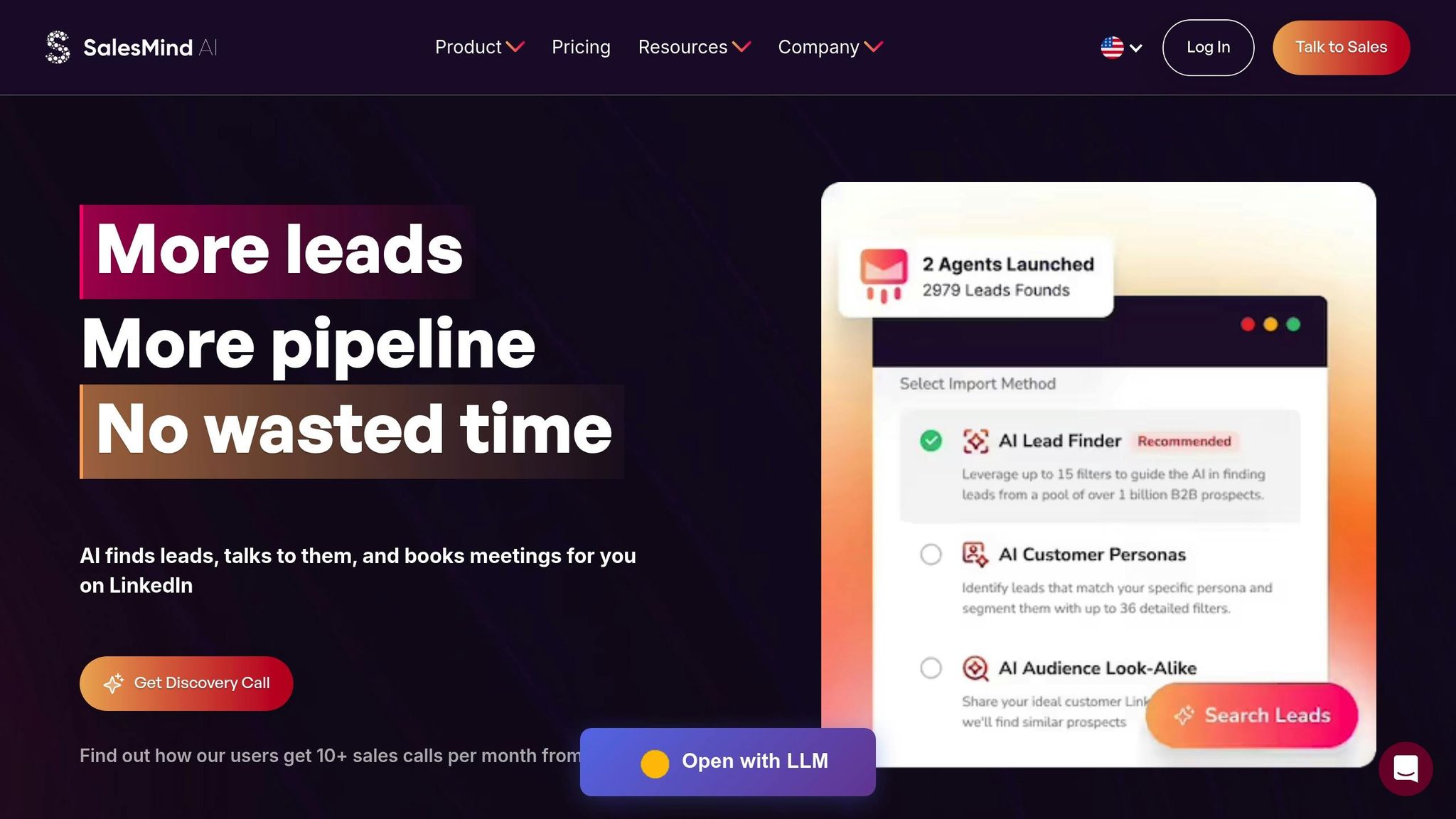
SalesMind AI addresses the biggest hurdles B2B SaaS teams face when scaling LinkedIn outreach. The platform automates the entire prospecting process while retaining the personal touch that sparks genuine conversations. On average, users see a 40% connection acceptance rate and a 45% reply rate, with a monthly pipeline value of $100,000[11]. Here's a closer look at how its standout features elevate LinkedIn outreach and lead generation.
LinkedIn Outreach Automation
SalesMind AI takes care of every part of LinkedIn outreach - profile visits, follows, connection requests, and multi-step messaging sequences - running 24/7 campaigns in the cloud without needing an open browser. To keep your LinkedIn account safe, it uses local IPs, detects office hours, and randomizes schedules to imitate human behavior and avoid spam flags. Its smart prospecting tools identify high-value leads by gathering data from event attendees, post interactions, and followers of competitor pages[11].
"I was able to automate something that would have taken me days or weeks of consistent manual work."
– Henry Face, Enterprise Account Executive, Salesforce[10]
AI-Driven Personalized Messaging
With its advanced personalization engine, SalesMind AI goes beyond basic name placeholders. It analyzes prospect data to create highly tailored messages that resonate. This makes LinkedIn messaging more efficient and helps engage prospects faster[11].
"The results were sometimes almost too good - connection rates and responses were way above what I expected."
– Nick Heijman, CEO, HypotheekXperts[10]
"I've used a couple of other tools for LinkedIn outbound, but this has gotten me 3× the results."
– Steven Huibers, COO, Policereports.ai[10]
Unified Inbox and Lead Scoring
SalesMind AI simplifies managing replies across multiple LinkedIn accounts with its unified inbox. This feature consolidates all conversations into one interface, offering automated tagging, reminders, and AI-suggested responses[10]. Its lead scoring system also evaluates prospects based on your filters, ensuring your team focuses on the most promising leads.
"The concept as well as the automation are good and I like that it shows you a score on what the lead suitability with your filters is."
– Jure Grabljevec, CEO, Jure Design[10]
"From the very first week, SalesMind AI boosted my productivity in lead prospecting by 10×."
– Alex Lossing, CTO, Slash[10]
Automated Follow-Ups and CRM Integration
With automated follow-ups, SalesMind AI ensures no potential lead slips through the cracks, freeing up your sales team to focus on closing deals. It also exports and enriches lead data for smooth integration with your existing CRM workflows[11].
"SalesMind AI has proven very useful to our sales team in reducing the massive pain points of manually tracking each and every lead interaction."
– Rahul Pushkarna, Senior Advisor, Bounty Media[10]
The platform helps teams secure over 10 sales calls per month from LinkedIn outreach[10]. It’s also highly rated, with scores of 4.4/5 on Trustpilot, 4.7/5 on G2, and 5/5 on the Chrome Store[10].
sbb-itb-817c6a5
Setting Up SalesMind AI for B2B SaaS Sales
SalesMind AI works directly with your LinkedIn workflow, streamlining outreach tasks with automation. Here's how you can set up your account, configure workflows, and explore pricing options.
Account Creation and LinkedIn Integration
Start by booking a discovery call or demo to find the best setup for your needs [10]. Once your account is ready, link your LinkedIn profile to activate a unified AI inbox. This inbox organizes replies, tags, and reminders across all your connected LinkedIn accounts [10]. If you’re using LinkedIn Sales Navigator, you can easily import lead searches and saved lists into your campaigns with a single click. Plus, SalesMind AI keeps these lists updated automatically, ensuring you’re always engaging with the most relevant prospects [12].
Configuring Lead Scoring and Workflow Rules
SalesMind AI uses filters to assign a lead suitability score, helping you focus on prospects with the best conversion potential [10]. For optimal results, apply precise Sales Navigator filters before importing leads [10][12]. Next, set up automated workflows for connection requests, messaging sequences, and follow-ups. The unified inbox consolidates all LinkedIn replies, with an AI co-pilot offering response suggestions, tagging options, and reminders for each interaction. Additionally, CRM synchronization ensures all lead data and interactions are automatically transferred, removing the need for manual updates [10][13].
By automating these processes, users save an average of 40 hours per week while achieving a 40% connection acceptance rate and a 45% reply rate [12].
Pricing Plans Comparison
SalesMind AI uses a flexible, usage-based pricing model that adjusts to your sales activity [14]. The Business Plan, tailored for growing B2B SaaS teams, costs $69 per seat per month. It includes automated LinkedIn connections, a unified inbox, team collaboration tools, and integration with Sales Navigator. A free trial is available, allowing new users to explore the platform before committing [15].
| Feature | Business Plan Details |
|---|---|
| Price | $69 per seat/month |
| LinkedIn Automation | 600+ automated connections per month |
| Inbox | Unified "All-in-1" inbox for all LinkedIn accounts |
| Team Features | Team management and shared lead lists |
| Lead Sourcing | Access to 1B+ potential leads with AI scoring |
| Integrations | CRM integration and Sales Navigator sync |
| Support | Priority support, including live chat and training |
With access to over 1 billion potential leads and AI-powered scoring, SalesMind AI helps you focus on prospects that align with your ideal customer profile [15].
"SalesMind AI has transformed our lead generation process. The platform's intuitive interface and smart automation features have significantly boosted our sales efficiency."
– Svit Babarovic, COO, Mountaindrop [10]
Best Practices for AI Workflow Optimization
Automating Tasks with SalesMind AI
Start by mapping out your sales process to pinpoint repetitive tasks like data entry and message sequencing. These are the areas where AI can make the biggest difference, saving time and reducing errors.
Before diving into automation, take a moment to clean up your contact data. Remove duplicates, verify email addresses, and standardize company names. Clean data ensures that mistakes don’t multiply as your outreach scales. This way, your team can focus on meaningful conversations with prospects who are genuinely interested.
Set up behavioral triggers to create timely, personalized outreach. For instance, if a prospect visits your pricing page multiple times or downloads a competitor comparison guide, SalesMind AI can send them a tailored message. This approach aligns your outreach with the prospect’s intent rather than sticking to a rigid schedule.
For the best results, use a human-in-the-loop approach. Let AI handle routine tasks like initial outreach and updating records, but route engaged prospects directly to your sales team. This ensures that your human reps are spending their time where it matters most.
Measuring ROI and Performance Metrics
Once you’ve automated the routine tasks, it’s crucial to measure the impact. Tracking specific metrics can help you see how AI is improving your workflow and contributing to your bottom line. For example, AI-driven workflows often lead to a 35% to 50% increase in lead-to-opportunity conversion rates and can shorten sales cycles by 20% to 30% by removing manual bottlenecks [16].
Calculate the time saved by looking at how many hours your team no longer spends on repetitive tasks. On average, sales reps spend just 33% of their time actively selling, with the rest eaten up by administrative work [1]. With SalesMind AI, users typically save around 40 hours per week on manual tasks [12]. To put a dollar value on this, multiply the hours saved by your team’s average hourly rate.
Don’t just measure quantity - focus on quality, too. SalesMind AI boasts an average reply rate of 45% and a 40% connection acceptance rate [12]. Use tools like sentiment analysis to categorize responses as positive, neutral, or negative. Also, keep an eye on pipeline velocity - the speed at which leads move through your funnel - to ensure your automation is effectively qualifying and nurturing prospects.
Most B2B SaaS companies see positive ROI within 8 to 12 months of adopting AI sales automation [16]. To validate the benefits, consider running a side-by-side test. Compare AI-driven workflows with your current manual processes over 30 to 60 days. This will give you concrete data on conversion rates and deal velocity, helping you make a solid case for your investment [16].
Conclusion
AI sales automation has proven to be a game-changer for scaling B2B SaaS companies. By taking over repetitive tasks like lead scoring, follow-ups, and data entry, it frees up your team to focus on what truly matters: closing deals and building strong, lasting relationships.
SalesMind AI users have reported impressive results, including saving 40 hours each week and generating an average pipeline value of $100,000 per month. Connection and reply rates also stand out at 40% and 45%, respectively.
"I've used a couple of other tools for LinkedIn outbound, but this has gotten me 3× the results." – Steven Huibers, COO, Policereports.ai [12]
The key is striking a balance between automation and human input. While AI handles the repetitive workflows, your team can concentrate on high-value interactions. Tracking metrics like conversion rates and pipeline velocity ensures you can measure the impact effectively.
Using a unified platform, integrating tools like your CRM and LinkedIn Sales Navigator, ensures consistent data management and provides a centralized performance tracking system. This streamlined approach not only simplifies operations but also paves the way for substantial sales growth [12][2].
If you're looking to overhaul your sales strategy and achieve measurable results, SalesMind AI offers the tools to help you succeed. The real question isn’t whether to adopt AI sales automation - it’s how quickly you can put it into action.
FAQs
How does AI enhance lead scoring accuracy in B2B SaaS sales?
AI takes lead scoring in B2B SaaS sales to a new level by analyzing massive amounts of real-time data and applying predictive models to pinpoint high-potential leads. Traditional methods often rely on static data, but AI goes further by evaluating dynamic factors like user behavior and engagement signals, delivering far more accurate scores.
With AI automating the lead scoring process, sales teams save time and avoid the grind of manual effort. This lets them zero in on the most promising prospects. Plus, this data-driven strategy strengthens the collaboration between sales and marketing while increasing conversion rates by prioritizing leads most likely to close.
What are the main features of SalesMind AI for LinkedIn outreach automation?
SalesMind AI equips B2B businesses with tools designed to simplify LinkedIn outreach. Some standout features include AI-powered personalized messaging, automated follow-ups, and advanced lead scoring. These tools allow you to pinpoint and prioritize your most promising prospects with ease.
On top of that, SalesMind AI integrates effortlessly with your CRM and offers a unified inbox to keep all your communications in one place. Its 24/7 automation ensures you can expand your outreach efforts without sacrificing time, letting you concentrate on what matters most - closing deals.
How does AI sales automation help B2B SaaS companies save costs and increase revenue?
AI sales automation is transforming how B2B SaaS companies manage their sales processes. By taking over time-consuming tasks like lead prospecting, follow-ups, and data entry, it frees up sales teams to concentrate on what truly matters - building relationships and closing deals. This shift not only streamlines operations but also speeds up revenue growth.
One of the standout benefits is advanced lead scoring and prioritization. AI helps sales teams focus their energy on the most promising prospects, cutting down on wasted effort and bringing customer acquisition costs down. On top of that, AI-powered tools make it possible to deliver personalized outreach at scale, which significantly boosts engagement and conversion rates. The result? A smarter, more efficient sales process that maximizes profitability while keeping operational costs in check.
 JG
JG