Predictive Lead Scoring in Sales Funnels
AI lead scoring ranks prospects to boost conversions, shorten sales cycles, and align sales and marketing; includes data, models, bias checks, and setup tips.
 Julien Gadea
AI lead scoring ranks prospects to boost conversions, shorten sales cycles, and align sales and marketing; includes data, models, bias checks, and setup tips.
How it works: Analyzes thousands of data points to assign conversion scores (0–100) to leads.
Why it matters: Improves lead prioritization, boosts conversions, and saves time.
Data sources: CRM, marketing tools, website analytics, and LinkedIn signals.
Results: Higher ROI, better sales-marketing alignment, and faster deal closures.
Table of Contents
Predictive lead scoring uses AI to rank leads by their likelihood to convert, helping sales teams focus on high-potential opportunities. Traditional methods often fall short, with only 1–6% of leads converting to customers. Predictive scoring analyzes data like CRM records, website activity, and email engagement to generate dynamic, accurate scores. Businesses using this approach report 50% more deals closed, 3× higher conversion rates, and 25% shorter sales cycles.
Key Takeaways:
- How it works: Analyzes thousands of data points to assign conversion scores (0–100) to leads.
- Why it matters: Improves lead prioritization, boosts conversions, and saves time.
- Data sources: CRM, marketing tools, website analytics, and LinkedIn signals.
- Results: Higher ROI, better sales-marketing alignment, and faster deal closures.
Predictive lead scoring isn’t a one-size-fits-all solution. It requires clean data, regular updates, and careful monitoring for bias or drift. Tools like SalesMind AI integrate predictive models with CRM and LinkedIn data, streamlining workflows and improving lead management. Start by defining your ideal customer profile, cleaning your data, and running a pilot program to measure results.
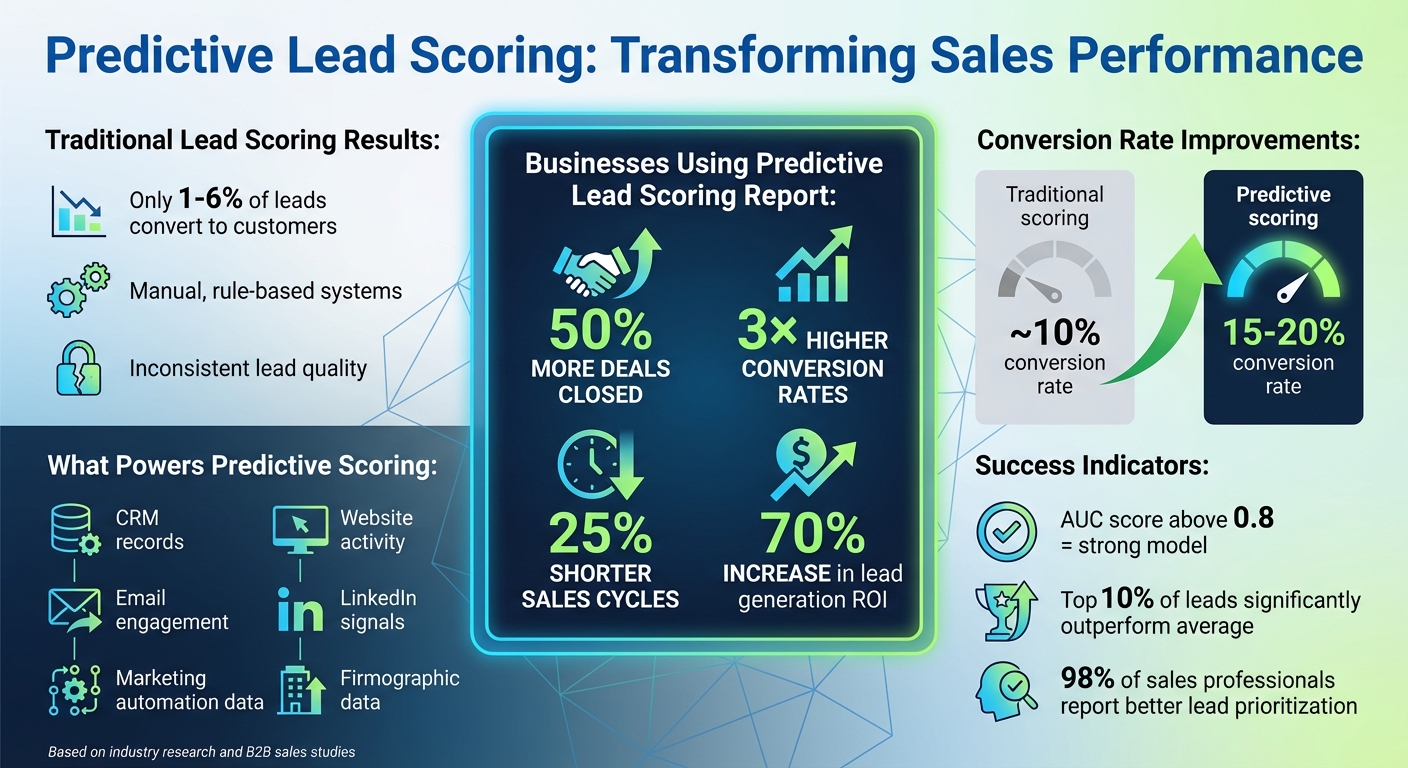
Predictive Lead Scoring Impact: Key Performance Metrics and ROI Statistics
Setting Up Predictive Lead Scoring Using Machine Learning
Research Findings on Predictive Lead Scoring
Studies have shown that AI-driven methods significantly improve lead prioritization and sales outcomes, validating their effectiveness in real-world applications.
Predictive Modeling Techniques
Different machine learning techniques are used to predict lead conversion, each with its strengths. Logistic regression is often the starting point. It's easy to interpret and works well when the relationship between lead behaviors and conversion rates is relatively straightforward[3]. For instance, it can predict how actions like visiting a pricing page or holding a specific job title influence the likelihood of closing a deal.
For teams with access to more detailed data, tree-based models, such as decision trees and random forests, are better suited for identifying complex, non-linear patterns. These models are particularly effective when combining website activity with firmographic data to pinpoint buying intent[3][9]. Gradient boosting algorithms, including XGBoost and LightGBM, are widely used in B2B settings due to their ability to handle diverse data types and uncover subtle relationships between features[3][9].
Deep learning models, while offering slight performance improvements in large datasets, are less interpretable. As a result, many U.S. companies opt for gradient-boosted trees, which strike a balance between accuracy and usability[3][9]. Across all approaches, selecting the right features remains critical for generating reliable predictive signals.
Features and Predictive Signals
Research consistently highlights that high-intent digital behaviors are some of the strongest indicators of B2B conversions. Actions like frequent visits to pricing pages, requests for demos or trials, and attendance at product-focused webinars clearly demonstrate serious interest[3]. Other indicators include prolonged website engagement - such as longer sessions and visits to multiple product pages - as well as email interactions like repeated opens, link clicks, and quick responses to outbound messages[2][3].
In addition to behavioral data, models also consider firmographic details (e.g., company size, annual revenue in USD, industry), demographic factors (e.g., job title, seniority, department), and technographic information (e.g., software currently in use, competitors utilized)[3][9]. Combining these data points helps distinguish casual visitors from decision-makers at high-revenue U.S. companies[3][9].
Performance Metrics and Study Comparisons
To measure how well these models perform, metrics like Area Under the ROC Curve (AUC), precision, recall, F1 score, and lift over baseline models are commonly used. An AUC score above 0.8 is typically considered strong, while a score of 0.5 suggests random guessing[7].
Logistic regression offers a simple and interpretable baseline, but ensemble models like gradient boosting achieve higher AUC scores by capturing complex, non-linear interactions[3][9]. Studies in the B2B sector consistently show that machine learning models outperform rule-based systems, delivering higher precision at fixed recall levels[2][3][9]. While deep learning can sometimes edge out gradient boosting in very large datasets, gradient-boosted trees remain a popular choice due to their balance of performance, speed, and explainability[3][9]. Ultimately, the most effective models are those that incorporate robust feature engineering and undergo regular updates, rather than relying solely on any single algorithm[3][9].
How Predictive Lead Scoring Improves Sales Funnel Performance
Predictive lead scoring helps businesses focus their efforts on the buyers most likely to convert, making resource allocation smarter and more impactful. Studies reveal that companies using AI-driven scoring see conversion rates increase by as much as threefold, while sales cycles shrink by roughly 25% [7][11]. By zeroing in on high-potential opportunities identified through machine learning, businesses avoid wasting resources on leads unlikely to pan out. The result? A boost in both revenue and efficiency.
Higher Conversion Rates and Revenue Growth
The financial benefits of predictive lead scoring are hard to ignore. Companies adopting these systems often see their conversion rates jump from around 10% to 15–20% [7]. These predictive models analyze patterns from past successes to identify leads with the highest likelihood of converting, allowing sales teams to prioritize the top 10% of leads that outperform average conversion rates by a wide margin [5][9].
Predictive scoring also significantly improves lead generation ROI, with organizations reporting a 70% increase by cutting spending on low-quality prospects [7]. When sales teams work with prioritized lead lists directly integrated into their CRM systems, they can focus more on meaningful activities like discovery calls, product demos, and closing deals, rather than chasing unlikely leads. A Harvard Business Review study even found that companies leveraging advanced AI for lead qualification close 50% more deals than those sticking with traditional methods [7].
Better Lead Qualification and Prioritization
Predictive scoring doesn’t just improve conversions - it also streamlines the lead qualification process, saving time and effort. By automating lead scoring, these systems eliminate the need for manual processes like point-based systems or spreadsheet tracking [2][4]. Instead of relying on static rules (e.g., assigning points based on job titles or industries), predictive models continuously update their criteria based on real-time data, ensuring accuracy. Sales teams receive leads that are not only pre-qualified but also accompanied by key behavioral insights - like multiple visits to pricing pages or webinar participation - helping them avoid wasting time on poorly matched prospects [9][10].
"The lead scoring system is particularly impressive, providing clear insights into lead quality." - Svit Babarovic, Food and Beverage Retail, MountainDrop [1]
Operationally, businesses set scoring thresholds to align with different stages of the sales funnel and create routing rules for each category [6]. High-scoring leads are often sent directly to senior sales reps with strict follow-up deadlines (usually within one to two business hours), while mid-range leads enter nurturing programs, and lower-scoring leads are added to long-term campaigns. This structured approach ensures that the most promising opportunities get immediate attention, while also fostering better collaboration between sales and marketing teams.
Stronger Sales and Marketing Alignment
Predictive lead scoring doesn’t just enhance individual team performance - it also bridges the gap between sales and marketing, creating a unified, data-driven approach. Both teams use the same lead scores, behavioral signals, and conversion metrics, which reduces disagreements over lead quality and helps them work toward shared goals [3][10]. Research shows that well-implemented lead scoring systems encourage faster engagement with high-quality leads, further aligning the two departments [8].
Marketing teams can use these insights to fine-tune their campaigns, targeting the profiles that predictive models identify as most valuable. Meanwhile, sales teams provide feedback on which high-scoring leads actually convert, creating a feedback loop that improves both the scoring model and marketing efforts over time. This collaboration leads to higher acceptance rates for marketing-qualified leads (MQLs) and smoother handoffs between teams [2][4][10]. In fact, a survey found that 98% of sales professionals believe AI helps them prioritize leads more effectively [7]. To measure the full impact of predictive scoring, teams should monitor key metrics like MQL-to-SQL acceptance rates, SQL-to-opportunity conversion rates, win rates, and sales cycle lengths before and after adopting the system [9][10].
sbb-itb-817c6a5
Best Practices and Limitations
Predictive lead scoring can deliver measurable results, but success hinges on careful preparation and staying vigilant against common challenges. The difference between a model that boosts revenue and one that drains resources often comes down to three key factors: data quality, continuous monitoring, and a clear understanding of what the model can - and cannot - achieve.
Data Preparation and Model Development
At the heart of predictive modeling lies clean, consistent data. Before diving into model training, it's essential to consolidate information from various sources like CRM systems, marketing automation tools, and outreach platforms. Duplicates should be eliminated, and key identifiers must be standardized to ensure each record is unique [9]. Missing data also requires attention - either by imputing the gaps or removing features with too many missing values. For categorical fields, standardization is critical; for instance, variations in job titles should be unified under a consistent label [9].
Defining what "success" looks like is another critical step. Whether success means closing deals above a certain dollar amount, creating opportunities within a specific timeframe, or qualifying leads for the next sales stage, sales and marketing teams must agree on a shared definition to avoid introducing noise into the training data [3]. Once the target outcomes are established, data should be split into training, validation, and test sets. Techniques like cross-validation help prevent overfitting, and evaluation metrics such as AUC-ROC, precision and recall at the top 10% of leads, and lift over random can measure model performance [9]. Logistic regression is often a reliable starting point due to its interpretability and effectiveness, but teams with sufficient data can explore more advanced methods like tree-based ensembles or gradient boosting [8]. After structuring the data, it's crucial to address bias and monitor for changes over time.
Managing Bias and Model Drift
Historical data often carries its own biases. For instance, if your sales team has traditionally focused on specific industries, regions, or company sizes, the model may learn to prioritize similar leads while undervaluing new opportunities [9]. This type of bias can harm scoring accuracy and disrupt the efficiency of the sales funnel. To identify bias, compare score distributions and conversion rates across different segments - such as small versus large companies or various U.S. states - and check for patterns where similarly converting groups are systematically assigned lower scores [3]. Addressing bias might involve rebalancing the training dataset, limiting the influence of correlated features, or applying fairness constraints. Regularly monitoring fairness metrics during model updates is also essential [9].
Model drift presents another challenge. Buyer behavior, channel preferences, and Ideal Customer Profile (ICP) definitions evolve over time, and models trained on outdated data can lose their effectiveness [9]. Signs of drift include declining conversion rates in top-scoring leads or a drop in AUC-ROC when comparing recent data to earlier periods. Teams should keep an eye on monthly indicators like score distribution, conversion rates by score band, and the correlation of top features. Retraining the model every three to six months - or following major shifts in go-to-market strategies - can help maintain accuracy [9].
Research and Application Limitations
Even with the best practices in place, predictive lead scoring has its limitations. Many studies rely on datasets from a single company or industry, which reflect unique ICPs, sales strategies, and data quality [3]. As a result, findings may not generalize well to other organizations. Short evaluation periods and the absence of holdout groups further limit the ability to establish causal impacts, making reported improvements in conversion or revenue more suggestive than definitive for other teams [3].
For U.S.-based teams, it's worth noting that lift figures from published studies may not directly apply due to differences in data depth, funnel volume, and ICP complexity [9]. Smaller teams, in particular, may face challenges like limited historical data, fewer closed-won deals, or inconsistent tracking, which can restrict the complexity and reliability of their models. Despite these constraints, predictive lead scoring remains a powerful tool for prioritizing sales efforts and improving funnel efficiency. Use external benchmarks as directional indicators, conduct your own A/B tests with treatment and control groups, and tailor models to your specific context - whether that's deal sizes in U.S. dollars, U.S.-focused territories, or region-specific buying cycles [9].
Applying Predictive Lead Scoring with AI-Powered Tools
Integrating Predictive Models into Sales Workflows
Predictive models deliver the most value when they’re seamlessly integrated into the tools your team already uses. By combining data from your CRM, marketing automation platforms, website analytics, email engagement, and LinkedIn activity, you can build a unified system that feeds the model with real-time behavioral and firmographic signals [2]. Once deployed, the model assigns scores and confidence levels to each lead, updating them in real time or on a set schedule.
To make the most of these scores, categorize leads into tiers based on your Ideal Customer Profile and historical success patterns. For instance, you might classify leads as "cold" (scores 0–30), "nurture" (31–65), or "sales-ready" (66 and above). These tiers can then drive automated workflows: high-scoring leads are routed directly to sales representatives based on territory or segment, while lower-scoring leads are placed into nurture campaigns. Organizing sales queues by score, recent activity, and suggested next steps ensures that your team focuses on the most promising opportunities. This approach is proven to increase conversion rates, shorten sales cycles, and lower acquisition costs [2]. It also lays the groundwork for enhancing your model with LinkedIn insights.
Using LinkedIn Data for Scoring
LinkedIn data adds another layer of precision to predictive models, especially for B2B prospecting. Key profile attributes - such as job role, seniority, industry, company size, location, and skills - help pinpoint prospects that align with your past successful deals. On top of that, company-level signals like hiring trends, funding announcements, or organizational changes can indicate a company’s readiness to invest. Engagement data, such as likes, comments, shares, InMail responses, connection requests, and event sign-ups, often reflects higher intent compared to general website activity.
When LinkedIn data is combined with CRM and marketing metrics - like email engagement, website visits, webinar attendance, and past outcomes - it creates a more accurate picture of lead potential. Research shows that models using multi-channel behavioral and firmographic data consistently outperform traditional rule-based systems. Teams can then use these enriched insights to filter prospects by fit and intent, prioritize outreach where the chances of engagement are highest, and time their outreach to coincide with peak interest [2].
How SalesMind AI Improves Sales Processes
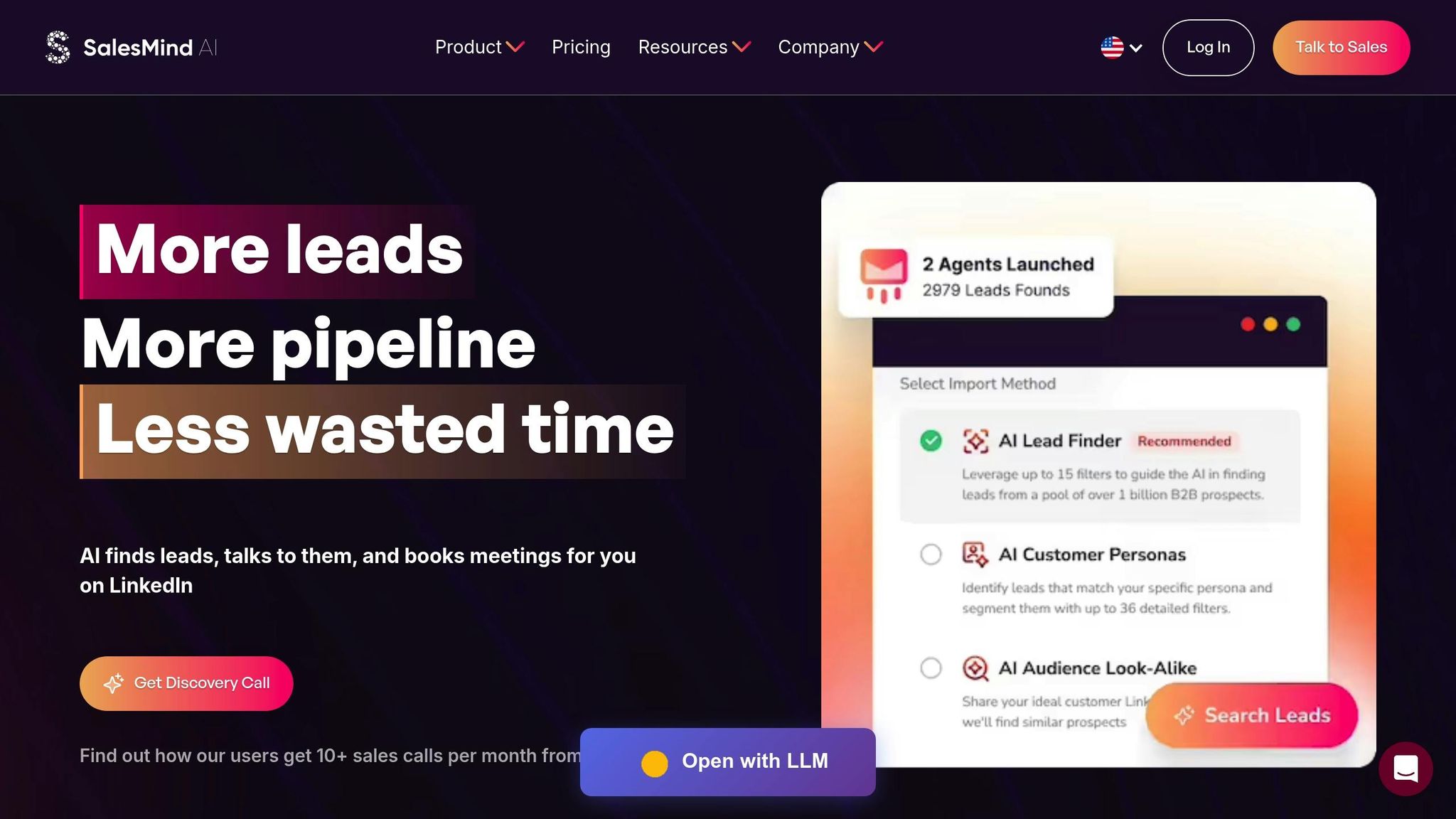
SalesMind AI takes this integrated approach a step further, simplifying outreach and lead management for U.S.-based B2B teams. By combining behavioral, firmographic, and LinkedIn engagement data, the platform identifies high-value leads and reduces time wasted on less promising prospects. It automates personalized connection requests, InMails, and follow-ups based on lead scores and segmentation, helping sales reps connect with more qualified prospects without losing the personal touch.
The platform also includes a unified inbox that consolidates replies from LinkedIn and other channels into a single AI-assisted view. This allows reps to respond faster while keeping the context of each conversation intact. By syncing with existing CRMs, SalesMind AI ensures that lead scores, statuses, and next steps stay up-to-date across sales and marketing teams. This alignment not only improves collaboration but also enhances revenue forecasting accuracy. Plus, the platform continuously learns from campaign performance - tracking metrics like reply rates, meetings booked, and revenue per lead - and feeds this data back into the predictive model to refine future efforts.
"From the very first week, SalesMind AI boosted my productivity in lead prospecting by 10×. At full capacity, the AI managed to get 5 to 10 new conversations started per week, opening doors to valuable connections I might not have reached otherwise." - Alex L., CTO, Slash Co [1]
Conclusion
Predictive lead scoring leverages AI to replace guesswork with precise, data-driven prioritization, offering a clearer picture of each lead's potential to convert. Studies reveal that businesses using predictive models can see sales conversion rates triple and lead generation ROI increase by 70%. Additionally, these models help boost the conversion rate from prospects to qualified leads from around 10% to 15–20%, while cutting sales cycle times by roughly 25% - a game-changer for sales teams looking to optimize their processes[7].
But the benefits go beyond just numbers. Predictive scoring fosters better alignment between sales and marketing teams by creating a shared, objective standard for evaluating lead quality. With both teams relying on the same insights, lead handoffs become smoother, collaboration improves, and revenue-focused goals are easier to achieve. For U.S.-based B2B organizations, this approach often results in stronger pipeline coverage, more accurate forecasting, and higher revenue per sales representative.
That said, predictive lead scoring isn’t a magic solution. These models work best with clean, complete, and regularly updated data. They also require continuous monitoring to address potential biases and adapt to changing market trends and buyer behaviors. Rather than replacing human judgment or relationship-building, predictive scoring should be seen as a tool to enhance these efforts. Think of it as an ongoing optimization process, not a one-and-done implementation.
Getting started means taking a close look at your lead data, defining your ideal customer profile, and identifying key data sources like your CRM, marketing tools, website analytics, and LinkedIn. Running a pilot program alongside your current approach allows you to compare metrics such as lead-to-opportunity and opportunity-to-close rates. From there, you can integrate predictive scores into your workflows to enable timely and targeted outreach.
As digital buying journeys continue to evolve, AI-driven scoring solutions like SalesMind AI are helping businesses scale personalized outreach and allocate resources more effectively. By combining behavioral, firmographic, and LinkedIn engagement data, SalesMind AI transforms model outputs into actionable workflows. The result? Faster-moving sales funnels, higher conversion rates, and a unified, data-driven approach to sales and marketing.
FAQs
How does AI-powered predictive lead scoring enhance sales efficiency?
AI-powered predictive lead scoring transforms how sales teams operate by pinpointing and prioritizing the leads most likely to convert. This means sales teams can channel their energy into prospects that truly matter, cutting down on wasted effort.
By analyzing customer behaviors and patterns, this technology filters out less promising prospects, saving both time and resources. The result? Faster decision-making, shorter sales cycles, and a greater chance of sealing the deal. With smarter lead prioritization, businesses can boost conversion rates and fine-tune their sales strategies for better results.
What types of data are critical for accurate predictive lead scoring?
Accurate predictive lead scoring depends on pulling data from a few important sources. These include prospect details (like their job title or the industry they’re in), engagement history (things like email opens or website visits), firmographics (such as company size, revenue, and location), and behavioral patterns (how prospects interact with your brand over time).
Using this data, you can zero in on the leads most likely to convert. This helps prioritize your efforts, making your sales process more efficient and ensuring your team focuses on the right opportunities.
How can businesses manage bias and maintain accuracy in predictive lead scoring models?
To keep predictive lead scoring accurate and fair, businesses need to regularly assess and refresh their models with up-to-date data. Using a variety of data sources that reflect diverse perspectives helps reduce bias and promotes balanced outcomes.
Frequent model validation and retraining are key to staying in tune with shifting market trends and evolving customer behaviors. By staying proactive, companies can maintain a lead scoring system that's dependable and aligned with their objectives.
 JG
JG