How Predictive AI Boosts LinkedIn Profile Engagement
Predictive AI analyzes behavior to prioritize leads, schedule posts and messages, and automate personalized LinkedIn outreach to improve engagement and conversions.
 JG
JGShare this article

- 44% higher connection acceptance rates
- 80% less time spent on engagement tasks
- 91% improvement in lead-to-close rates
Predictive AI is changing the way professionals use LinkedIn, making it easier to connect with the right people at the right time. By analyzing user behavior and engagement patterns, it helps identify high-potential prospects, optimizes outreach timing, and automates personalized interactions. This approach leads to:
- 44% higher connection acceptance rates
- 80% less time spent on engagement tasks
- 91% improvement in lead-to-close rates
With tools like SalesMind AI, you can score leads, target audiences more effectively, and automate multi-touch campaigns - all while maintaining a personal touch. Predictive AI turns LinkedIn into a powerful platform for building relationships and driving sales, especially for B2B professionals in the U.S.
Key takeaways:
- Focus outreach on users most likely to engage.
- Segment audiences by behavior, firmographics, and intent.
- Use AI to schedule posts and messages at optimal times.
- Automate follow-ups and lead prioritization for efficiency.
Predictive AI simplifies LinkedIn engagement, saving time and boosting results without sacrificing quality.
What Is Predictive AI and How It Works on LinkedIn
Defining Predictive AI
Predictive AI is all about using past and real-time data to make informed guesses about future behaviors and outcomes. Instead of just looking at past numbers like traditional analytics, it identifies patterns to predict what might happen next. On LinkedIn, this means pinpointing which prospects are most likely to interact with your profile. By analyzing data, predictive models assign scores and rankings to prospects based on their likelihood to engage. This approach shifts the focus from analyzing past actions to anticipating future interactions, forming the backbone of LinkedIn's automated strategies.
How LinkedIn's Algorithms Work with Predictive AI
LinkedIn's feed ranking is built on three key factors: relevance, recency, and relationship strength. Its algorithms analyze engagement signals like dwell time, clicks, and comments to decide which posts are most likely to interest you [1]. Natural language processing (NLP) helps evaluate the content and tone of posts, while collaborative filtering studies engagement patterns among similar users to recommend posts. Additionally, pattern recognition identifies emerging trends, ensuring that content generating active engagement - like comments and shares - reaches a wider audience.
Predictive AI takes this a step further. It digs into why users engage with specific content, the types of content they prefer, their connections, and when they are most active. These insights allow LinkedIn to make more accurate predictions about future engagement and provide smarter recommendations to maximize content reach. By combining these algorithmic insights with predictive modeling, LinkedIn fine-tunes its ability to forecast engagement.
Data Sources That Power Predictive AI on LinkedIn
The accuracy of predictive AI on LinkedIn comes from combining multiple data sources. These models pull together various streams of information to estimate engagement potential:
- Engagement behaviors: Metrics like likes, comments, shares, connection acceptance rates, message replies, and profile views play a key role. Consistent engagement signals higher interest.
- Network and relationship data: Factors such as mutual connections, degrees of separation, group memberships, and past interactions help refine engagement scores. For instance, someone with several shared connections and similar group memberships is more likely to accept a connection request than someone without those overlaps.
- Profile and firmographic data: Details like job titles, company size, industry, location, skills, and profile completeness provide context. A seasoned professional at a large company may engage differently than someone with a sparse profile.
- Content interaction patterns: These models analyze which types of posts - whether data-driven, opinion pieces, or visual content - tend to draw the most engagement. If your audience prefers detailed, data-heavy posts, the model will recommend focusing on that style.
- Timing and frequency data: Understanding when your audience is most active is critical. For example, optimal posting times might be between 9:00 and 11:00 a.m. U.S. time on weekdays when engagement is highest. These models also help avoid over-posting or long periods of inactivity.
How to Boost LinkedIn Profile Engagement with Predictive AI
Predicting Who Will Engage with Your Profile
Predictive AI takes the guesswork out of LinkedIn outreach by analyzing behavioral signals like reactions, comments, shares, dwell time, and profile visits. Instead of casting a wide net, it helps you focus on users whose past behavior shows they’re already interested in what you offer.
By combining data streams - such as frequent profile views, website clicks, and content engagement - you can assign higher lead scores to prospects who show stronger interest. Tools like SalesMind AI use these lead scoring systems to evaluate LinkedIn engagement alongside external signals, like email opens or site visits, to calculate a suitability score. This score helps you prioritize outreach by showing which leads best match your criteria.
Not all engagement signals are equal. For example, a comment or share often signals more interest than a simple like, and a click to your pricing page shows higher intent than just viewing your profile. By tracking these patterns across many prospects, predictive models identify which behaviors typically lead to meaningful conversations or conversions.
Here’s a key stat: 89% of B2B marketers now prioritize predictive analytics, and companies using it are 1.8× more likely to exceed their goals [4]. With clearer insights into which prospects are most likely to respond, you can focus on building relationships with high-potential leads. This approach not only increases profile views but also improves reply rates, setting the stage for more targeted outreach and better timing.
Segmenting Audiences for Targeted Outreach
Once you’ve identified high-potential leads, predictive AI helps you group them into segments for tailored outreach. Generic messages rarely work on LinkedIn, so segmentation based on firmographics, behavior, and intent signals allows for more personalized communication.
Firmographic segmentation uses criteria like industry, company size, job title, and location. For instance, you could target U.S.-based SaaS CMOs from companies with 50–500 employees differently than manufacturing operations managers. Research shows that 87% of B2B marketers believe aligning strategies with firmographic data improves engagement [4]. Predictive AI enhances this by adding behavioral and intent data for even more precise targeting.
Behavioral segmentation focuses on how users interact with your content. High engagers frequently like, comment, or share your posts; lurkers might view your content without engaging; and new connections are still forming their habits. Each group responds best to different approaches. High engagers might appreciate invites to webinars or exclusive content, while lurkers could be drawn in with polls or direct questions. New connections may need educational content to build trust before deeper engagement.
Intent-based segmentation zeroes in on actions that show readiness to engage. For example, users who visit your pricing page, download resources, or click through to landing pages demonstrate higher intent than those who just browse your profile. Predictive models track these behaviors, flagging prospects who show multiple intent signals in a short time. A prospect who views your profile repeatedly, engages with your posts, and clicks through to your website is a prime candidate for personalized outreach.
Once your segments are defined, align your messaging with each group’s needs. For high-intent prospects like U.S.-based SaaS CMOs, send a tailored message referencing a specific post they engaged with and include a relevant case study. For less-engaged audiences, like lurkers in certain industries, share a how-to article addressing a common challenge and invite their feedback. The goal is to match your content and tone to what each segment values most.
Finding the Best Times to Engage
Timing is everything when it comes to engagement. Predictive AI analyzes when your audience is most active and responsive, offering personalized recommendations for posting content and sending messages. Unlike generic advice like "post on weekdays at 9:00 a.m.", these insights are based on your audience’s actual behavior.
For example, if your U.S.-based tech prospects engage most between 9:00 and 11:00 a.m. Eastern Time on Tuesdays and Thursdays, the AI will suggest posting during those windows. If healthcare professionals in your network are more active in the evening, you’ll get different timing recommendations. This ensures your content appears when your audience is paying attention.
The same logic applies to direct outreach. Predictive models analyze when specific prospects or segments are likely to respond to messages. Whether it’s early morning, lunchtime, or after work, sending connection requests or follow-ups at the right time increases the chances of a quick and meaningful response.
Real-time data processing adds another layer of precision. Machine learning models monitor how your posts perform live. If a post gains unexpected traction, the system can alert you to engage with commenters or boost similar content while the momentum is strong.
To put this into action, configure your outreach tools to schedule messages based on AI-recommended times rather than fixed intervals. For example, if a prospect is most responsive on Wednesday mornings, adjust your follow-up schedule accordingly. Tools like SalesMind AI integrate these timing insights into automated workflows, ensuring each message reaches its audience at the best possible moment. Keep an eye on metrics like connection acceptance rates, reply rates, and profile views, and tweak your strategy as needed to maximize results.
Automating LinkedIn Engagement with Predictive AI
Taking your LinkedIn outreach to the next level, predictive AI simplifies engagement, making interactions more efficient and impactful. Manual outreach can be exhausting and time-consuming. Predictive AI steps in to automate workflows, speeding up response times, boosting conversion rates, and letting sales teams focus on what they do best - closing deals.
Triggering Actions Based on User Behavior
Predictive AI keeps a close watch on prospect behavior, responding instantly with tailored actions. When someone shows interest - like viewing your profile, liking a post, or leaving a comment - the AI jumps into action. It might send a connection request, a thank-you message, or even a case study, depending on the signal. This ensures timely and relevant engagement.
Think of it as matching the right response to the right behavior. For example:
- A profile view might trigger a connection request.
- A comment on your post could lead to sharing a white paper.
- A website click-through might prompt a direct message offering a demo.
This approach keeps the conversation flowing naturally, moving prospects from curiosity to meaningful dialogue. Timing is everything here. If you wait too long to follow up, you risk losing the lead to a faster competitor. Automated triggers ensure you're quick to respond, keeping your brand fresh in their minds and maximizing the chance of a productive interaction.
As these automated interactions pile up, dynamic lead scoring takes over to help you focus on the most promising prospects.
Scoring and Prioritizing Leads
Not every LinkedIn connection deserves equal attention. That’s where SalesMind AI steps in, using a combination of firmographic and behavioral data to score leads in real time. This scoring system ensures your team zeroes in on the hottest prospects first, saving time and increasing efficiency.
A July 2025 study revealed some impressive results: companies using predictive analytics for LinkedIn engagement saw 44% higher connection acceptance rates, an 80% reduction in time spent on engagement tasks, and a 91% increase in lead-to-close rates [2]. These gains come from focusing on high-scoring leads while automating tasks that don’t require as much attention.
"The lead scoring system is particularly impressive, providing clear insights into lead quality." - Svit Babarovic, Food and Beverage Retail, MountainDrop [3]
With SalesMind AI, your team gets a clear view of why specific leads are prioritized. This transparency builds trust in the system and ensures reps spend their time wisely. Instead of guessing who to contact, they follow a data-backed plan that maximizes results. Marketing teams also benefit, as they can direct their budgets toward campaigns targeting high-value segments. It’s a smarter way to work, with the AI taking care of the heavy lifting.
Creating Personalized Multi-Touch Sequences
Once automated triggers and lead prioritization are in place, multi-touch sequences take over to nurture prospects through personalized follow-ups. A single message rarely seals the deal. Predictive AI crafts sequences that adapt to each prospect’s behavior, guiding them step by step toward a sales conversation.
These sequences start with an initial touchpoint, like a connection request or intro message. From there, the AI adjusts based on the prospect’s responses. For instance:
- If they engage with your content, the AI might send educational materials.
- If they click through to your website, it could follow up with a demo invitation.
- If they ignore your messages, the AI tweaks its approach to re-engage them.
Unlike traditional drip campaigns that send the same message to everyone, AI-driven sequences are dynamic. They branch out based on what the prospect does, making the outreach feel more personal and less robotic.
"By automating all conversations and personalizing them with direct insights extracted from my prospect profiles, it delivers precise, high-quality interactions that consistently convert prospects into meetings." - Sébastien D., Freelance, Freelance Insider [3]
SalesMind AI uses data from prospect profiles, company details, and past interactions to craft messages that resonate. It tracks what works and fine-tunes future sequences, ensuring your outreach becomes more effective over time. One user reported a 10x boost in productivity, starting 5 to 10 new conversations per week [3]. Another saw 4-5 daily responses during an 8-day free trial, leading to booked meetings and new business [3].
These sequences run until the prospect responds or opts out, ensuring follow-ups happen at the right time without being pushy. For U.S.-based teams, the AI even considers local business hours, sending messages during work hours to keep things professional.
Handling all these interactions manually would be overwhelming. Thankfully, SalesMind AI’s unified inbox consolidates replies from multiple LinkedIn accounts. This makes it easy to track conversations, ensure no lead is missed, and seamlessly hand off warm prospects to sales reps for closing. It’s a streamlined system that keeps your outreach both efficient and effective.
How SalesMind AI Uses Predictive AI for LinkedIn Engagement
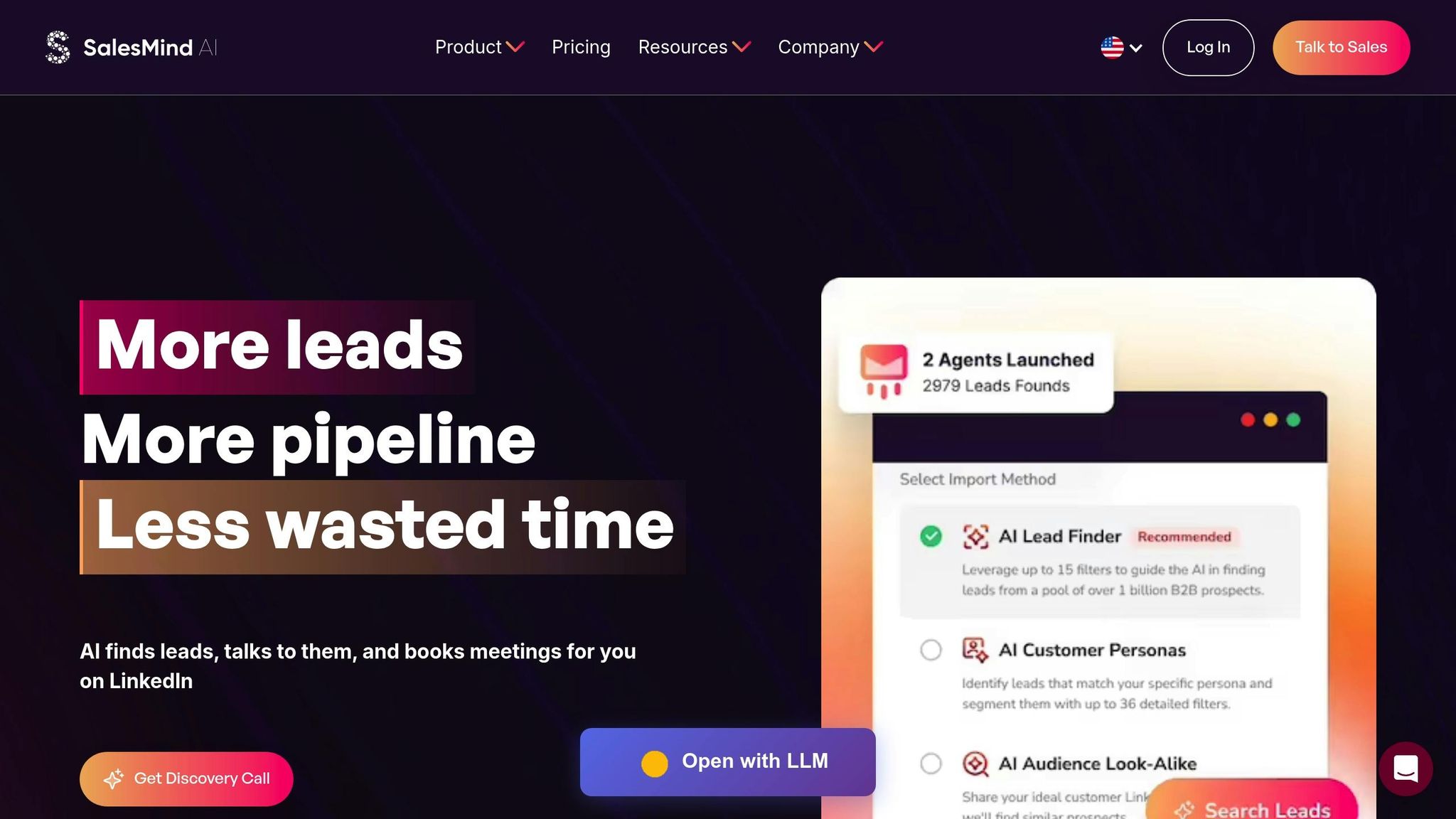
SalesMind AI integrates predictive AI directly into your LinkedIn workflow, turning raw data into targeted actions. For U.S.-based B2B SaaS teams, this means less time guessing and more time connecting with the right prospects. By combining lead scoring, smart automation, and seamless LinkedIn integration, SalesMind AI helps sales teams operate more efficiently. Here's a closer look at how it enhances every step of your LinkedIn engagement process.
Lead Scoring for LinkedIn Prospects
SalesMind AI uses predictive lead scoring to rank prospects based on their likelihood to engage and convert. Unlike generic scoring models, it adapts to U.S. market specifics - considering time zones, regional business trends, and local buying behaviors. This ensures outreach aligns with how American buyers prefer to engage.
The platform’s scoring system is transparent, giving sales reps clear insights into why a lead is ranked high or low. This clarity helps refine targeting, leading to more meaningful interactions and stronger pipelines.
AI-Powered Inbox and Automated Follow-Ups
Managing LinkedIn conversations across multiple accounts can be chaotic. SalesMind AI simplifies this with a unified inbox that consolidates all replies into one dashboard. The AI co-pilot suggests responses, organizes conversations with tags, and sets follow-up reminders, allowing sales reps to stay on top of every lead without tedious manual tracking.
"To have one master dashboard not just for yourself but for our entire team, to try different lead lists and sequences and track them all in real time is fantastic. Additionally, SalesMind works while you sleep, and you are exponentially increasing your productivity that way."
– Rahul P., Senior Advisor, Bounty Media [3]
This automation saves time, letting sales teams focus on closing deals rather than managing profiles and follow-up schedules.
LinkedIn Integration for Large-Scale Outreach
SalesMind AI takes personalized outreach to the next level by deeply integrating with LinkedIn. It pulls real-time data from prospect profiles and company pages to craft tailored messages that reference specific details, like a prospect's recent post or their company’s latest milestone.
"I was able to automate something that would have taken me days or weeks of consistent manual work. Additionally, I've been impressed with some of the AI-recommended messaging, which pulled information from my website and other sources to curate recommended responses."
– Henry F., Enterprise Account Executive, Salesforce [3]
Messages are sent at optimal times based on U.S. time zones and industry activity patterns, ensuring they land during business hours. Built-in safeguards like rate limiting and randomized timing mimic human behavior and maintain compliance. Plus, ongoing routines for deduplication and data enrichment ensure prospect data stays accurate.
Challenges and Future Opportunities
Predictive AI is reshaping LinkedIn engagement, but it comes with its own set of hurdles - data quality issues, model bias, and the pitfalls of over-automation. For U.S.-based teams, addressing these challenges responsibly is essential to scaling outreach efforts effectively. At the same time, new possibilities are emerging in areas like multi-channel engagement, improved transparency, and long-term relationship tracking. Let’s dive into these challenges and explore strategies to navigate them.
Data Quality and Model Bias Issues
For predictive AI to work well, it needs clean, accurate data. But when CRM systems, marketing tools, or LinkedIn itself provide incomplete or fragmented data, the results can be less than ideal. Duplicate contacts, inconsistent job titles, or mismatched company names can throw off AI models, leading to wasted outreach efforts and missed opportunities.
Then there’s the issue of bias. AI systems trained on historical data often inherit the same biases baked into that data - whether it’s related to gender, race, seniority, or even industry preferences. For example, if past outreach efforts have disproportionately targeted certain job levels or industries, the AI might continue to prioritize those groups while ignoring others that could be just as valuable. This not only narrows your reach but can also harm your brand’s reputation if it becomes clear that certain groups are being overlooked.
Over-automation adds another layer of complexity. When too much of the outreach process is handed over to AI, the messages often lose their human touch. Recipients can easily spot generic, robotic communications, which can lead to "message fatigue" and lower response rates. Interestingly, a study from July 2025 found that businesses using predictive analytics saw a 44% improvement in connection acceptance rates and an 80% reduction in time spent on engagement. However, this highlights the importance of keeping a close eye on automation to ensure it doesn’t backfire [2].
Best Practices for Using Predictive AI
To make the most of predictive AI while minimizing its risks, U.S.-based teams should follow a disciplined approach:
- Keep your data clean and accurate. Regularly audit your CRM and other data sources to eliminate duplicates and inconsistencies. This ensures reliable lead scoring and better model performance.
- Maintain a balance between AI and human oversight. Let AI handle tasks like drafting messages, suggesting leads, or prioritizing outreach. But when it comes to finalizing messages or engaging with high-value prospects, human input is crucial. As one SalesMind AI user noted, AI can help create tailored responses by pulling data from various sources, but a personal touch is still key to closing deals [3].
- Focus on meaningful metrics. Instead of chasing vanity metrics like views or likes, track outcomes that matter - like reply rates, meetings booked, or revenue generated. Continuously test different message styles, send times, and audience segments to refine your strategy.
- Integrate your CRM with predictive AI. This allows for closed-loop reporting and precise lead scoring, giving you a full view of your pipeline and making your outreach strategy more agile and accountable.
- Respect personalization and frequency limits. Avoid overloading prospects with automated messages. Instead, vary your content and include personalized touches, like referencing a recent post or a company milestone. This helps your messages stand out and keeps them from landing in spam folders.
Areas for Future Research
While these best practices help address current challenges, there’s still room to grow. Future research could focus on refining multi-channel engagement strategies that integrate LinkedIn with email, paid social, display ads, and website personalization. For U.S. B2B teams managing multiple channels, a unified model that optimizes timing and sequencing across all touchpoints could significantly improve conversion rates.
Another key area is understanding the long-term effects of AI-driven outreach. Many studies focus on short-term metrics like clicks or replies, but heavy reliance on automation could impact trust and relationship depth over time. Researching these dynamics will help teams strike the right balance between automation and genuine relationship-building.
Finally, improving the transparency of predictive models is crucial. Sales and marketing teams need to understand why certain prospects or accounts are prioritized or why specific content is recommended. Explainable AI can build trust within teams, support compliance, and ensure these systems are governed effectively.
Platforms like SalesMind AI are already tackling some of these challenges by combining strong data practices, CRM integration, and bias monitoring with advanced lead scoring and behavioral insights. The key to the future of LinkedIn engagement lies in finding the right mix of thoughtful automation and human insight. Teams that strike this balance will be the ones who see the best results.
Conclusion
Predictive AI is transforming the way professionals and businesses engage on LinkedIn. By leveraging data-driven insights, it’s now possible to pinpoint who is most likely to respond, craft content that resonates, and time outreach for maximum impact. Studies show that predictive analytics can increase connection acceptance rates by 40–60% while cutting manual outreach time by as much as 80% [2][5]. This efficiency allows teams to focus their energy on meaningful, high-value conversations.
LinkedIn’s algorithms prioritize posts based on predictive signals, such as early engagement and relevance, which means aligning your activity with these patterns is crucial. The platform rewards authentic interactions and content that demonstrates genuine interest. Predictive AI tools can tap into these same signals, helping you expand your reach and connect with the right people at the right time. This blend of human strategy and algorithmic insight is the foundation of a successful LinkedIn engagement approach.
Tools like SalesMind AI make this process both practical and scalable. With advanced features such as lead scoring, an AI-powered inbox, and automated multi-touch sequences, you can maintain a personalized approach while managing a high volume of prospects. The platform integrates directly with LinkedIn, allowing you to send connection requests, InMails, and follow-ups all from one interface. Real-time performance tracking turns LinkedIn into a structured, data-driven revenue generator.
For predictive AI to be effective, clean data and responsible usage are essential. Regular CRM audits and monitoring for potential bias are key to ensuring accuracy and fairness. Balancing automation with human oversight is equally important to maintain authenticity and achieve the best outcomes. Tracking metrics like meetings booked, opportunities created, and revenue in USD ensures your efforts translate into tangible business results.
As predictive AI continues to evolve, the potential for even greater precision and integration in outreach strategies grows. Future advancements may include multi-channel integration, enhanced model transparency, and tools for long-term relationship tracking. For professionals in the U.S., the takeaway is clear: those who combine thoughtful automation with genuine human insight will stand out, build trust, and achieve measurable success on LinkedIn.
FAQs
How does predictive AI identify the best times to engage with prospects on LinkedIn?
Predictive AI leverages advanced data analysis to pinpoint the best times to connect with prospects on LinkedIn. By examining patterns in user behavior, engagement trends, and historical activity, it identifies when your audience is most likely to be online and receptive.
This approach ensures your outreach efforts are well-timed, increasing the chances that your messages will be seen and lead to meaningful interactions.
What challenges might arise when using predictive AI for LinkedIn engagement, and how can they be addressed?
Using predictive AI for LinkedIn engagement comes with its own set of challenges, like data privacy concerns, over-automation that risks feeling impersonal, and algorithm bias. However, there are ways to tackle these hurdles effectively:
- Protect user data: Make sure you're fully compliant with privacy laws and regulations to safeguard sensitive information.
- Keep it personal: Balance automation with thoughtful, personalized messaging to preserve authentic connections.
- Monitor for bias: Regularly evaluate AI-generated outputs to spot and address any biases or inaccuracies.
By addressing these challenges head-on, businesses can make the most of AI while maintaining trust and creating meaningful interactions.
How can professionals in the U.S. use predictive AI tools like SalesMind AI to keep LinkedIn outreach personal?
Professionals across the U.S. can rely on SalesMind AI to strike the perfect balance between personalization and automation in their LinkedIn outreach. With tools like automated personalized messaging, advanced lead qualification, and seamless follow-up features, it enables users to reach prospects efficiently while still keeping interactions meaningful and tailored.
SalesMind AI’s predictive capabilities take it a step further by pinpointing the best engagement opportunities. It helps craft messages that genuinely connect with individual leads, ensuring your outreach stays thoughtful and relevant - even when handling a large number of connections.
JGGet AI Sales Insights Weekly