LinkedIn Content Sharing: AI Trends 2025
AI now powers LinkedIn content and outreach—automating creation, personalization, timing, and networking while keeping authentic engagement.
 Julien Gadea
AI now powers LinkedIn content and outreach—automating creation, personalization, timing, and networking while keeping authentic engagement.
AI now powers LinkedIn content and outreach—automating creation, personalization, timing, and networking while keeping authentic engagement.
Table of Contents
AI has completely reshaped LinkedIn content sharing by 2025, making it faster, smarter, and more effective. Here's what you need to know:
- Content Creation Efficiency: AI tools create posts 9x faster, cutting effort by 90%. Companies produce 21x more content without extra staff.
- Demand Generation: Gated content is out. Freely accessible thought leadership content builds trust, with B2B buyers 4x more likely to trust experts over corporate messaging.
- Organic Reach Challenges: LinkedIn's organic reach dropped 65%, but AI-powered strategies help overcome this with automation, personalization, and engagement tools.
- Personalization: AI customizes posts using audience data, improving engagement and reducing costs (e.g., 21% lower cost-per-lead for early adopters).
- Post Timing: AI optimizes post timing for maximum visibility. Engaging in the first hour boosts reach by 40%.
- Networking: AI identifies high-value connections and improves messaging, resulting in 45% response rates for tailored outreach.
- SalesMind AI: Automates LinkedIn tasks like messaging, lead scoring, and scheduling, saving 40 hours per week and increasing pipeline value to $100,000/month.
AI isn't just a tool - it's a necessity for scaling content and building meaningful LinkedIn connections. By letting AI handle repetitive tasks, professionals can focus on strategy and relationships.
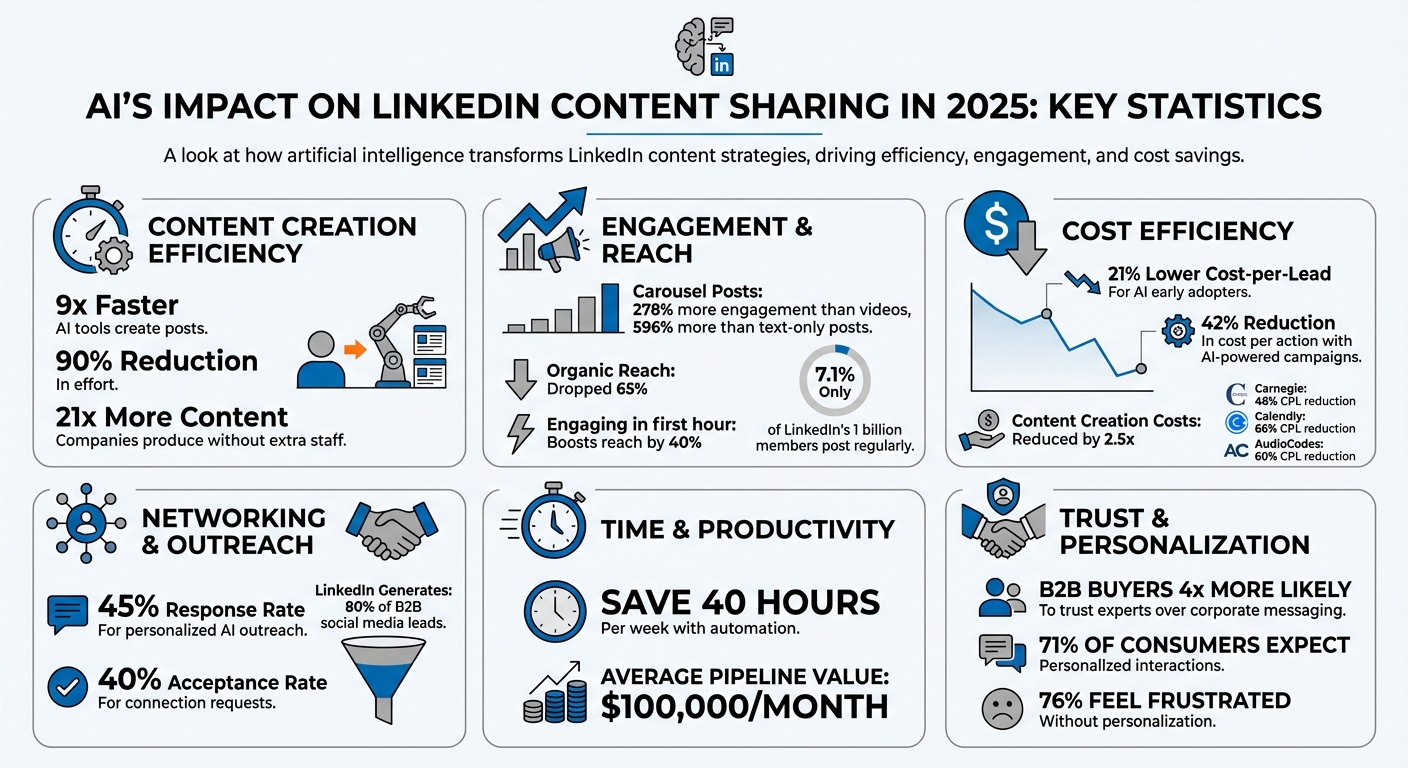
AI Impact on LinkedIn Content Sharing: 2025 Key Statistics
AI-Powered Content Creation and Personalization
Automated Content Generation Tools
AI tools have revolutionized how LinkedIn content is produced, taking much of the workload off creators. Platforms like Taplio and AuthoredUp can generate multiple post drafts from a single prompt, making it easier to craft engaging content [5][7]. Simply provide a seed idea, and these tools deliver several polished drafts ready for fine-tuning.
One of the standout benefits is how AI enables content repurposing. For example, a 2,000-word article can be transformed into LinkedIn carousels, newsletter segments, and more [4]. This efficiency can reduce content creation costs by up to 2.5 times [4]. Visual automation tools further simplify the process by converting text or blog posts into eye-catching carousel slides - no manual design needed. This is significant because carousel posts generate 278% more engagement than videos and 596% more than text-only posts [4].
Testing content variations is another area where AI shines. Trying out five or more creative versions can increase click-through rates by over 20% [5]. AI-powered tools like carousel builders and ad variant generators make it feasible to scale this kind of testing efficiently.
These tools provide a solid starting point for crafting personalized and targeted content strategies.
Using Audience Data for Content Customization
AI doesn't just create content - it also ensures it resonates with the right audience. By analyzing profile data, firmographics, and real-time behavioral cues, AI helps match content to specific professional groups. Dynamic macros can even insert personalized details into LinkedIn posts automatically [5][6]. This level of customization is crucial, as 71% of consumers expect personalized interactions, and 76% feel frustrated when companies fail to deliver [5].
A great example of this in action comes from 2023, when marketing agency Carnegie tested LinkedIn Predictive Audiences for promoting graduate business degree programs. Amy Orlando, the agency's director, noted that AI helped expand their reach to high-intent prospects, cutting their cost-per-lead by 48% [8]. Similarly, Zscaler’s Sr. Director of Digital Marketing, Suruchi Sharma, used Predictive Audiences from February to May 2023 to focus on the 5% of buyers actively in-market, significantly improving conversion rates [8][5].
"The use of AI to expand reach by targeting the right audiences at the right time is highly effective." – Suruchi Sharma, Sr. Director Digital Marketing, Zscaler [8]
These targeted strategies don’t just boost engagement - they also make lead generation more cost-effective. Early adopters of AI-driven audience matching reported an average 21% drop in cost-per-lead, while Siemens saw a 121% increase in Lead Form Completion Rates using LinkedIn Accelerate's automated targeting in 2024 [8][2].
Predictive AI for LinkedIn Outreach Optimization
AI-Powered Post Timing and Frequency
Predictive AI takes the guesswork out of LinkedIn posting by analyzing audience behavior and past engagement trends. This helps identify the best times to post when your followers are most likely to be active [9].
Timing is everything, especially in the "golden hour" - the first 60–90 minutes after posting. During this window, your post’s engagement determines about 70% of its total reach. AI tools focus on metrics like dwell time to gauge initial interest. Udit Goenka, CEO of Autoposting.ai, highlights this period as critical for content distribution. If the algorithm detects strong engagement early on, it pushes your post to a wider audience [9].
Consistency is key. Posting 3–4 times a week can place you among LinkedIn’s top 10% of active users. This is significant, as only 7.1% of LinkedIn’s 1 billion members post regularly [9]. However, avoid posting more than once in a 24-hour period - doing so can hurt your reach by splitting your audience’s attention [9].
For best results, consider these posting times:
- Carousels: 8:00–10:30 AM (weekdays)
- Text-only posts: 10:00 AM–12:00 PM
Carousels with around 12 slides tend to perform exceptionally well, averaging 1,387 impressions compared to 703 impressions for text-plus-image posts [9]. Engaging with comments within the first hour can also boost your reach by up to 40%, as it signals the algorithm that your content is sparking meaningful conversations [9].
By fine-tuning your posting schedule, you can create a solid foundation for AI-driven strategies that maximize LinkedIn engagement.
AI Recommendations for Better Networking
AI isn’t just about improving post performance - it’s also a game-changer for networking. By analyzing firmographic data, job titles, industries, company sizes, and seniority levels, AI tools help you identify high-value connections [10] [2]. This matters because LinkedIn generates 80% of B2B social media leads, far outpacing other platforms at just 13% [1].
A shift toward follower-centric content distribution is already underway. By 2025, 25–30% of your followers will see your posts, compared to just 10–15% of your connections [9]. Building a niche-aligned follower base is more effective than random connections for long-term growth. Tools like Crystal Knows even provide personality insights, helping you craft outreach messages tailored to individual communication styles [3].
Personalization is vital for success. Messages about business opportunities on LinkedIn see a 45% response rate [1], but generic AI-generated posts fall short. These posts experience 30% less reach and 55% lower engagement. LinkedIn’s advanced spam detection, with 94% accuracy, prioritizes authentic content over automated messaging [9].
Companies embracing AI-driven networking strategies are already seeing tangible results. For example, LinkedIn’s AI-powered Accelerate campaigns have led to a 42% reduction in cost per action compared to traditional methods [2]. Using AI to identify intent signals and create personalized messages, rather than relying on generic outreach, significantly boosts networking outcomes [11] [12].
These approaches highlight how AI enhances every aspect of LinkedIn interaction, from posting to building meaningful connections.
SalesMind AI: LinkedIn Content Sharing Automation
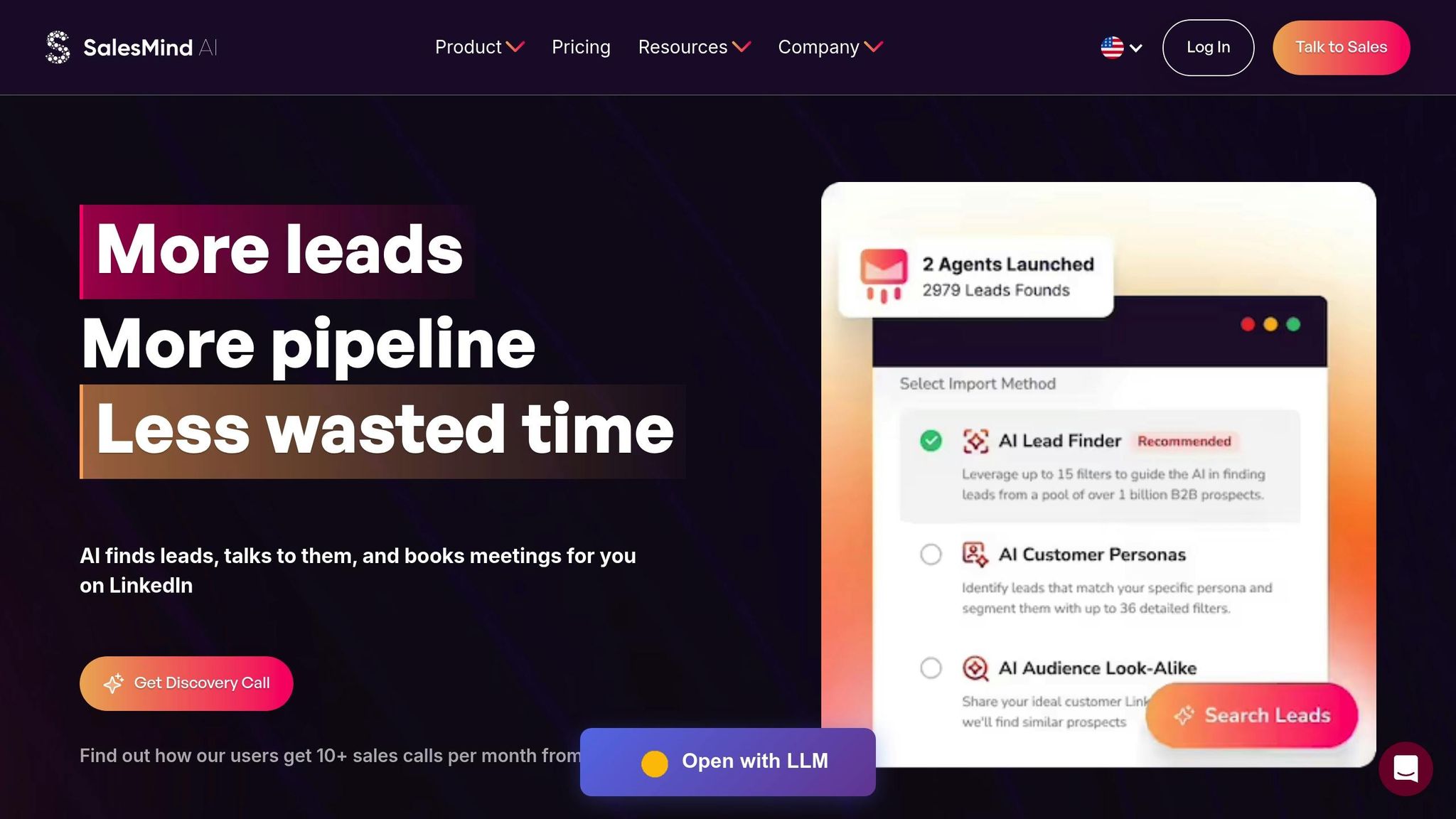
Key Features and Benefits of SalesMind AI
SalesMind AI takes LinkedIn content sharing and outreach to the next level by automating and personalizing key activities to drive engagement. The platform simplifies LinkedIn tasks like likes, follows, profile visits, connection requests, and messaging sequences. Using AI-powered personalization, it crafts messages that feel tailor-made for each recipient. The results are impressive: a 40% acceptance rate and a 45% reply rate [14] [15]. On top of that, the unified AI inbox consolidates responses from multiple LinkedIn accounts into one dashboard, complete with automatic tagging, reminders, and AI-suggested replies [13] [14].
"It's definitely a game changer... by automating all conversations and personalizing them with direct insights extracted from my prospect profiles, it gives accurate and high-quality outputs." – Sébastien D., Freelance Insider [13]
One standout feature is its smart prospect extraction, which pinpoints high-potential leads from events, post interactions, and competitor follower activity [14] [16]. This, combined with automated lead scoring, ensures users can focus on the most promising opportunities instead of wasting time manually sorting through connections [13]. In June 2025, Alex L., CTO of Slash Co, shared how the platform boosted his team's productivity tenfold within the first week, enabling them to initiate 5 to 10 new conversations weekly at full capacity [13].
SalesMind AI operates around the clock in the cloud, mimicking human activity with advanced scheduling and local IP usage to maintain account security [14] [16]. Integration with Sales Navigator further streamlines workflows by allowing instant imports of lead searches and saved lists, saving users an average of 40 hours per week. This efficiency translates into an average pipeline value of $100,000 per month [14] [15]. With such powerful features, SalesMind AI offers pricing plans tailored to different outreach needs.
SalesMind AI Pricing Plans Overview
SalesMind AI provides three pricing tiers to suit a range of LinkedIn outreach requirements: Basic, Professional, and Enterprise. The Basic plan is perfect for small teams or individuals just starting with LinkedIn automation, offering tools like outreach automation, basic lead scoring, and AI messaging. The Professional plan steps it up with advanced lead scoring, a unified inbox, and CRM integration [14]. For larger organizations, the Enterprise plan delivers the full suite of features, including custom integrations and dedicated support for managing complex campaigns.
The platform has earned high praise from users, with ratings averaging 4.7/5 on G2, 4.4/5 on Trustpilot, and a flawless 5/5 on the Chrome Store [13]. A free demo is available - no credit card required - so users can experience its lead generation capabilities firsthand. In December 2024, Henry F., an Enterprise Account Executive at Salesforce, reported that the trial transformed weeks of manual outreach into 4 to 5 responses per day [13].
"The real differentiator is the team: incredibly responsive, accessible, and genuinely invested in your success. You can actually speak with the founder and get thoughtful feedback." – Mandy Gartrell, Angry Shrimp Media [13]
sbb-itb-817c6a5
The Future of AI in LinkedIn Content Sharing
Hyper-Targeted Campaigns for Better Engagement
AI is reshaping how LinkedIn campaigns connect with audiences, turning them into precision tools for engagement. LinkedIn Accelerate simplifies the entire campaign process - from targeting and creative generation to bidding and placement - using just a single URL [2]. By combining firmographic data, campaign engagement history, and first-party sources like contact lists, the system identifies audiences most likely to convert [2].
In 2024, Siemens leveraged LinkedIn Accelerate and achieved a 121% boost in Lead Form Completion Rates compared to their previous campaigns [2]. Similarly, Calendly and AudioCodes implemented AI-driven campaigns focused on website visits, cutting their Cost Per Lead (CPL) by 66% and 60%, respectively [2]. Overall, Accelerate campaigns powered by AI have shown a 42% reduction in cost per action compared to traditional manual approaches [2].
Personalization is now a consumer expectation, with 71% wanting tailored messaging and 76% feeling frustrated when it’s absent [17]. AI tools step in here, analyzing performance data in real time to refine content and ensure it resonates with specific professional audiences [18]. Ads can even adapt dynamically, adjusting messaging based on real-time profile data [17].
Experts emphasize the importance of "human-in-the-loop" AI, where marketers review and fine-tune AI-generated ads to maintain brand personality and ensure ethical practices [2][18]. AI-driven campaigns are already proving to be 15% more efficient than traditional methods [2]. By integrating tools like the Conversions API and uploading existing customer or lead lists, marketers can fine-tune audience targeting for even better results [2].
These advancements don’t just enhance precision - they also lay the groundwork for transparent and ethical use of AI in content sharing.
Explainable AI for Ethical Content Sharing
Transparency is key when it comes to AI-driven recommendations, as building trust with users is non-negotiable. LinkedIn positions AI as a supportive tool, allowing marketers to review and adjust AI-generated content to ensure it aligns with their brand [2]. This oversight is critical, especially since 74% of consumers express doubts about the authenticity of AI-influenced content [22].
"AI-powered solution can be a game-changer, especially for teams that are time-strapped and eager to devote more energy toward strategy and creative thinking." – Mindaou Gu, AI Ad Marketplace Executive, LinkedIn [2]
LinkedIn’s feed AI personalizes content using three main signals: Identity (who you are), Content (engagement metrics), and Behavior (past interactions) [19]. By understanding these signals, creators can share posts that align with how the algorithm determines relevance. As of December 2025, LinkedIn has reached 100 million verified members, ensuring that AI-driven interactions happen between authentic professionals [20].
Ethical automation also spaces out requests and varies message timing to mimic human behavior, avoiding restrictions [1]. Instead of focusing on mass-blasting, AI now prioritizes "creator-side optimization," favoring members who consistently produce meaningful, high-quality content over short-term engagement tricks [19][21]. With 75% of CMOs facing increased pressure to prove ROI quickly, transparent AI tools that clearly demonstrate performance metrics have become indispensable [2]. These ethical practices not only support long-term engagement but also reinforce trust in AI-powered tools to maintain genuine professional connections.
LinkedIn Automation is BANNED in 2025... Do THIS Instead
Conclusion
AI is transforming the way professionals share content on LinkedIn, reshaping how relationships are built at scale. With two-thirds of marketers now leveraging generative AI - a 20% increase from the previous year [23] - this trend shows no signs of slowing down.
The most effective strategy views AI as a co-pilot rather than a substitute for human creativity. By automating tasks like research, timing, and personalization, AI allows professionals to focus on what truly matters: cultivating authentic relationships and engaging in meaningful interactions.
"AI technologies - when used wisely - can potentially double selling time for every salesperson." – Amanda Van Nuys [24]
Sellers who embrace AI-driven best practices see nearly double the sales performance [24]. This approach paves the way for platforms that seamlessly integrate these capabilities. For example, tools like SalesMind AI combine content creation, audience targeting, and engagement automation to simplify LinkedIn interactions and deliver measurable outcomes.
The real challenge lies in finding the right balance between automation and authenticity. Let AI handle the repetitive tasks, so you can focus on genuine conversations and sharing your unique perspective. With 73% of decision-makers trusting thought leadership over traditional marketing materials [23], your voice and insights remain irreplaceable.
FAQs
How does AI make LinkedIn content creation faster and more effective?
AI is transforming how content is created on LinkedIn by taking over time-consuming tasks like drafting posts, fine-tuning tone, suggesting hashtags, and even recommending the best times to post. It can also reformat existing content for various uses, saving users countless hours while delivering polished and engaging posts in just seconds.
For businesses, this means the ability to produce up to ten times more content without sacrificing quality. By simplifying the process, AI lets professionals focus on what truly matters: building meaningful connections and achieving measurable results on LinkedIn.
How does AI improve LinkedIn networking and outreach?
AI tools are reshaping how professionals network on LinkedIn by taking over tedious tasks and making interactions more personal. With predictive algorithms, these tools can analyze profiles, engagement habits, and activity to recommend connections and create customized outreach messages. The result? Higher connection acceptance and response rates. On top of that, AI simplifies tasks like commenting, optimizing posts, and managing follow-ups, giving professionals more time to focus on meaningful conversations.
Take SalesMind AI, for example. This platform goes a step further by automating personalized LinkedIn messages, offering an AI-driven unified inbox, and using advanced lead scoring to help prioritize prospects. For U.S. businesses, this means better connection rates, faster sales cycles, and greater revenue opportunities - all while cutting down on the time and effort needed for outreach.
How does AI determine the best times to post on LinkedIn for higher engagement?
AI leverages sophisticated algorithms to examine audience behavior, focusing on activity patterns and past engagement trends. By diving into this data, it pinpoints the best times to share content - those moments when your audience is most active and likely to interact.
After identifying these prime time slots, AI tools can take over and schedule your LinkedIn posts to go live precisely when engagement is expected to peak. This not only ensures your content reaches more people but also saves you time while enhancing overall interaction and visibility.
 JG
JG