GDPR Compliance in LinkedIn Sales Tools
Practical guide to GDPR-compliant LinkedIn sales outreach: legal bases, consent tracking, secure tools, third-party risks, and handling access/deletion requests.
 Julien Gadea
Practical guide to GDPR-compliant LinkedIn sales outreach: legal bases, consent tracking, secure tools, third-party risks, and handling access/deletion requests.
Practical guide to GDPR-compliant LinkedIn sales outreach: legal bases, consent tracking, secure tools, third-party risks, and handling access/deletion requests.
Table of Contents
GDPR compliance matters for LinkedIn sales outreach. If you're targeting prospects in the European Union, every interaction - like viewing profiles, saving leads, or sending connection requests - means you're handling personal data. GDPR applies regardless of where your business is based, and failure to comply can result in penalties up to €20 million or 4% of global revenue.
Key points to know:
- Legal Basis for Data Processing: You need consent, legitimate interest, or contractual necessity to process personal data.
- Consent Rules: Consent must be clear, specific, and easy to withdraw.
- Transparency: Inform prospects how their data is used, retained, and shared.
- Third-Party Tools: Ensure vendors follow GDPR standards and have proper agreements.
- Avoid Risks: Don't use scraping tools or violate LinkedIn's terms.
Staying compliant involves using LinkedIn's official APIs, managing consent effectively, and securing data. Tools like SalesMind AI can help streamline outreach while adhering to GDPR. Ultimately, compliance builds trust and avoids legal trouble.
Getting started with GDPR compliance: Controller or processor
GDPR Requirements for Sales Outreach
The General Data Protection Regulation (GDPR) lays out specific guidelines for handling personal data in sales outreach. These rules come into play whenever you gather information from a LinkedIn profile, send a connection request, or follow up with a prospect via email. Adhering to these guidelines is essential for compliant outreach.
Legal Basis for Processing Data
Under GDPR, you must establish a valid legal basis before processing personal data for LinkedIn sales outreach. While there are several lawful bases, three are most relevant in B2B sales:
- Consent: The prospect has explicitly agreed to let you use their data for a specific purpose, such as receiving product updates or sales communications. For instance, this applies when someone fills out a LinkedIn Lead Gen Form or downloads a resource from your website.
- Legitimate Interest: This allows you to process data if you have a valid business reason, provided the prospect's rights don't outweigh your interests. For example, reaching out to a marketing director who fits your ideal customer profile might qualify. However, you must document your reasoning through a legitimate interest assessment. This includes explaining why the outreach is necessary, how it benefits both parties, and what steps you’ve taken to minimize privacy risks. Keep this documentation for audits.
- Contractual Necessity: When data processing is required to fulfill a contract or take pre-contractual steps - such as responding to a request for a demo or pricing information - you can rely on this basis to follow up.
For example, adding LinkedIn leads to an email nurturing sequence usually requires explicit consent, while sending a single personalized LinkedIn message might be justified under legitimate interest. Always document the legal basis for your outreach activities to ensure compliance with GDPR.
Consent and Opt-In Requirements
Once you've determined the legal basis, obtaining proper consent becomes critical. GDPR mandates that consent must be clear, specific, informed, and unambiguous [7]. Prospects must actively agree - pre-checked boxes or vague statements don’t meet the standard. For example, if you're using LinkedIn Lead Gen Forms, ensure the checkbox is unchecked by default.
Your consent request should clearly outline what data will be used and for what purpose. For example:
"I agree to receive sales communications about [product name] via email and LinkedIn messages for the next 12 months."
Additionally, include a visible privacy notice explaining how the data will be used, where it will be stored, and how long it will be retained. Prospects must also have the option to withdraw their consent at any time. Make this easy by including an unsubscribe link in emails and offering an opt-out option in LinkedIn messages. Ensure opt-out requests are processed promptly, ideally within 24–48 hours.
For cold outreach, it’s often necessary to combine legitimate interest for the initial contact with a clear mechanism for obtaining follow-up consent.
Privacy Notices and Transparency
Transparency is a cornerstone of GDPR and a key to building trust. Prospects have the right to know what data you’re collecting, why you’re collecting it, and how it will be used. A well-crafted privacy notice should include these elements:
- Data Collected: Specify the types of data collected for LinkedIn outreach, such as names, job titles, company names, LinkedIn profile URLs, and contact details like email addresses or phone numbers.
- Purpose: Clearly state why the data is being collected. For example, instead of vague terms like "business purposes", use direct language like "to send personalized sales communications."
- Legal Basis: Explain the legal basis for processing their data, whether it’s consent, legitimate interest, or another lawful ground. If relying on legitimate interest, briefly outline your reasoning and how prospects can object.
- Retention: Indicate how long the data will be retained (e.g., 24 months after the last interaction) and when it will be deleted.
- Data Sharing: Disclose who will have access to the data. If third-party services like CRMs, email platforms, or LinkedIn automation tools (e.g., SalesMind AI) are involved, mention these relationships and confirm that Data Processing Agreements are in place.
- User Rights: Inform prospects of their rights, including the ability to access their data, correct inaccuracies, request deletion, or restrict processing. Provide clear instructions for exercising these rights, such as a dedicated email address or contact form.
Make your privacy notice easy to find. For example, link to it in your LinkedIn profile’s "About" section, include it in your email signature, or reference it in your outreach messages. A sample message might say:
"I'm reaching out based on your public LinkedIn profile. You can learn more about our data practices in our privacy notice [link]."
Clear and transparent data practices not only ensure compliance but also help build trust by showing prospects that their information is handled responsibly.
Common GDPR Compliance Challenges
Navigating GDPR requirements can be tough for businesses relying on LinkedIn sales automation. The fast-paced nature of outreach methods often clashes with strict data protection rules. Problems typically stem from how data is collected, the complexities of managing consent across large groups of prospects, and uncertainties around how third-party tools handle personal data.
Data Collection and Processing Issues
Using bots or browser extensions to scrape LinkedIn profiles is a direct violation of both LinkedIn's User Agreement and GDPR principles like lawfulness, fairness, and purpose limitation [1][3]. These tools often gather far more data than necessary for a campaign, leading to compliance risks.
Another issue is improper data enrichment or profiling. For example, if you extract a prospect's name and job title from LinkedIn and then use a third-party service to find their email address or infer their buying intent, you're processing data in ways that prospects likely didn’t expect. This can breach GDPR rules around lawful basis, transparency, and purpose limitation [1][3][8][2].
Regulators are paying close attention. In October 2024, Ireland's Data Protection Commission fined LinkedIn (Microsoft Ireland Operations Ltd.) €310 million for unlawfully processing personal data for behavioral advertising. The case highlighted failures in transparency and the lack of a valid legal basis [6]. This serves as a warning for businesses that misuse LinkedIn data in sales outreach.
To stay compliant, stick to using only the information that users willingly share on LinkedIn. Processing should be limited to what's absolutely necessary for a defined sales purpose, and it's best to use LinkedIn's official features or APIs, which include built-in consent and transparency mechanisms [7][8]. If your data processing surprises prospects or violates their expectations, you’re likely running afoul of GDPR [2][3].
Managing Consent at Scale
Tracking and managing consent becomes much harder when you're dealing with hundreds or thousands of prospects. GDPR requires you to document and update consent records, including details like who gave consent, what they agreed to, and when and how they consented [5][7]. These records must be readily available for audits or to respond to data subject requests.
The challenge grows when prospects engage with your business across multiple platforms. Consent must be tied to specific purposes and communication channels. For instance, if someone agrees to receive updates via LinkedIn but opts out of emails, your systems must reflect these preferences accurately [7][2].
Operational headaches arise when prospects withdraw their consent or object to processing. These changes need to be updated across all your systems - whether it's your CRM, marketing tools, or even manually maintained spreadsheets. Without a centralized system to manage consent, you risk contacting people who have opted out, which could lead to compliance violations and damage your reputation [5][7].
Third-Party Tool Compliance Risks
Using third-party LinkedIn automation tools introduces additional layers of GDPR risk. When sharing personal data with an external vendor, you must clarify whether they act as a data processor on your behalf or as a separate controller with their own responsibilities [8][4].
Unclear roles can create confusion about who is responsible for breaches or handling user rights. As the primary controller of LinkedIn-sourced data, your organization remains liable if a vendor fails to meet GDPR requirements [7][6].
A lack of a solid Data Processing Agreement (DPA) can leave you exposed. A proper DPA should address key areas like sub-processors, data transfers outside the EU, retention policies, security measures, and procedures for handling data subject requests [8][4].
Additionally, tools that rely on scraping or violate LinkedIn’s terms can lead to platform penalties and regulatory scrutiny [1][3]. Overstepping LinkedIn's rate limits, engaging in aggressive scraping, or sharing login credentials could result in account bans and GDPR violations.
Here’s a quick summary of these challenges and their real-world consequences:
| Challenge Area | GDPR Risk in LinkedIn Sales Automation | Practical Implication |
|---|---|---|
| Data collection & scraping | Collecting profile/contact data without a lawful basis or transparency; violating LinkedIn's terms | Refer to earlier discussion on proper data collection methods and lawful bases [1][3]. |
| Data enrichment | Combining LinkedIn data with third-party databases without a clear basis or notice | See above regarding enrichment practices that exceed transparency obligations. |
| Consent management | Inability to track, prove, and update consent or objections across systems | Difficulty demonstrating compliance during audits; risk of contacting individuals who have opted out [5][7]. |
| Third-party tools | Vendors acting as processors without proper DPAs or safeguards | As the controller, your organization remains liable for any vendor non-compliance [7][6]. |
| User rights handling | Challenges in deleting or correcting exported LinkedIn data across systems | Inadequate response to data access or erasure requests can breach GDPR obligations [5][7]. |
Non-compliant tools can lead to severe penalties, including fines of up to 4% of global annual revenue or €20 million for serious violations like unlawful data processing or ignoring user rights [1][2]. Beyond fines, using such tools can harm your reputation. Prospects may lose trust if they receive irrelevant messages or learn their data was collected and enriched without proper disclosure. Over time, this can hurt engagement and conversion rates.
When evaluating third-party vendors, carefully review their DPAs and Standard Contractual Clauses (for data transfers), check for security certifications (like SOC 2 or ISO 27001), and ensure they follow data minimization practices. Stick to tools that use LinkedIn's official APIs, avoid unauthorized scraping, and secure comprehensive DPAs to stay compliant [1][7][8][4].
sbb-itb-817c6a5
How to Achieve GDPR Compliance in LinkedIn Sales
Running LinkedIn sales campaigns while staying within GDPR guidelines requires a thoughtful approach. By using the right tools, documenting consent effectively, and adhering to data protection rules, you can ensure compliance without compromising your outreach efforts. Leveraging official integrations, consent tracking, and privacy-focused automation tools can help you scale your campaigns responsibly, avoiding penalties and maintaining your reputation. Below are strategies to help you navigate GDPR compliance effectively.
Using Official LinkedIn APIs
To address concerns about unauthorized data collection, it's essential to stick to official LinkedIn APIs. These APIs, along with certified integrations, operate under LinkedIn's Platform Policy and incorporate safeguards that align with privacy laws. Using official APIs ensures transparency and accountability, making them the only reliable option for GDPR-compliant outreach.
When you choose official APIs, you gain control over data access and usage. These tools allow you to log what personal data is accessed, when it’s retrieved, and the purpose for processing it. This level of documentation is critical for GDPR compliance, especially during audits or when handling data subject requests. LinkedIn also provides tools for exporting and deleting data, simplifying the process of honoring user rights without relying on manual tracking across multiple systems [7][5].
Avoid tools that bypass LinkedIn's official APIs. These alternatives often lack transparency and fail to document consent properly, putting your compliance at risk. When evaluating a LinkedIn tool, check that it uses official APIs, review its Data Processing Agreement (DPA) and Standard Contractual Clauses for cross-border data transfers, and confirm it holds certifications like SOC 2 or ISO 27001.
Setting Up Consent Management Systems
Using authorized APIs is just the beginning. A well-designed consent management system (CMS) is essential for tracking and documenting user consent on a larger scale. GDPR requires you to record details such as who gave consent, what they agreed to, when and how they provided it, and whether it has been withdrawn or updated [7]. Without a centralized CMS, you risk contacting prospects who have opted out, which could lead to compliance issues and harm your reputation.
Integrating your CMS with your CRM and marketing tools ensures that consent preferences are updated in real time. For example, if a prospect opts out of email communication but agrees to receive LinkedIn InMails, your CMS should reflect this preference and prevent any unintended outreach.
When designing your consent process for LinkedIn lead generation, make sure consent boxes are unchecked by default and require active selection. Include clear privacy notices on all forms, explaining how data will be used, how long it will be stored, and how consent can be withdrawn.
For LinkedIn InMails and connection requests, you can rely on legitimate interest as a legal basis, provided your outreach is relevant to the recipient's professional role. However, you must include easy opt-out options in every message and respect LinkedIn's privacy settings. If a prospect objects to processing, you should immediately stop contacting them and update your records. A robust CMS should also track consent withdrawals and objections, and you should regularly review and update your privacy policies to reflect changes in your operations or legal requirements [7].
Using SalesMind AI for Compliant Automation
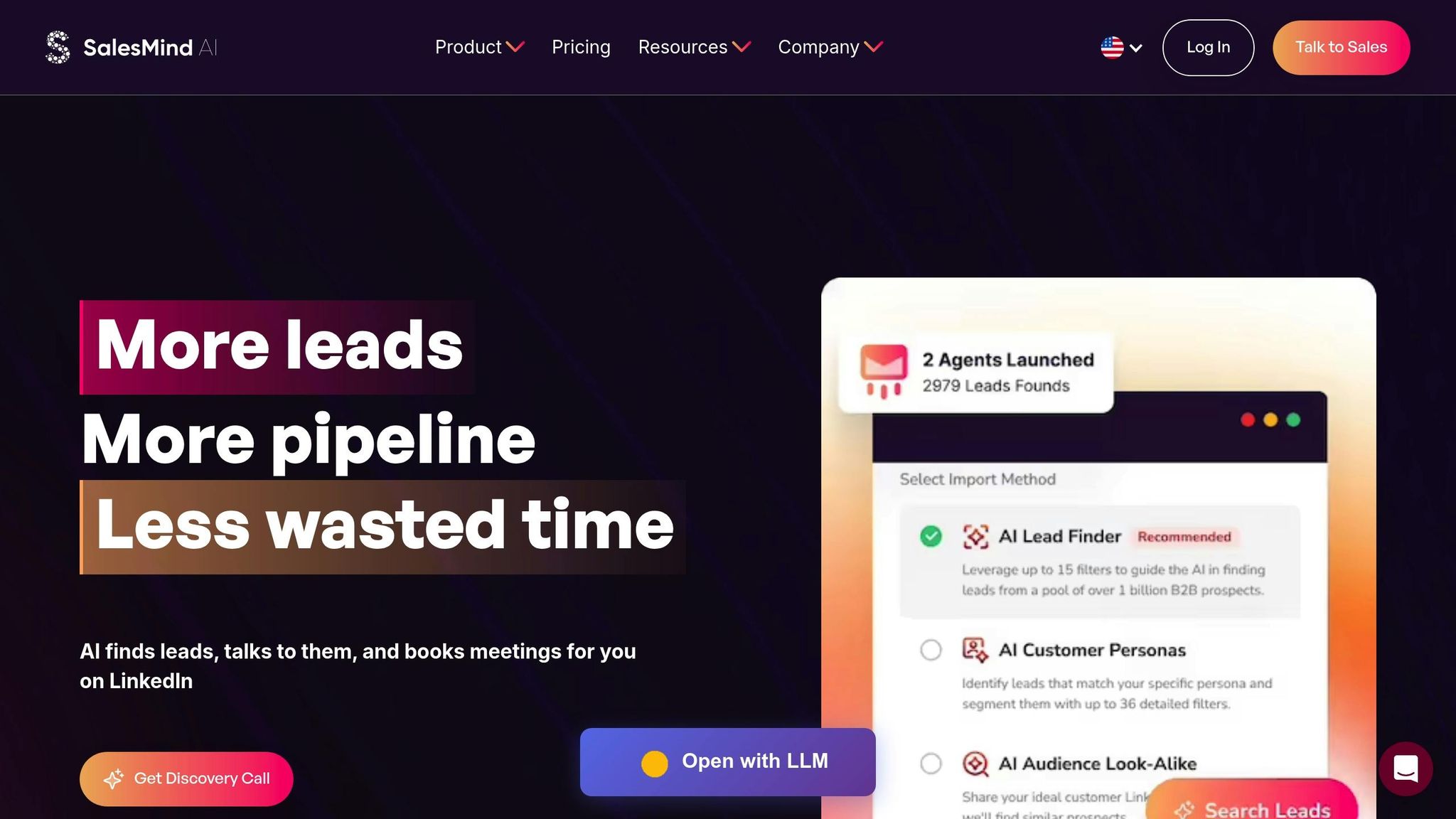
SalesMind AI makes GDPR-compliant LinkedIn outreach easier by automating processes while adhering to data protection principles. The platform integrates seamlessly with LinkedIn, offering AI-driven messaging, advanced lead scoring, and tools to manage consent effectively.
One of its standout features is a centralized AI inbox that tracks replies across multiple LinkedIn accounts. This allows you to monitor consent and objections in real time. If a prospect opts out or requests data deletion, you can update their status in one place, ensuring they are removed from all active sequences. The platform also provides AI-powered responses, reminders, and tagging options to help your team stay organized and compliant.
SalesMind AI’s lead scoring system helps you focus on prospects with higher conversion potential, aligning with GDPR's principle of data minimization. By generating personalized messaging templates and analyzing prospect profiles, the tool ensures your outreach is relevant without collecting unnecessary data.
To maintain compliance when using SalesMind AI, include clear opt-out language in every message. Ensure your privacy notices explain how LinkedIn data is used and provide an easy way for prospects to withdraw consent. Integrate SalesMind AI with your CRM and CMS to synchronize consent preferences across platforms.
Establish a process for quickly handling data access or deletion requests across LinkedIn, your CRM, and SalesMind AI. If you're unsure about compliance, consult a data protection officer or GDPR legal advisor before scaling your outreach efforts [5].
While SalesMind AI offers valuable tools, achieving compliance ultimately depends on how you configure and use the platform. Regularly review LinkedIn’s Data Processing Agreement and update your practices to stay aligned with regulatory requirements [6].
Data Security and User Rights Management
Keeping LinkedIn lead data secure and respecting user rights is a must under GDPR. Once you've set up compliant outreach processes, the next step is safeguarding that data and being ready to act when prospects exercise their rights. This involves collecting only the necessary information, storing it securely, and having clear procedures for handling access and deletion requests. Regular audits can help you identify and fix potential issues before they escalate into violations.
Data Minimization and Storage Security
The GDPR principle of data minimization means you should only collect and keep the personal data needed for your business purpose. For LinkedIn-based sales, this usually includes professional details like name, job title, company, LinkedIn profile URL, and business email. Avoid collecting unnecessary information, such as phone numbers, education history, or profile photos, if they don’t directly support your outreach goals.
Start by mapping out all LinkedIn data flows. Identify every system - like your CRM, email tools, or analytics platforms - that receives this data, and document which fields are collected and why. This can reveal redundant or unnecessary data collection, helping you simplify compliance efforts in case of a breach.
Limit the data fields your tools collect. For instance, if your CRM can sync 30 profile fields but you only need eight for outreach, disable the rest. Use role-based access controls to ensure only relevant team members can view specific lead data. Enforce multi-factor authentication (MFA) for those with export or deletion rights, restrict administrative privileges, and use single sign-on (SSO) to centralize access management.
Make sure your CRM and outreach tools encrypt data both in transit and at rest. Review vendor security documentation and Data Processing Agreements (DPAs) to confirm these protections are in place.
Set clear data retention schedules based on your sales cycle and legal requirements. Automate data purges - for example, delete or anonymize unresponsive leads after 12 months of inactivity, while keeping customer records longer for contractual or tax purposes. Avoid storing LinkedIn data in local spreadsheets or personal files, as these bypass centralized security measures and audit logs.
These security practices not only protect data but also prepare you for efficient handling of Data Subject Access Requests (DSARs) and regulatory audits.
Handling Data Access and Deletion Requests
Processing DSARs is a key part of GDPR compliance. Under GDPR, individuals have enforceable rights, including access to, correction of, and deletion of their personal data. Organizations must respond to DSARs within one month, with the option to extend by up to two months for complex cases, as long as the individual is informed [6]. Missing these deadlines can lead to complaints or fines.
Set up a clear process to handle DSARs. Your privacy notice should explain how LinkedIn profile data is used for B2B outreach, the legal basis for processing it (typically legitimate interest), the types of data collected, and how individuals can exercise their rights. Provide a dedicated contact method, like an email address or web form, for privacy requests. Train your team to recognize and act on these requests immediately.
Verify the requester’s identity with a confirmation link or key profile details. Use a checklist to ensure you locate all data related to the individual across systems like LinkedIn, your CRM, email tools, analytics platforms, backups, and archived exports.
For access requests, compile all relevant personal data, including its source, the purpose of processing (e.g., B2B sales), and any third parties that have access. Make sure responses are consistent across all systems. For deletion requests, halt all outreach immediately upon objection. Instead of deleting the record outright, flag it as "Do Not Contact – GDPR" to prevent accidental reimporting. Retain minimal information, like an email address and opt-out status, as allowed under GDPR. When correcting data, update it consistently across all systems and document the changes.
Although LinkedIn provides its own tools for downloading and deleting data [6], you remain responsible for managing that data in your own systems. As the independent controller of LinkedIn data imported into your CRM or outreach tools, you must handle these requests thoroughly. Keep detailed logs of all DSARs, including dates, actions taken, and resolution times, to demonstrate compliance during audits.
Conducting Regular Compliance Audits
Maintaining GDPR compliance is an ongoing process, not a one-time task. Regular audits are essential to ensure your data security and user rights processes stay up to standard, especially as your operations grow or new tools are added. Plan for at least one privacy and security audit per year, with additional spot checks if your business is scaling quickly or under regulatory scrutiny.
Start your audits by checking that documented data flows align with actual practices. Review retention policies to confirm outdated data is being deleted or anonymized on schedule. For example, if you’re supposed to purge unresponsive leads after 12 months but find records older than two years, that’s a compliance gap to address.
Examine contracts and Data Processing Agreements with LinkedIn and third-party tools. Make sure they meet current GDPR requirements and include Standard Contractual Clauses for international data transfers where necessary [6]. A recent case highlights the importance of this: in October 2024, Ireland's Data Protection Commission fined LinkedIn €310 million for processing personal data for behavioral advertising without proper legal grounds or transparency [6].
Test your DSAR procedures by running mock requests for data access and deletion. Ensure all systems, including backups and archived exports, are compliant. Check for unauthorized tools, like unapproved LinkedIn scraping extensions, and replace them with compliant alternatives [5]. Regularly review access controls to ensure data remains secure.
Conclusion
Navigating LinkedIn sales while staying compliant with GDPR might seem daunting, but it’s entirely possible with the right approach. Remember, GDPR applies to all outreach targeting EU residents, and violations can lead to hefty fines - up to €20 million or 4% of global annual turnover - for issues like lacking a lawful basis or failing to respect data rights[7]. Beyond financial penalties, non-compliance can harm your reputation and even result in LinkedIn account restrictions.
To stay on the right side of GDPR, sales teams need to establish a valid legal basis for their activities, effectively manage large-scale consent, ensure third-party tools meet GDPR standards, and handle requests for data access or deletion promptly. Tackling these challenges head-on is key to creating effective and compliant workflows.
Start by using official LinkedIn APIs and providing clear privacy notices. Build processes that immediately honor opt-out requests and maintain detailed logs of all data-related activities. These practices not only ensure compliance but also prepare you for potential audits.
When selecting tools, prioritize those that support GDPR compliance. Look for features like Data Processing Agreements, encrypted data storage, role-based access controls, and built-in consent management. Solutions like SalesMind AI can simplify this process by automating LinkedIn outreach while focusing on data minimization, encrypted processing, and tracking data subject requests, giving sales teams the confidence to prospect without cutting corners.
Compliance doesn’t stop with tools - it requires ongoing effort. Regularly audit your data flows, retention policies, and vendor contracts, especially when dealing with international transfers. Ensuring agreements like Standard Contractual Clauses are in place is essential for handling cross-border data.
Ultimately, GDPR-compliant operations foster trust. When prospects see that their data is handled responsibly, they’re more likely to engage with your outreach. Compliance isn’t just about avoiding penalties - it’s about building sustainable, trustworthy sales practices that can thrive globally.
FAQs
How can I ensure GDPR compliance when using LinkedIn for sales outreach?
To stay compliant with GDPR while leveraging LinkedIn for sales outreach, it's crucial to focus on safeguarding personal data and securing proper user consent. Always handle personal information transparently and ensure you have a valid legal basis - like consent or legitimate interest - before contacting potential leads.
If you're using tools like SalesMind AI to streamline LinkedIn outreach, make sure the platform aligns with GDPR standards. This includes secure data handling and features for tracking consent. Be sure to provide clear opt-out options in your messages to honor user preferences and adhere to GDPR rules. Regularly assess and update your practices to keep pace with changing data privacy regulations.
How can businesses ensure GDPR compliance when using LinkedIn sales tools?
To stay compliant with GDPR when using LinkedIn sales tools, businesses need to prioritize obtaining and managing user consent properly. Make sure prospects clearly understand how their data will be used and always provide an easy way for them to opt in. It's equally important to securely document this consent and keep it accessible for future audits or verification.
Leverage tools that emphasize data privacy by offering features like automated consent tracking and secure data management. For instance, SalesMind AI helps simplify LinkedIn outreach while staying GDPR-compliant. It automates messaging, streamlines lead qualification, and ensures transparency in how data is handled, making it easier for businesses to meet privacy requirements.
What are the risks of using third-party tools for LinkedIn sales, and how can they be managed?
Using third-party tools for LinkedIn sales comes with some risks, including breaking LinkedIn's terms of service, violating data privacy laws like GDPR, and exposing sensitive information to potential breaches. These issues can result in account restrictions, hefty fines, or even the loss of valuable customer data.
To reduce these risks, opt for tools that emphasize compliance with GDPR and have robust data security protocols. Make sure the tool explicitly obtains user consent for handling personal data and integrates securely with LinkedIn's platform. It's also a good idea to routinely review your practices to ensure they align with LinkedIn's policies and current privacy regulations.
 JG
JG