AI vs. Manual Sales Pipeline Management
AI wins on pipeline management because it eliminates the admin that slows manual processes down. This comparison covers forecasting accuracy, response time, personalization at scale, and cost per outcome. Manual management still has a role in complex deals, but for high-volume pipelines, AI handles the repetitive work faster and with fewer errors.
 Julien Gadea
AI wins on pipeline management because it eliminates the admin that slows manual processes down. This comparison covers forecasting accuracy, response time, personalization at scale, and cost per outcome. Manual management still has a role in complex deals, but for high-volume pipelines, AI handles the repetitive work faster and with fewer errors.
AI wins on pipeline management because it eliminates the admin that slows manual processes down.
This comparison covers forecasting accuracy, response time, personalization at scale, and cost per outcome.
Manual management still has a role in complex deals, but for high-volume pipelines, AI handles the repetitive work faster and with fewer errors.
Table of Contents
AI vs. Manual Sales Pipeline Management boils down to efficiency, accuracy, and scalability. Manual methods rely on human effort, spreadsheets, and basic tools. They work for small teams but are time-consuming, prone to errors, and hard to scale. AI automates repetitive tasks, improves forecasting, and handles large volumes with precision. Companies using AI report shorter sales cycles, higher win rates, and more time for selling.
Key Points:
- Manual Management: Heavy on admin work, error-prone, and limited in scale. Works for small teams with low lead volume.
- AI-Powered Management: Automates tasks, improves accuracy, and scales easily. Ideal for growing businesses handling high lead volumes.
Quick Comparison:
| Feature | Manual Approach | AI-Powered Approach |
|---|---|---|
| Time Spent Selling | 28–33% of workweek | Significantly increased |
| Lead Response Time | 42+ hours | Under 1 minute |
| Forecast Accuracy | 60–75% | 85–95% |
| Scalability | Limited | High |
| Error Rate | 4–7% | 1–2% |
AI isn't about replacing humans - it's about freeing them to focus on selling and building relationships. Start small, clean your data, and test AI in one area to see results. AI can transform sales outcomes, but success depends on quality data and thoughtful implementation.
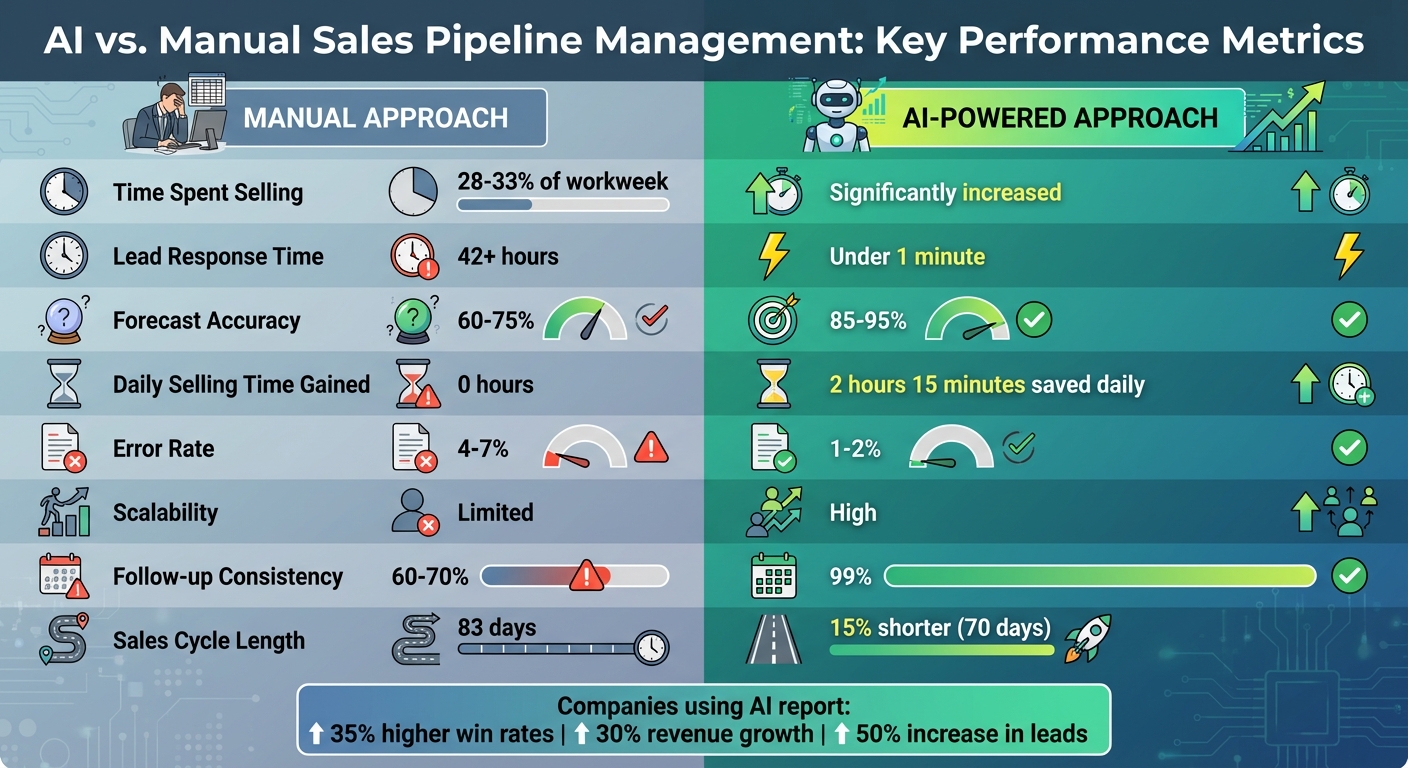 Sales Pipeline Management: Key Metrics Comparison" style="max-width:100%; margin:1em auto; display:block;">
AI vs Manual Sales Pipeline Management: Key Metrics Comparison
How to Boost Your Sales With AI Automation? (Complete Guide, 2025)
How Manual Sales Pipeline Management Works
Manual pipeline management is the old-school way of tracking prospects and closing deals. It leans heavily on human effort, spreadsheets, and basic CRM tools that need constant updates. Sales reps manually log every interaction, research prospects one by one, and move deals through the pipeline step by step [6].
The process kicks off with prospecting, where reps spend 15–20 minutes per lead combing through digital resources to find potential customers [8]. Once a lead is identified, they rely on their judgment to qualify it based on factors like budget, authority, and need [1]. All activities, from emails to phone calls, are tracked manually across disconnected tools like spreadsheets, email chains, and basic CRM platforms [7].
This approach comes with a hefty administrative load. Sales teams dedicate about 34% of their time to tasks like data entry and pipeline updates [6]. The rest of their time is spent updating spreadsheets, setting reminders, and ensuring contact details are accurate.
"Manual processes kill revenue. Plenty of professional services firms lose deals simply because their systems can't keep up."
– Michael Welch, Author, HubSpot [9]
Manual data entry is also prone to errors. In fact, 94% of businesses report inaccuracies in their sales, marketing, and customer service data, with nearly half of those errors stemming from manual input [6]. When deal information is scattered across multiple tools, leadership struggles to identify risks early. Forecasting becomes guesswork, and 10% of sales leaders regularly miss their forecasts by at least 25% [8].
Main Features of Manual Pipeline Management
At its core, manual pipeline management relies on human oversight and repetitive administrative work. Sales reps often spend up to 20 hours a week on these tasks [6]. The key elements include:
- Using spreadsheets (like Excel or Google Sheets) to track lead status.
- Manually researching prospects and logging every interaction.
- Handling proposals, negotiations, and contract updates manually [6][7][8][1].
This setup leads to fragmented data and limited visibility. When information is spread across various tools and documents, it becomes nearly impossible for leadership to get a clear, real-time view of the pipeline [9][8]. In fact, 75% of businesses believe they’re losing revenue because of poor pipeline management [6].
Take the example of Sandler, a sales training organization. In October 2025, they switched from using six separate tools to a unified CRM. The result? A 50% increase in CRM adoption year-over-year. Jackson Mead, an Enterprise Account Executive at Sandler, explained:
"Understanding where a prospect is in the buyer's journey has made conversation with them a lot more relevant. We're able to meet prospects where they are rather than just taking a shot in the dark."
– Jackson Mead, Enterprise Account Executive, Sandler [9]
When Businesses Use Manual Methods
Manual pipeline management can work for small teams, especially those operating on tight budgets. For businesses managing a low volume of deals - say, 10–20 per month with a two-person sales team - a well-organized spreadsheet might be enough [7]. Spreadsheets are simple, inexpensive, and don’t require the upfront investment of more advanced software [9].
However, as companies grow, the cracks in this system start to show. Expanding into new markets, adding service lines, or handling a higher volume of leads makes spreadsheets unwieldy [9]. Manual processes force teams into a reactive mode, where reps spend more time logging activities than building relationships, and managers waste hours cleaning up data instead of coaching their teams [9].
The limitations are clear. While 80% of leads need five to twelve follow-ups before making a decision, only 8% of reps follow up more than five times [8]. These inefficiencies highlight why businesses eventually turn to automation - tools that can handle scale and complexity without the bottlenecks of manual methods.
How AI-Powered Sales Pipeline Management Works
AI-powered pipeline management takes the hassle out of manual tasks by automating data logging and prospect research. Using machine learning, it predicts the likelihood of closing deals by analyzing historical sales data, customer interactions, and market trends. This shift away from traditional, time-consuming tracking methods helps sales teams focus on what they do best - selling [11][4].
AI agents can even make decisions on their own to complete workflows. For instance, if a prospect replies to an email saying they won’t be ready to move forward until next quarter, the AI can automatically schedule a follow-up at the right time [12]. Natural Language Processing (NLP) takes it a step further by analyzing sales calls and emails in real time, identifying customer sentiment, buying signals, and possible objections [11][5].
By handling repetitive tasks, AI frees up sales reps, who typically spend 67–72% of their time on administrative work. This boost in efficiency not only increases productivity but also improves forecasting accuracy from 66% to 96% [2][5][11]. On top of that, AI-generated personalized messages outperform traditional methods, achieving a reply rate of 5–8%, compared to 4–6% for manual personalization and just 1.5–2.5% for generic templates [12].
"AI should do the repetitive work at machine speed, while humans own judgment, tone, and the moments that actually build trust."
– SalesHive [2]
Core Features of AI Pipeline Management
AI pipeline management brings several standout features to the table, making it a game-changer for sales teams:
- Automated Lead Scoring: By analyzing millions of data points, AI evaluates prospects based on factors like firmographics, intent signals, and behavior. This helps prioritize leads most likely to convert.
- Personalized Messaging: AI dives into a prospect’s digital footprint - such as recent news, social media activity, and website behavior - to craft tailored messages at scale. While humans might research 20 prospects a day, AI can analyze thousands in just minutes [3].
- Real-Time Data Analysis: The system keeps CRM records updated by pulling actionable insights from emails and calls, ensuring data stays accurate and useful [5].
- Predictive Forecasting: Machine learning models assess historical deal patterns to predict which opportunities are likely to close and flag deals at risk. For example, if a prospect’s engagement drops or their sentiment turns negative, the system raises the alarm. One B2B SaaS company saw a 27% reduction in churn and uncovered $2.3 million in hidden pipeline within six months using AI-driven insights [11].
Unlike traditional automation, which relies on rigid rules and static templates, AI-powered systems adapt to context, making smarter, personalized decisions [12].
AI Tools in Action
SalesMind AI is a great example of how businesses can leverage AI for sales. This platform automates LinkedIn outreach and B2B lead generation, handling everything from personalized messaging to lead qualification and follow-ups. Its unified inbox consolidates conversations across channels, while advanced lead scoring ensures sales teams focus on the most promising prospects.
The system also tracks key trigger events - like funding announcements or leadership changes - and uses them to time outreach perfectly. Its ability to generate context-aware replies means a single AI agent can manage the workload of three to five full-time Sales Development Representatives [12][13].
Speed matters in sales. AI agents can respond to inquiries around the clock, and research shows that responding within five minutes is 21 times more effective for conversions than waiting 30 minutes [12]. For instance, in 2025, Lattice’s sales team used Dock’s AI to analyze Gong call recordings and build compelling business cases. This approach led to a 25% year-over-year increase in late-stage win rates [5].
Time Savings and Workflow Speed: Manual vs. AI
Sales reps typically spend just 28–33% of their week on actual selling, with administrative tasks eating up the rest of their time [2][5]. AI drastically reduces this workload, saving an impressive 2 hours and 15 minutes every day. That translates to about three extra months of selling time each year. Even more striking, lead response times drop from over 42 hours to less than a minute with AI assistance [14].
Real-world examples back up these efficiency gains. In 2025, Andrew Romanyuk, Co-Founder of Pynest, used AI agents to analyze prospect behavior by looking at job postings and tech stacks. This cut initial lead screening time by 32% and increased pipeline velocity by 22% [5]. Another example comes from a mid-market SaaS vendor, where AI-powered nurture emails helped reduce the average deal time by 31% and improved win rates by 18% [14].
"AI is becoming the hardest-working assistant in sales, taking care of the repetitive administrative tasks that have long demanded valuable time from sales professionals – time that could be better spent building relationships." – Sean Evers, VP of Sales & Partner, Pipedrive [15]
Efficiency Metrics Comparison
The table below showcases how AI stacks up against traditional manual processes:
| Metric | Manual Approach | AI-Powered Approach |
|---|---|---|
| Daily Selling Time Gained | 0 hours | 2 hours 15 minutes [14] |
| Lead Response Time | 42+ hours (average) [14] | Under 1 minute [14] |
| Follow-up Consistency | 60–70% [14] | 99% [14] |
| Sales Cycle Length | 83 days [14] | 15% shorter [14] |
| Data Accuracy | 93–96% (4–7% error rate) [14] | 99% [14] |
| Time Spent Selling | 28–33% of work week [2][5] | Significantly increased |
AI-driven automation doesn’t just save time - it transforms sales outcomes. Companies using these tools report a 15% shorter sales cycle on average [14]. Take the example of a pharmaceutical sales rep who used AI-generated prospect briefs. Their average sales cycle dropped from 14 weeks to just 8 weeks, a 43% reduction in time-to-close [14]. These time savings directly translate into faster deal closures and improved overall performance.
Accuracy and Forecasting Performance
Traditional forecasting methods often fall short - only 20% of sales teams achieve more than 75% accuracy, while 79% miss forecasts by over 10%, and nearly 90% of spreadsheets contain errors [16][17]. These shortcomings highlight the inherent limitations of manual forecasting approaches.
AI, however, transforms this landscape. Companies using AI-powered forecasting achieve accuracy rates between 85% and 95%, with some even reaching 98% [16][17]. The key difference lies in how data is handled. Traditional methods rely on static snapshots that quickly become outdated. In contrast, AI systems continuously update predictions in real-time, incorporating live market signals, customer engagement metrics, and economic indicators [16][17].
The impact of AI-driven forecasting is evident in real-world examples. In 2025, MUFG reported a 25% increase in conversion rates, a 30% reduction in sales cycles, and 300% more qualified leads after adopting AI. Similarly, Danone reduced forecast errors by 20% and cut lost sales by 30% [16][17].
AI eliminates the guesswork by replacing subjective judgment with data-driven probability scores, addressing the 45% trust gap in manual forecasting accuracy [16]. Human bias and overconfidence often distort manual predictions. On the other hand, machine learning models like XGBoost uncover complex patterns in historical data - such as how marketing spend and consumer sentiment together influence sales - patterns that human analysts might overlook [16].
Error Rates and Prediction Accuracy
The stark difference between manual and AI-powered forecasting becomes evident when comparing key metrics:
| Metric | Manual Methods | AI-Powered Solutions |
|---|---|---|
| Forecast Accuracy | 60–75% [16][17] | 85–95%+ [16][17] |
| Error Rate (MAPE) | 10–25% [16] | 5–15% [16] |
| Lead Qualification Time | High (manual research) [3] | 30% reduction [16] |
| Organizations Missing Forecast by 10%+ | 79% [16] | Much lower |
| Data Reliability | 90% of spreadsheets contain errors [16] | 57% of CFOs report fewer errors [16] |
| Update Frequency | Static snapshots [16] | Real-time updates [16][17] |
These measurable improvements highlight how AI-powered forecasting strengthens sales performance. For example, IBM experienced a 25% increase in sales leads and a 30% improvement in campaign success rates after implementing AI-driven lead scoring. By analyzing behavioral data, the system helped focus efforts on prospects most likely to convert, replacing slower manual qualification processes. Similarly, New Relic achieved a 98% accuracy in consumption forecasting using Aviso's AI platform, enabling more precise revenue planning and better resource allocation [16][17].
sbb-itb-817c6a5
Handling Volume and Personalization at Scale
Managing pipelines manually becomes even more challenging when dealing with large volumes. For example, SDRs are typically limited to sending just 50 personalized emails a day - about 1,000 per month - creating a natural cap on pipeline growth, no matter how many leads are generated [12].
Over time, the quality of manual outreach tends to drop. Early emails might achieve reply rates of 6.2%, but later ones often fall to 3.1% or even as low as 1–2% when generic templates are used [12].
The administrative load also eats into selling time. Shockingly, 44% of salespeople give up on a lead after just one follow-up, even though 80% of sales require at least five touches [12].
Manual Method Limitations at Scale
The biggest issue with manual pipeline management is that it’s constrained by human capacity, not market potential. SDRs spend 5–10 minutes researching each prospect, which limits them to sending 20–30 tailored emails per day [12][13]. On average, an SDR can handle about 15–20 leads daily, factoring in research, personalized outreach, and admin tasks. For a team of five, that’s roughly 100 qualified leads per day [19]. When lead volumes exceed this limit, quality inevitably declines.
Response times also take a hit. Manual processes often result in delays of 24–48 hours between an inquiry and a response. This is a critical issue because the first company to respond wins the deal 35–50% of the time [19]. On top of that, manual lead qualification becomes a bottleneck, requiring about 45 minutes per lead to complete all necessary tasks [19].
These inefficiencies highlight why automation is no longer optional but essential.
How AI Enables Scale and Customization
AI-powered systems eliminate these bottlenecks by automating both research and personalization. AI can analyze thousands of prospects in mere seconds, enabling it to craft tailored messages for over 500 leads daily - a task that would take a human team weeks to accomplish [12][13].
A great example of this comes from 2025, when Pynest Co-Founder Andrew Romanyuk used AI agents to analyze company behaviors through open sources like publications, job postings, and tech stacks. This approach cut initial lead screening time by 32%, allowing the team to focus on prospects showing genuine buying signals [5]. Similarly, Edward Arnold, Founding Account Executive at Flowla, leveraged AI to create personalized recap emails after discovery calls. This saved 30 minutes per call and boosted demo-to-deal conversion rates by 12% [5].
The difference in scale is staggering. A single AI outreach agent can handle the workload of three to five full-time SDRs, monitoring up to 15,000 leads by continuously tracking buying signals and engaging only when prospects are ready [13]. AI also excels at hyper-personalization, using real-time data to analyze dozens of data points per prospect. This allows it to craft messages that address specific business challenges, moving beyond generic templates [3][13].
"AI should do the repetitive work at machine speed, while humans own judgment, tone, and the moments that actually build trust."
- SalesHive [2]
| Metric | Manual SDRs | AI Agents |
|---|---|---|
| Outreach Volume | 50–100 touches/day | 1,000–5,000 touches/day [12] |
| Research Time | 5–10 minutes per prospect | Automated (seconds) [12] |
| Personalization Capacity | 20–30 emails/day [13] | 500+ emails/day [13] |
| Reply Rate | 3–5% | 4–7% [12] |
| Meeting Cost | $200–$300 | $30–$60 [12] |
| Availability | Business hours only | 24/7 [12] |
This table highlights how AI-driven outreach offers unmatched scalability.
But it’s not just about volume. Companies using AI for lead management report up to a 50% increase in leads and appointments [3]. AI-driven engagement can also boost sales-qualified leads by 50% [18]. Even more compelling, teams that incorporate AI into their revenue workflows see up to 35% higher win rates and nearly 30% greater revenue growth compared to those that don’t [2].
Pros and Cons of Each Approach
When deciding between manual methods and AI-driven solutions, it's essential to weigh their distinct advantages and limitations. Each approach has its strengths, and understanding these can help you determine the best fit - or combination - for your business needs.
Manual processes excel in areas where building trust and personal relationships are critical. For industries like wealth management, professional services, and commercial real estate, success often hinges on personal connections that AI simply cannot replicate [21]. Human representatives bring unique strengths to the table, such as interpreting body language, adapting messages based on emotional cues, and weaving personal stories into negotiations. These skills make humans particularly effective in contexts requiring creativity and emotional intelligence [21][10].
However, manual methods come with significant drawbacks. For instance, 64% of sales professionals spend up to two hours a day on data entry, and traditional forecasting methods often miss targets by 10–25% due to human bias [22][21]. Scaling these processes requires more staff, training, and infrastructure, which can be resource-intensive. Additionally, about 70% of sales professionals report limited visibility into their sales pipeline when relying on traditional approaches [22].
AI-powered systems address many of these challenges. They can handle thousands of engagements simultaneously without increasing headcount, making them highly scalable. Implementation is also quicker - taking about four weeks compared to 12 weeks for traditional CRM systems - with ROI checkpoints arriving much sooner (12 weeks versus 36 weeks) [20]. Businesses that adopt AI in sales report impressive results, including a 30% increase in revenue, a 25–30% improvement in conversion rates, and a 20–25% reduction in sales cycles [22]. AI also frees up 10–15 hours per week for each sales representative by automating repetitive tasks [21].
That said, AI has its limitations. Its performance relies heavily on the quality of the data it's fed. Poor data can lead to scaled errors, compounding inefficiencies rather than solving them [21][22]. Furthermore, AI struggles with the subtleties of selling, such as navigating complex negotiations and fostering deep client relationships - areas where human expertise remains indispensable.
To make these differences clearer, here's a side-by-side comparison:
Side-by-Side Comparison
| Feature | Manual Pipeline Management | AI-Powered Pipeline Management |
|---|---|---|
| Capacity | Limited (50–100 contacts/day per rep) | Unlimited (thousands of simultaneous engagements) |
| Personalization | High-touch personalization | Hyper-personalization at scale via data analysis |
| Speed of Setup | 12 weeks (Traditional CRM) [20] | 4 weeks (AI-Augmented CRM) [20] |
| Forecast Accuracy | Subjective; error rate 10–25% [21] | Predictive; 15–20% boost in accuracy |
| Time to ROI | ~36 weeks [20] | ~12 weeks [20] |
| Primary Strength | Relationship building & complex negotiations [21] | Efficiency, speed, and data-driven scaling [21] |
| Primary Weakness | Administrative burden & slow scaling | Sensitive to data quality and implementation complexity |
| Best For | High-value enterprise accounts, consultative selling | Transactional SMB sales, high-volume outreach |
This comparison highlights the trade-offs between human-centered and AI-driven approaches. While humans excel in relationship-building and nuanced selling, AI provides unmatched scalability and efficiency. The best choice depends on your specific business goals and operational priorities.
SalesMind AI: LinkedIn-Powered Pipeline Automation
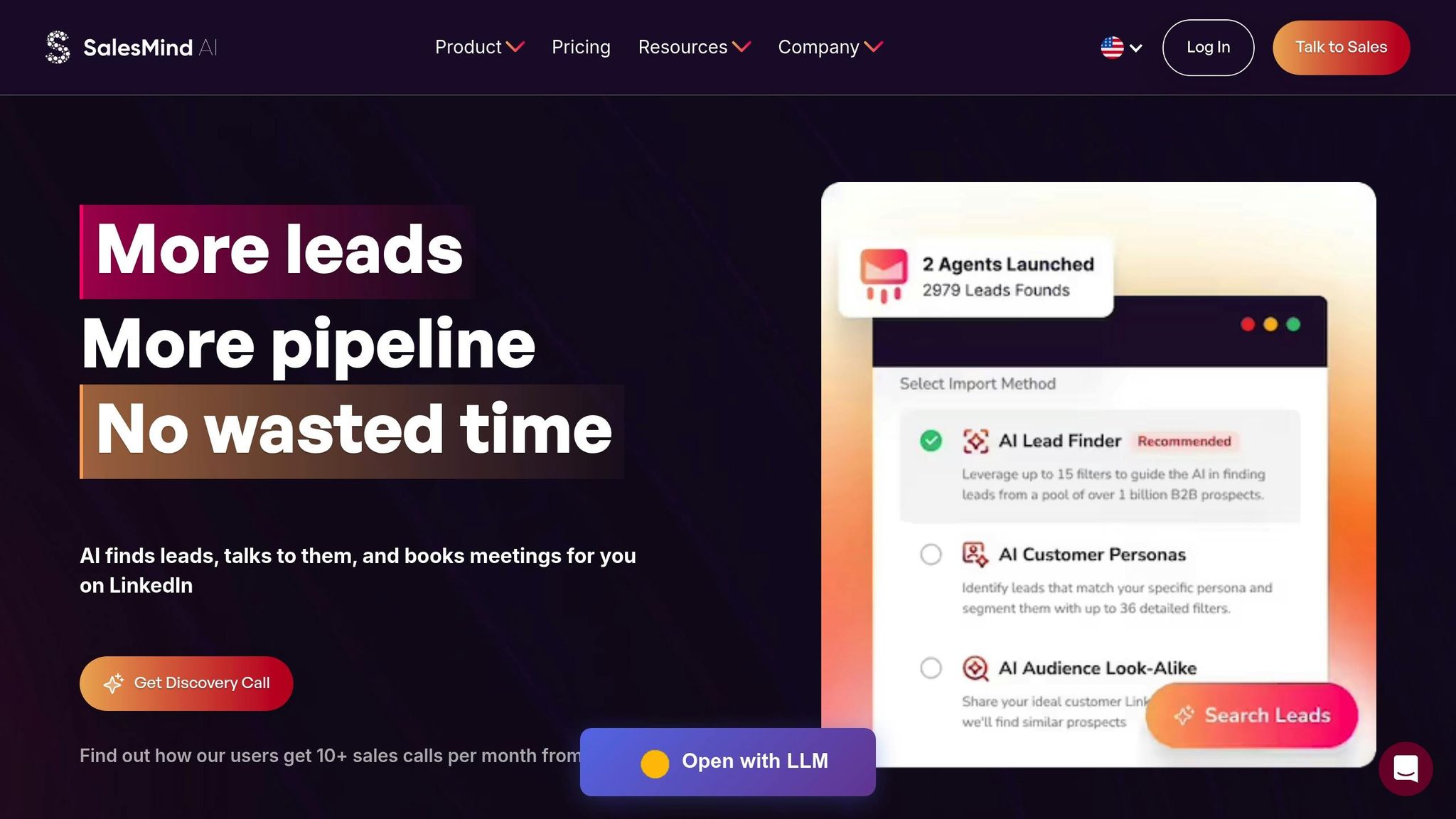
SalesMind AI is redefining how sales teams manage their pipelines by leveraging LinkedIn automation. This platform tackles some of the biggest challenges in sales - like time-intensive lead generation, endless data entry, and the chaos of follow-up coordination - by offering a streamlined, AI-driven solution.
SalesMind AI Features
At its core, SalesMind AI integrates seamlessly with LinkedIn, using automation to handle outreach while keeping interactions personal. One standout feature is its AI-powered unified inbox, which merges conversations from multiple LinkedIn accounts into one place. This means no more switching profiles or manually tracking interactions - everything is organized for smoother communication.
Another key feature is its advanced lead scoring system, which replaces guesswork with data-backed insights. Instead of relying on subjective judgment, the platform evaluates leads based on factors like engagement trends, company details, and behavioral cues. The results speak for themselves: companies using AI for sales analysis achieve forecasting accuracy of up to 96%, compared to just 66% for those relying solely on human intuition [11]. This scoring system ensures sales teams can focus their energy on the most promising opportunities.
SalesMind AI also keeps your CRM up to date in real time, provides actionable analytics for better visibility, and automates follow-ups so no lead slips through the cracks. With these tools, teams can boost both their efficiency and conversion rates.
Results with SalesMind AI
Switching to AI-powered pipeline management isn't just about convenience - it delivers real results. Businesses using AI-driven lead scoring report a 30% improvement in conversion rates compared to traditional manual methods [11]. By automating time-consuming tasks, SalesMind AI gives sales teams more time to focus on what they do best: selling. Plus, its user-friendly setup makes it easy to transition to an AI-driven workflow. As businesses scale, SalesMind AI ensures they can maintain the perfect balance of personalization and precision.
Moving from Manual to AI Pipeline Management
Shifting from manual processes to AI-driven pipeline management is most effective when done gradually, over three to six months. Start small - focus on a single team or process before scaling across the entire company. This phased approach allows you to address key data issues and refine processes before fully implementing AI tools [3].
The first step? Clean up your data. Manual systems often harbor messy data - duplicate entries, inconsistent naming conventions, or outdated information. Without fixing these issues, AI will amplify those problems far quicker than any human can keep up. Take the time to standardize critical fields like industry, company size, and account ownership before introducing automation.
Next, identify the biggest bottleneck in your pipeline. Analyze six to twelve months of pipeline data to figure out where deals tend to stall - maybe it’s between the Lead and MQL stages. Start small by applying AI to address that specific pain point. Quick wins, like automated lead scoring or follow-up reminders, can demonstrate value early on without disrupting your entire workflow [3].
To ease the transition, run a parallel test for 30 to 60 days. Use AI recommendations alongside your manual processes and compare metrics like conversion rates and deal velocity. This side-by-side comparison helps your team see the benefits of AI without requiring them to abandon familiar workflows. Encourage your team to think of AI as a co-pilot - handling repetitive tasks like research and data entry - so they can focus on building relationships and making strategic decisions.
"AI should do the repetitive work at machine speed, while humans own judgment, tone, and the moments that actually build trust." – SalesHive [2]
Finally, integrate your AI tool with your existing CRM to create a unified view of your prospects. This minimizes manual errors, prevents data silos, and ensures a smoother workflow [10]. With clean data, a step-by-step rollout, and proper training, you can transition to AI without compromising the human touch that drives trust and connection.
Choosing the Right Pipeline Management Approach
Deciding between manual and AI-powered pipeline management boils down to one question: how much time is your team spending on selling versus getting bogged down in administrative tasks? Right now, sales reps dedicate only 28–33% of their workweek to actual selling. The rest? It’s eaten up by CRM updates, data entry, and other admin work [2][5]. AI can eliminate this "hidden tax", automating repetitive tasks and freeing up as much as 20 hours per week for each rep [23][13].
For small teams with straightforward pipelines and low deal volume, manual methods might suffice. But as your business grows, these processes can quickly become a roadblock. Take email outreach as an example: while a human rep might craft 20–30 personalized emails in a day, AI can scale that effort to over 500 hyper-personalized messages [13]. The results speak for themselves - companies integrating AI into their sales processes report up to 35% higher win rates and nearly 30% more revenue growth compared to those sticking with manual approaches [2]. It’s clear that scaling effectively calls for an AI-driven strategy.
However, data quality can make or break your AI initiatives. A messy CRM filled with duplicate or inconsistent entries will only amplify problems when AI starts processing that information. The solution? Start by cleaning up your data. Then, launch a 90-day pilot program targeting a specific bottleneck, like lead scoring or automated follow-ups [2][5]. This approach not only builds team confidence but also provides measurable ROI before committing to a full rollout.
To tackle these challenges, integrated solutions become essential. For instance, SalesMind AI simplifies scaling LinkedIn outreach by automating personalized messaging and lead qualification - without losing the human touch.
The most effective approach combines the power of AI with human expertise. It’s not about replacing reps with AI but empowering them. Let AI handle the grunt work - research, data entry, and repetitive tasks - so your team can focus on strategy and building relationships. Regularly audit your pipeline for inefficiencies, clean your data, and deploy AI where it can deliver quick wins. Businesses that thrive will be the ones treating AI as a co-pilot, working alongside their reps to achieve better outcomes.
FAQs
How does AI enhance the accuracy and efficiency of sales pipeline management?
AI brings a new level of accuracy and efficiency to sales pipelines by automating tedious tasks like lead qualification, follow-ups, and data entry. This not only cuts down on human error but also keeps pipeline data accurate and current. By taking over these repetitive duties, AI frees up sales teams to focus on what truly matters - building meaningful connections with potential customers.
On top of that, AI-powered tools offer predictive analytics and sophisticated lead scoring. These features help teams prioritize leads more effectively and make revenue forecasts with improved precision. Armed with these insights, businesses can refine their sales processes, sharpen their targeting, and confidently scale their operations.
What challenges might arise when switching from manual to AI-driven sales pipeline management?
Switching from manual methods to AI-driven sales pipeline management isn't without its challenges. One of the most significant obstacles is blending AI systems into existing workflows. This often means tweaking established processes and infrastructure, which can feel like a disruption to team members who are comfortable with manual approaches - or even skeptical about the changes AI might bring.
Another key challenge lies in maintaining high-quality and consistent data. AI systems thrive on accurate information to generate reliable insights and automate tasks effectively. If the data is incomplete or messy, the system’s performance can suffer. Beyond that, businesses may need to allocate time and resources for training and change management. Sales teams need to not only understand the technology but also feel confident in using it.
Tackling these hurdles calls for clear communication, thoughtful planning, and ongoing support. With the right approach, the transition can be smoother and more rewarding for everyone involved.
Can AI effectively personalize sales outreach?
Yes, AI has the power to make sales outreach feel personal while automating the process. By crafting tailored messages and follow-ups based on a prospect's behavior and preferences, businesses can reach more people without losing that human touch that drives connections.
Take tools like those from SalesMind AI, for example. They analyze data to predict what customers might need and create relevant, targeted communication. This approach doesn’t just save time - it makes interactions more meaningful and effective. By blending automation with smart, data-driven insights, AI helps businesses scale their outreach while keeping it personal and engaging.
 JG
JG