How AI Tracks Lead Engagement in Follow-Ups
AI monitors email, LinkedIn, website visits and calls to score leads, automate personalized follow-ups, and prioritize high-intent prospects for faster conversions.
 Julien Gadea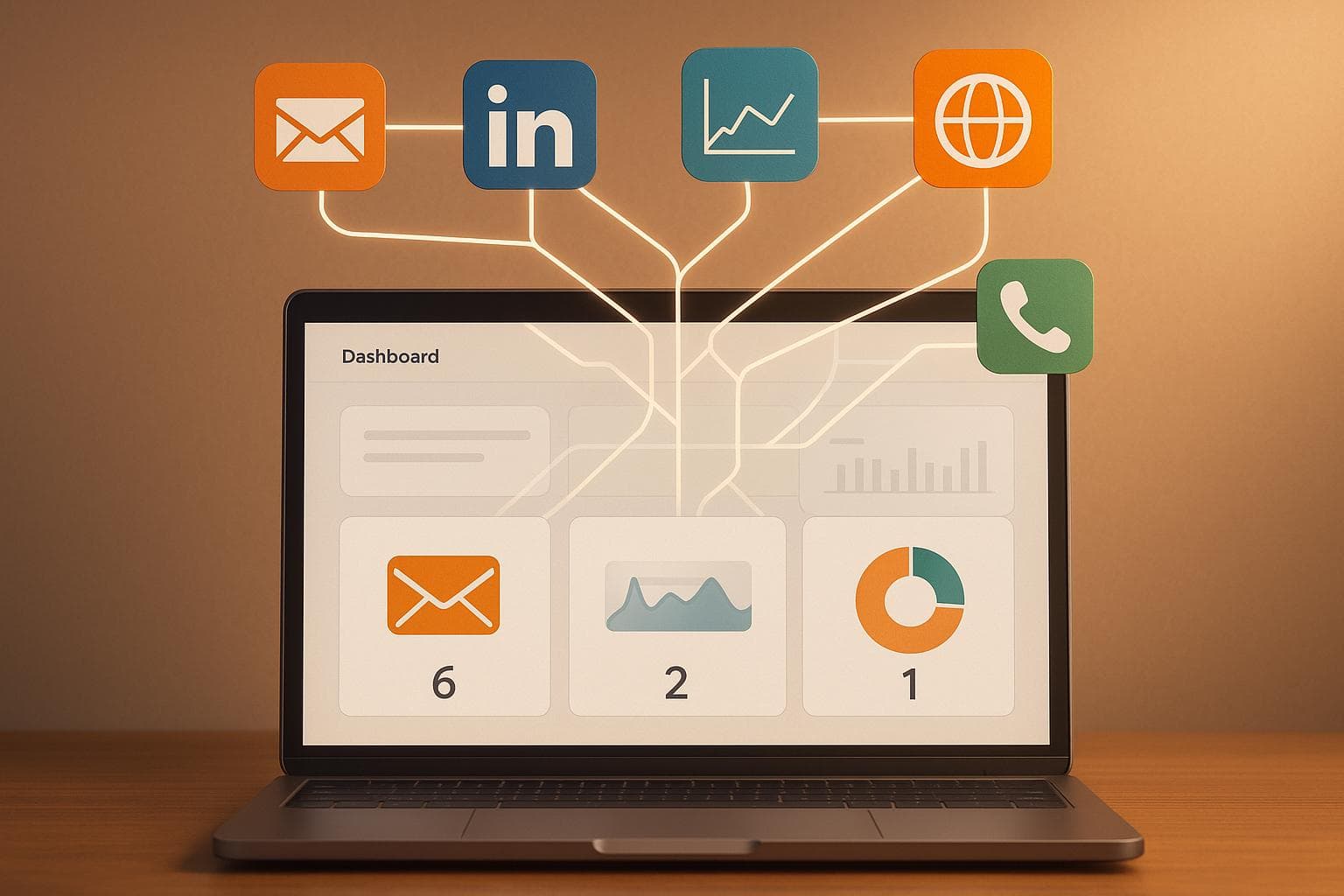
AI monitors email, LinkedIn, website visits and calls to score leads, automate personalized follow-ups, and prioritize high-intent prospects for faster conversions.
AI-driven lead engagement tracking helps sales teams identify and prioritise high-potential leads by analyzing real-time data from emails, LinkedIn, website visits, and calls.
Tools like SalesMind AI automate follow-ups, score leads based on behavior, and provide insights to improve outreach.
Key benefits include: AI keeps a close eye on LinkedIn outreach responses, tracking key metrics that shape follow-up strategies.
For instance, it uses pixel tracking and API integration to monitor InMail opens, embedded link trackers to track clicks on links or CTAs, and inbox monitoring to capture replies.
AI-driven lead engagement tracking helps sales teams identify and prioritise high-potential leads by analyzing real-time data from emails, LinkedIn, website visits, and calls. Tools like SalesMind AI automate follow-ups, score leads based on behavior, and provide insights to improve outreach. Key benefits include:
How AI Tracks and Converts Lead Engagement Data Into Sales Insights
Engagement Metrics AI Tracks
Message Interaction Metrics
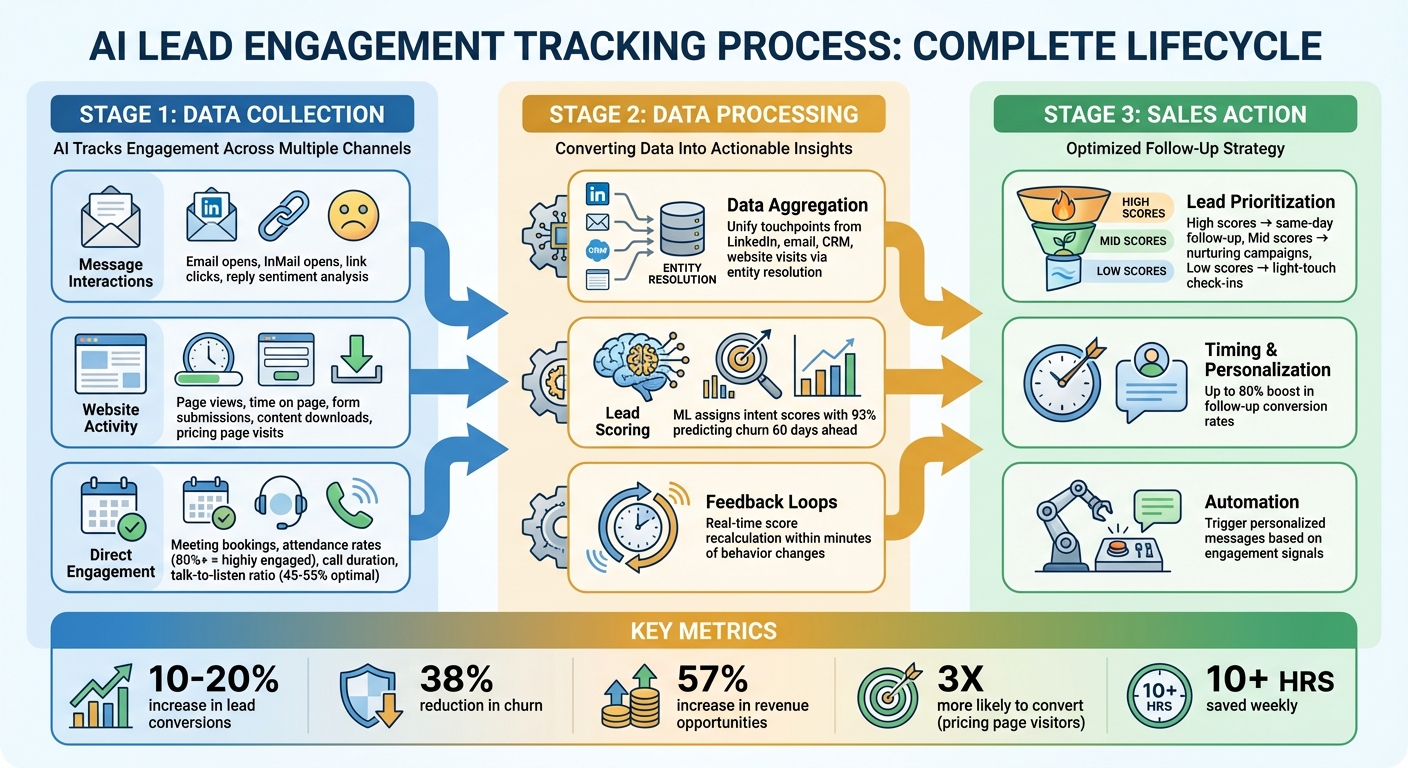
AI keeps a close eye on LinkedIn outreach responses, tracking key metrics that shape follow-up strategies. For instance, it uses pixel tracking and API integration to monitor InMail opens, embedded link trackers to track clicks on links or CTAs, and inbox monitoring to capture replies. Through natural language processing (NLP), it even analyzes response sentiment, evaluating tone and keywords to determine whether a prospect is genuinely interested or just being polite. By analyzing interactions across email and messaging platforms, AI identifies which communication channels prospects prefer - leading to a 10–20% boost in response rates[2]. This approach not only highlights who is engaging but also uncovers the depth of their interest.
Website and Content Engagement
AI also dives into website and content activity to assess digital behavior. Metrics like page views, time spent on each page, form submissions, and content downloads are tracked through integrated analytics. These data points help identify patterns that inform follow-up timing and personalization. For example, if a prospect visits your pricing page three times in one week, AI flags this as a high-intent signal, indicating they’re three times more likely to convert[2]. Companies leveraging AI for website engagement insights have seen a 38% drop in churn by responding quickly to strong signals while deprioritizing leads that show minimal interaction or bounce quickly[2].
Meeting and Call Engagement
AI doesn’t stop at digital signals - it also evaluates direct interactions like meetings and calls. It tracks booked meetings, attendance rates, call duration, and even talk-to-listen ratios to gauge genuine interest and prioritize follow-ups. For instance, prospects who attend over 80% of scheduled meetings and maintain a balanced talk-to-listen ratio of 45–55% are seen as highly engaged[2]. AI transcribes calls to calculate these ratios, revealing that active participants - those who ask questions and share challenges - are far more likely to convert. After every meeting or call, the system updates lead scores instantly, allowing sales teams to follow up with precise timing and relevance[4].
How AI Converts Engagement Data Into Insights
Data Aggregation and Unification
AI takes engagement metrics to the next level by piecing together data from various touchpoints to create detailed lead profiles. It pulls information from sources like LinkedIn profile views, email interactions, CRM stages, and website visits. Through a process called entity resolution, AI matches elements like email addresses or company domains to connect these scattered data points. For example, one AI tool consolidates interactions from email, SMS, chat, and voice into real-time behavioral profiles. This approach adapts outreach strategies based on preferred communication channels, boosting lead conversion rates by 10–20% [2]. SalesMind AI leverages this method with its unified AI Inbox, allowing sales teams to monitor every lead interaction across multiple lists and sequences in real time.
Scoring and Intent Prediction
Once the data is unified, AI assigns scores to engagement behaviors, predicting the likelihood of conversion. Machine learning identifies patterns, linking specific actions to intent levels. For instance, completing onboarding steps within the first week can signal that users are three times more likely to convert [2]. Some AI systems achieve up to 93% accuracy in predicting churn up to 60 days in advance by analyzing factors like login frequency and session depth. These patterns are converted into intent scores, revealing opportunities that could drive a 57% increase in revenue [2]. Scores are updated instantly after interactions, such as attending a webinar or downloading content, giving sales teams up-to-date insights [4]. SalesMind AI’s lead scoring system helps users filter leads based on their conversion potential, enabling more precise follow-ups.
"The lead scoring system is particularly impressive, providing clear insights into lead quality." - Svit Babarovic, MountainDrop
Learning From Feedback Loops
AI doesn’t stop at assigning scores - it continuously learns from outcomes to improve predictions. By using CRM results as training data, the system refines its models through reinforcement learning. For example, if lost deals frequently correlate with low email engagement, the system adjusts its weighting for future predictions [3]. Real-time monitoring identifies significant behavior changes, like a 50% drop in session length, and recalculates scores within minutes, sending alerts [2][4]. Analyzing communication habits across channels allows proactive interventions, reducing churn by 38% [2]. SalesMind AI integrates this feedback loop into its automation processes, ensuring follow-up strategies adapt based on real-world performance data.
Using Engagement Data to Improve Follow-Ups
Prioritizing Leads Based on Engagement Scores
One way to ensure your sales team focuses on the right opportunities is by using engagement scores to prioritize leads. For example, you can set score thresholds: high-scoring leads get immediate, same-day follow-ups, mid-level scores are added to automated nurturing campaigns, and low scores receive occasional light-touch check-ins. This method helps your team spend their time where it counts the most. Tools like SalesMind AI make this process easier by providing a suitability score for each lead, based on filters you define.
"I like that it shows you a score on what the lead suitability with your filters is." - Jure, CEO, Jure Design
To keep this system effective, it's important to regularly refine the scoring model. Look at the engagement patterns of top-performing leads and adjust the weight of behaviors that most often lead to closed deals. This continuous tweaking ensures your team focuses on prospects with real buying intent rather than superficial engagement metrics. When leads are prioritized correctly, your outreach becomes both timely and relevant.
Timing and Personalizing Outreach
Timing is everything in sales, and AI-powered tracking can boost follow-up conversion rates by up to 80% [5]. Real-time updates, such as a lead attending a webinar or visiting your pricing page, allow you to follow up exactly when their interest is at its peak.
Personalization also plays a huge role here. Reference recent actions like viewing pricing details or downloading a case study. Tailor your offers to align with the content they’ve already consumed or address specific topics they’ve mentioned - like budget considerations or implementation needs. For instance, Henry F., an Enterprise Account Executive at Salesforce, used SalesMind AI’s suggested messaging, which pulled insights from his website and other sources. Within just 8 days of trying the tool, he was receiving 4-5 responses daily, leading to booked meetings and new business [1]. Once these personalized messages are crafted, automating the follow-up process ensures no opportunities slip through the cracks.
Automating Follow-Up Workflows
Automation can take your follow-ups to the next level. For example, if a lead revisits your pricing page twice in 24 hours, accepts a LinkedIn connection, or skips a scheduled meeting, you can set up rules that immediately trigger a personalized follow-up or reschedule link.
Roberto K., Chief Product Officer at aCommerce, used SalesMind AI to fully automate his LinkedIn prospecting. He created sequences of follow-up messages that continued until the prospect responded. This allowed him to engage with hundreds - or even thousands - of leads without losing track [1]. SalesMind AI integrates seamlessly across channels like LinkedIn and email, ensuring that activity on one platform triggers smart, coordinated actions across your entire sales workflow.
Setting Up AI Engagement Tracking
Connecting and Integrating Data Sources
Start by linking all your key touchpoints into a single system. SalesMind AI comes pre-integrated with LinkedIn, making it simple to automatically track profile views, connection acceptances, and InMail replies. Beyond that, you'll want to connect tools like your email platform, CRM, website analytics, and scheduling apps such as Google Calendar or Calendly.
Use OAuth or API keys to authenticate integrations, and map unique identifiers - like email addresses, LinkedIn URLs, or CRM IDs - to unify events across platforms. To keep data flowing in real time, set up webhooks for events such as email opens, clicks, replies, or scheduled meetings. Watch out for common challenges: duplicate records caused by inconsistent IDs, time zone discrepancies that can skew engagement timelines, or unencrypted data transfers that may breach security policies.
Defining Lead Stages and Scoring Rules
After connecting your data sources, it's time to assign weights to different engagement activities. For instance, an email open might carry minimal weight, while a click gets a moderate score, and replies or positive chatbot interactions are weighted more heavily. High-value actions - like visiting a pricing page, downloading a case study, or checking out a demo page - should have even greater weight. The highest scores should go to actions like booking meetings or joining calls where buying signals (e.g., mentions of "pricing", "timeline", or "implementation") are present.
SalesMind AI offers a suitability score for each lead, calculated based on your custom filters. Regularly refine these scoring rules by analyzing patterns that consistently lead to closed deals. With a clear scoring system in place, you can track engagement in real time and adjust your outreach strategies for better results.
Monitoring Engagement and Adjusting Strategies
Build a central dashboard that consolidates lead scores, flags high-intent behaviors, and tracks campaign conversion rates. SalesMind AI provides exactly this kind of functionality.
"To have one master dashboard not just for yourself but for our entire team and try different lead lists, sequences, and track them all in real time is fantastic." - Rahul P., Senior Advisor, Bounty Media
Set up alerts or tasks for when a lead's engagement score hits a high-intent threshold or when unusual patterns - like a sudden drop in replies or a spike in clicks without responses - emerge. These signals can guide you to tweak your follow-up timing or messaging. Keep reviewing engagement data and incorporate insights from both successful and unsuccessful deals to fine-tune your tracking and strategies over time.
Never Lose a Lead Again: AI-Powered Follow-Ups That Close Deals
Conclusion
AI-driven engagement tracking takes the guesswork out of follow-ups for B2B sales teams by leveraging real-time data. Instead of juggling countless touchpoints manually or relying on outdated lead scores, AI evaluates behavioral signals like email opens, LinkedIn profile views, website visits, and even call sentiment. This smarter approach can boost follow-up conversion rates by up to 80% while saving over 10 hours each week, ultimately increasing lead conversions by 10–20% [2][5].
With automation handling the heavy lifting, sales teams can shift their focus from tedious tracking to engaging with high-intent leads. Real-time responsiveness, combined with personalized outreach informed by unified engagement data, ensures no promising lead slips through the cracks. This shift represents a strategic leap forward, driven by the capabilities of AI.
SalesMind AI brings all these features together in one streamlined platform, specifically enhancing LinkedIn outreach. Its AI-powered unified inbox consolidates conversations across multiple LinkedIn accounts, while advanced lead scoring highlights your most engaged prospects automatically. With seamless LinkedIn integration, actions like profile views, connection acceptances, and message replies are tracked effortlessly - eliminating the need for manual updates. By blending automation with precise tracking, SalesMind AI empowers sales teams to focus on what truly matters: building meaningful connections that drive results.
FAQs
How does AI enhance follow-up timing and personalization?
AI takes follow-ups to the next level by analyzing real-time engagement data, like when leads open emails, click on links, or reply to messages. This means businesses can time their follow-ups for when they're most likely to get noticed.
On top of that, AI dives into individual behaviors and preferences to create messages that feel tailored to each person. This kind of personalized outreach not only feels more relevant but also boosts the chances of forming genuine connections. The result? A smoother sales process and better conversion rates.
What engagement metrics does AI monitor to evaluate lead interest?
AI assesses lead engagement by tracking important metrics like email opens, link clicks, reply rates, and the frequency of interactions during follow-ups. These data points reveal a lead’s level of interest and help sales teams decide where to focus their efforts.
By interpreting these metrics, businesses can fine-tune their follow-up approaches, concentrating on the most responsive prospects and boosting their chances of converting leads into customers.
How does AI predict which leads are most likely to convert and help reduce churn?
AI uses key engagement metrics - like response rates, clicks, and time spent on follow-ups - to predict lead conversion. This insight allows businesses to create tailored strategies that connect with potential customers on a deeper level.
When it comes to reducing churn, AI spots patterns that indicate when a lead might be losing interest. By automating well-timed, relevant follow-ups, it keeps prospects engaged and helps businesses build stronger, more lasting relationships.
{"@context":"https://schema.org","@type":"FAQPage","mainEntity":[{"@type":"Question","name":"How does AI enhance follow-up timing and personalization?","acceptedAnswer":{"@type":"Answer","text":"<p>AI takes follow-ups to the next level by analyzing real-time engagement data, like when leads open emails, click on links, or reply to messages. This means businesses can time their follow-ups for when they're most likely to get noticed.</p> <p>On top of that, AI dives into individual behaviors and preferences to create messages that feel tailored to each person. This kind of personalized outreach not only feels more relevant but also boosts the chances of forming genuine connections. The result? A smoother sales process and better conversion rates.</p>"}},{"@type":"Question","name":"What engagement metrics does AI monitor to evaluate lead interest?","acceptedAnswer":{"@type":"Answer","text":"<p>AI assesses lead engagement by tracking important metrics like <strong>email opens</strong>, <strong>link clicks</strong>, <strong>reply rates</strong>, and the <strong>frequency of interactions</strong> during follow-ups. These data points reveal a lead’s level of interest and help sales teams decide where to focus their efforts.</p> <p>By interpreting these metrics, businesses can fine-tune their follow-up approaches, concentrating on the most responsive prospects and boosting their chances of converting leads into customers.</p>"}},{"@type":"Question","name":"How does AI predict which leads are most likely to convert and help reduce churn?","acceptedAnswer":{"@type":"Answer","text":"<p>AI uses key engagement metrics - like response rates, clicks, and time spent on follow-ups - to predict lead conversion. This insight allows businesses to create <strong>tailored strategies</strong> that connect with potential customers on a deeper level.</p> <p>When it comes to reducing churn, AI spots patterns that indicate when a lead might be losing interest. By automating <strong>well-timed, relevant follow-ups</strong>, it keeps prospects engaged and helps businesses build stronger, more lasting relationships.</p>"}}]}
 JG
JG