7 AI Tactics for LinkedIn Outreach
AI-driven LinkedIn outreach: seven tactics to personalize messages, optimize timing and cadence, score leads, and scale multichannel B2B engagement.
 Julien Gadea
AI-driven LinkedIn outreach: seven tactics to personalize messages, optimize timing and cadence, score leads, and scale multichannel B2B engagement.
AI-driven LinkedIn outreach: seven tactics to personalize messages, optimize timing and cadence, score leads, and scale multichannel B2B engagement.
Table of Contents
AI is reshaping LinkedIn outreach by making it smarter, faster, and more effective. Here's what you need to know:
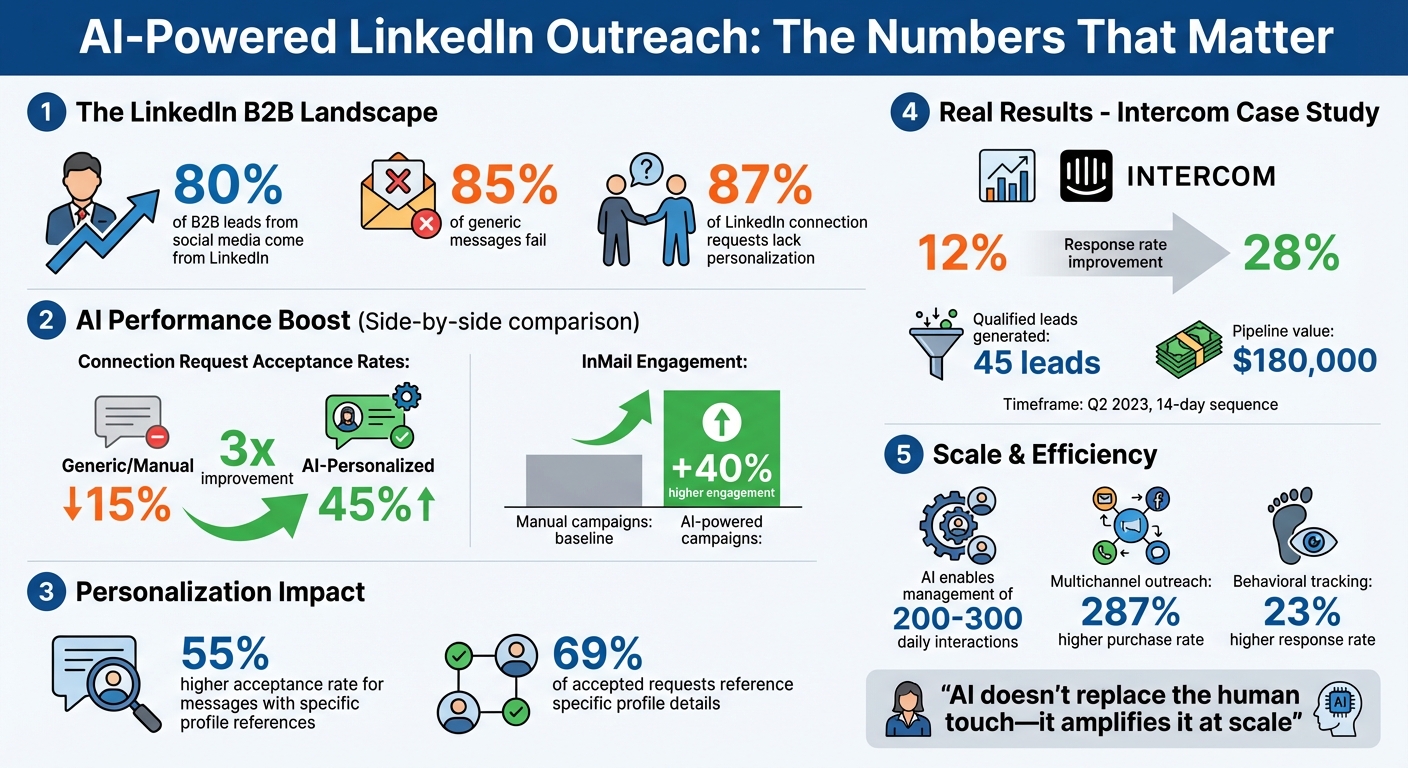
- LinkedIn drives 80% of B2B leads from social media, but generic messages fail 85% of the time.
- AI boosts connection request acceptance rates from 15% to 45% and increases InMail engagement rates by 40%.
- Tools like SalesMind AI automate research, personalize messages, and optimize outreach timing, saving time while improving results.
Key AI Tactics:
- Personalized Messaging: AI tailors outreach using profile and company data, increasing acceptance by 55%.
- Behavioral Tracking: Tracks prospect activity to time messages for a 23% higher response rate.
- Dynamic Templates: Scales personalization with AI-crafted message templates.
- Optimized Timing: Schedules outreach during peak engagement hours.
- Multichannel Insights: Combines LinkedIn, email, and CRM data for better follow-ups.
- Lead Scoring: Ranks prospects by engagement signals to prioritize the best leads.
- Continuous Improvement: AI learns from past campaigns to refine future strategies.
Why It Matters:
AI helps sales teams manage 200+ interactions daily while maintaining a human touch. With 87% of LinkedIn requests lacking personalization, using AI gives you a clear edge in building meaningful connections and driving revenue.
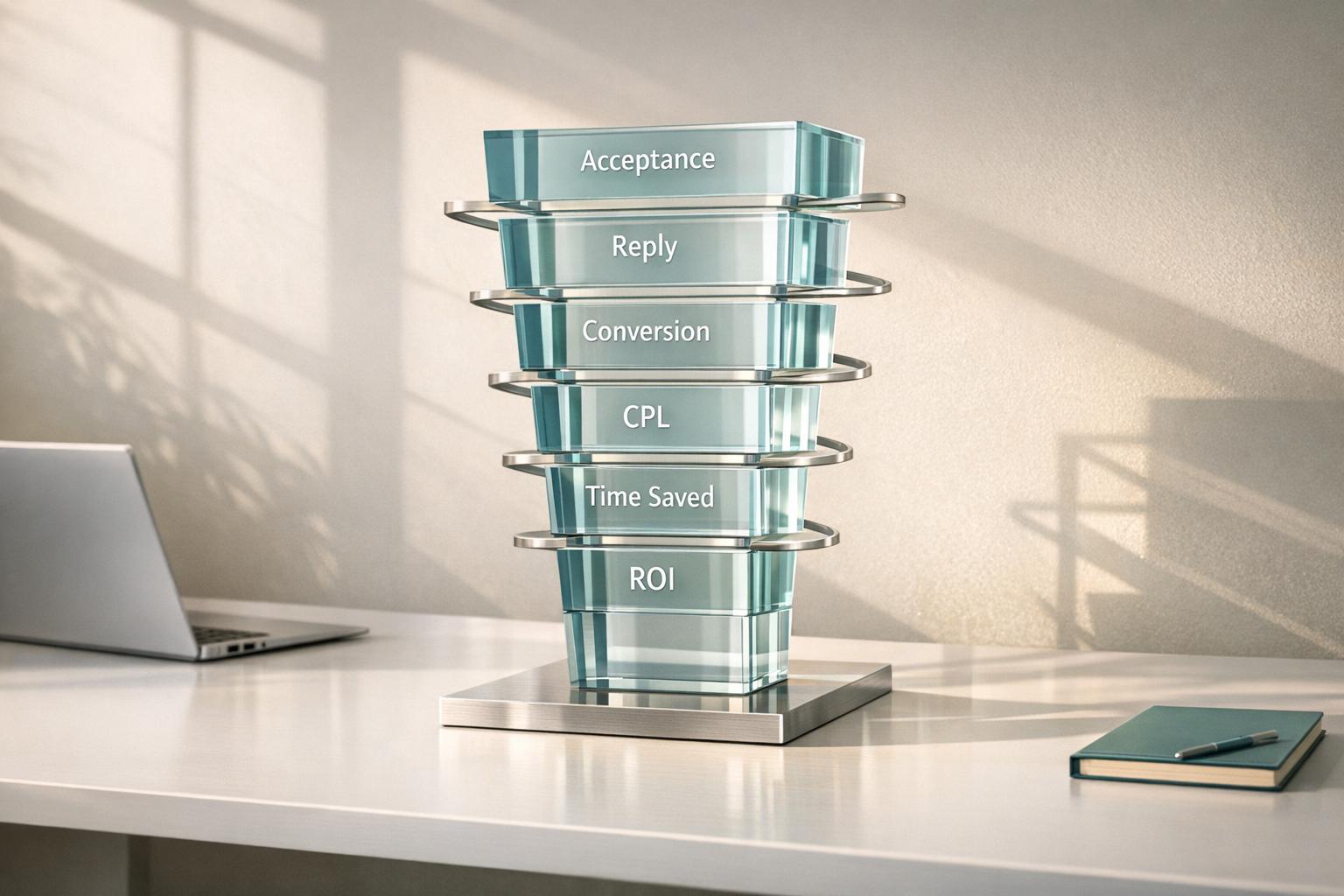
AI LinkedIn Outreach Statistics: Response Rates and ROI Impact
How I Automated LinkedIn DM Outreach with 2x AI Agents (Free Template Included)
1. Profile and Company Personalization
AI takes the guesswork out of crafting personalized messages by analyzing profile and company data. Instead of sending bland, cookie-cutter requests, it scans details like a prospect's job title, recent posts, and company updates to create tailored introductions. Here's why this matters: 87% of LinkedIn connection requests lack any personalization [1], but those that are personalized see a 55% higher acceptance rate [2]. Even more impressive, 69% of accepted requests reference specific details from the recipient's profile [2].
Beyond just scratching the surface, AI dives into technographic and firmographic data - like the tools a company uses or its recent growth trends. This helps align your outreach with what the prospect actually needs [4]. Think of it as setting the stage for more advanced tracking techniques, which we'll explore in the next section.
"AI should be the research assistant, not the closer. The reps who win are the ones who use AI to save time on research and targeting, then reinvest that saved time into thoughtful outreach." – Davidson Hang, HubSpot [4]
Basic personalization, such as adding a first name or company name, can feel robotic [4]. AI goes beyond that by spotting meaningful details - like recent funding announcements, leadership changes, or updates to their tech stack. These insights help you craft messages that show you genuinely understand their business priorities [4]. Tools like SalesMind AI can automate this research while keeping the human touch that builds authentic connections.
When writing connection requests, keep them concise - 200 to 250 characters is ideal for mobile readability. A solid structure includes:
- A compelling hook to grab attention.
- Brief context to explain why you're reaching out.
- A clear value proposition.
- A soft call to action to encourage engagement.
This approach ensures your first impression stands out. From here, behavioral insights can take your outreach strategy to the next level.
2. Behavioral and Engagement Tracking
AI doesn’t just help identify prospects - it keeps a close eye on their behavior. By monitoring actions like post interactions, profile views, and connection activity, AI can determine the best moments to reach out. For example, AI-powered InMail campaigns boast 40% higher engagement rates compared to manual efforts [2], thanks to their ability to target prospects at the most opportune times. These behavioral insights allow for outreach that's perfectly timed and highly effective.
Expanding on personalized outreach, AI now takes engagement tracking to another level, ensuring your messages land at the right moment. Think of it as having a virtual assistant that flags key intent signals - like when a prospect views your profile immediately after receiving your message. Medium-intent signals, such as multiple likes on specific posts, suggest it’s time for a tailored follow-up. AI identifies these patterns and triggers timely responses. Take Intercom as an example: in Q2 2023, they rolled out a 4-step LinkedIn message sequence over 14 days, tracking engagement signals along the way. This strategy increased their response rate from 12% to 28%, delivering 45 qualified leads and generating a pipeline worth $180,000 [2].
AI tools also track when target accounts interact with competitors or consume industry-specific content, offering valuable competitive insights. This intelligence helps you time your outreach during critical evaluation phases . Smart Link tracking, for instance, reveals which shared content resonates most, enabling you to refine your approach [1][3].
| Intent Level | Behavioral Signals | Recommended Action |
|---|---|---|
| High Intent | Pricing page visits, demo requests, profile views after email | Immediate direct outreach (within 24 hours) |
| Medium Intent | Multiple content downloads, repeated post likes, email engagement | Personalized follow-up with a relevant resource |
| Low Intent | Single blog visit, new social media follow, connection acceptance | Soft engagement (e.g., liking their posts) to build rapport |
These signals power action-based automation. For instance, AI can send follow-ups when someone opens your message but doesn’t reply [6][1]. Tools like SalesMind AI handle this behavioral tracking seamlessly, blending automation with a personal touch that turns connections into meaningful conversations. By leveraging engagement signals to guide your outreach, you’ll be ready for the next step: refining how your messages are delivered.
3. Dynamic Message Templates at Scale
AI streamlines the process of creating personalized LinkedIn messages by analyzing company news, past interactions, and stakeholder roles to craft dynamic templates tailored to each recipient's profile [7]. This behind-the-scenes data gathering feeds into message templates that feel personal - without the need for hours of manual effort. It aligns smoothly with overall outreach strategies, leaving room for human review and strategic fine-tuning.
The secret sauce here is a hybrid personalization model. AI takes care of the groundwork by pulling key profile details - things like job titles, company size, recent posts, and mutual connections - to draft the initial message. Then, humans step in to polish it, adding those final touches that make the message feel genuine. This step is crucial because 62% of B2B buyers can spot AI-generated messages [2], making human refinement a must.
For instance, in the second quarter of 2023, HubSpot's sales team leveraged AI-driven personalization through LinkedIn Sales Navigator to target 10,000 SaaS decision-makers. By tailoring opening hooks and value propositions to each recipient’s profile, they secured 215 qualified leads [2]. The success of this campaign lay in its specificity - each message referenced relevant details, showcasing how AI can make large-scale personalization achievable.
When creating these templates, stick to a concise structure for connection requests: a 50-character hook, 100 characters of context, 100 characters of value, and a 50-character soft call-to-action. This 200-250 character format ensures brevity while including all the key elements [1].
Platforms like SalesMind AI simplify the entire process, combining AI-powered research with personalized messaging at scale. These tools manage lead qualification and follow-ups while maintaining a natural tone that turns connections into conversations. By letting AI handle template creation and data integration, you can focus on the strategic decisions that truly drive results. Once your dynamic templates are ready, the next step is fine-tuning the timing and cadence of your outreach.
4. AI-Optimized Timing and Cadence
Even the most well-crafted message can miss the mark if it’s sent at the wrong time. AI steps in to solve this problem by analyzing when your prospects are most active on LinkedIn. It tracks details like posting habits, engagement patterns, and online activity hours. Using this data, you can time your outreach more effectively, potentially increasing response rates by 23% [2].
Take Intercom’s results from Q2 2023 as an example. They implemented a 4-step, 14-day sequence and saw response rates jump from 12% to 28%, generating 45 qualified leads and adding $180,000 to their pipeline [2]. The secret? Strategically spacing messages, typically 3–4 days apart, over a 2–3 week period.
"The difference between mediocre and exceptional LinkedIn outreach often comes down to timing and persistence." - LinkedIn Sales Solutions Report 2024 [2]
For best results, focus on optimal engagement windows - Tuesday through Thursday, between 9:00 AM and 4:00 PM [3]. A structured, consistent approach to sequencing can make all the difference.
Tools like SalesMind AI make this process even easier. Instead of spending 15–20 minutes manually researching each prospect, AI analyzes activity patterns and schedules follow-ups in seconds. This allows you to manage outreach for 50+ prospects daily. What’s more, the system adapts to each individual’s behavior, ensuring your outreach aligns with their schedule - not yours.
sbb-itb-817c6a5
5. Multichannel Context in LinkedIn Conversations
Timing your outreach is important, but it's only part of the equation. To truly refine your strategy, you need to understand how prospects interact across multiple channels - LinkedIn, email, websites, and beyond. Treating each channel as a separate entity risks losing crucial context. This is where AI steps in, combining data from CRM systems, email platforms, and LinkedIn into one unified view. This consolidated approach lays the groundwork for more precise follow-ups and strengthens your outreach efforts.
The benefits of integrated data are clear. For example, a HubSpot campaign successfully combined CRM and LinkedIn data to deliver personalized messaging, all while maintaining scalability [2]. AI tools can even track when a prospect views your LinkedIn profile after receiving an email or visits your website following a connection request. This insight allows you to craft follow-ups that consider the entire relationship, not just isolated interactions.
The numbers back this up. Businesses that use three or more channels for outreach experience a 287% higher purchase rate compared to those sticking to a single channel [2].
Platforms like SalesMind AI take this concept to the next level with features like a unified inbox. This tool brings together LinkedIn and email replies in one place, using sentiment analysis to categorize responses and highlight the most important conversations. This makes it easier to respond quickly and tailor your messages more effectively. By simplifying workflows and enhancing personalization, this approach doesn’t just save time - it boosts results.
Industry experts also emphasize the value of integration.
"The modern B2B buyer expects a seamless experience across all touchpoints. Our data shows that integrated marketing approaches result in 3x higher engagement rates compared to siloed channel strategies." – Jesse Chen, Founder, CoPilot AI [2]
6. AI-Assisted Lead Qualification and Routing
Not all prospects are at the same stage of readiness. Some are eager to engage directly, while others need more nurturing before they're ready to commit. AI steps in to make sense of this by analyzing profile data, engagement signals, and behavioral patterns, automatically scoring and routing leads to ensure the right approach for each.
With predictive lead scoring, machine learning algorithms dig into historical sales data and current prospect behavior to rank leads by their likelihood to convert [8]. For example, if a prospect frequently visits your pricing page or downloads multiple resources, AI can identify them as high-intent and send them directly to a senior account executive. On the other hand, someone who only shows light engagement - like liking a single post - might be placed into an automated nurture sequence. This process helps sales teams focus on the leads that matter most.
In the second quarter of 2023, HubSpot used AI-driven personalization in combination with LinkedIn Sales Navigator to target 10,000 SaaS decision-makers. By tailoring messages to align with specific conversion goals, they secured 215 qualified leads [2]. This demonstrates the power of AI in delivering results when it comes to lead qualification.
AI doesn’t just score leads; it also identifies the perfect moment to transition them to a human sales professional. As IBM puts it:
"filter the most qualified leads and intelligently identify the moment at which it's most useful to involve a human agent" [8]
This automated routing ensures your sales team spends their time where it counts - on prospects who are ready for meaningful engagement.
Platforms like SalesMind AI take this even further. They use advanced lead scoring to evaluate engagement metrics and profile data, prioritizing which conversations to pursue. By integrating with your CRM, they create a seamless handoff between automated outreach and human follow-up. This combination of efficient qualification and smart routing not only saves time but also maintains the personalized touch that drives conversions. With AI-enhanced lead qualification and routing, businesses can ensure their LinkedIn outreach is both efficient and tailored for success.
7. Continuous Learning and Campaign Optimization
AI takes your outreach to the next level by constantly analyzing interactions and refining strategies. Every response, interaction, or even missed opportunity becomes valuable data for improvement.
For example, by examining which message formats, opening lines, and calls-to-action resonate most, AI identifies patterns that might otherwise fly under the radar. It might reveal that concise messages under 150 words are ideal for C-level executives, while mid-level managers engage more with detailed case studies [2]. This kind of insight allows your outreach to automatically adapt to different personas, leading to smarter decisions and better campaign results.
The benefits of this continuous learning are undeniable. Campaigns that consistently refine their messaging often experience noticeable increases in engagement and lead conversion. In fact, companies that actively monitor and tweak their LinkedIn outreach have reported a 65% higher conversion rate [2].
Take SalesMind AI as an example. This platform uses continuous learning to analyze engagement metrics across campaigns. It identifies which templates are most effective, the best timing for specific industries, and the follow-up sequences that turn prospects into meetings. All this data feeds back into the system, automatically fine-tuning future outreach - no manual effort required.
To make the most of these insights, consider implementing weekly optimization cycles. Regularly review how your messages are performing and assess the quality of responses. Then, roll out the most successful variations across your campaigns [1]. While AI handles tasks like A/B testing subject lines, value propositions, and calls-to-action, human oversight ensures your strategy stays aligned with your business goals. This combination of machine learning and human insight creates a powerful feedback loop that keeps your LinkedIn outreach improving over time.
Comparison Table
When it comes to outreach, each method offers its own strengths and weaknesses. The right choice depends on balancing factors like scalability, efficiency, and the time you’re willing to invest. But every approach also comes with its own risks and rewards.
For instance, static templates allow for mass outreach but typically yield low response rates (1–5%) and carry a higher risk of being flagged as spam [1]. On the other hand, manual personalization can achieve impressive response rates of 30–48%, but it’s time-consuming and labor-intensive.
AI-driven frameworks strike a balance between these extremes. They combine the tailored touch of manual outreach with the speed and scale of automation. With AI, sales reps can manage 200 to 300 interactions at the same time . These systems go beyond simple personalization (like adding a recipient's name) by analyzing business priorities and role-specific challenges to craft highly relevant messages [4].
Here’s a breakdown of how these methods stack up:
| Feature | Static Templates | Manually Personalized | AI-Driven Frameworks |
|---|---|---|---|
| Scalability | High (Mass volume) | Low (Time-intensive) | High (Automated research) |
| Efficiency | Low (1–5% response) | High (30–48% response) | High (Quality at scale) |
| Time per Lead | Seconds | 2–3 Minutes | Seconds (with review) |
| Personalization | Surface-level (Name) | Deep (Human research) | Deep (AI-driven insights) |
| Risk Level | High (Spam flags) | Low (Human behavior) | Medium (Compliance tools) |
This comparison underscores the performance differences between these approaches. Generic connection requests, for example, have an acceptance rate of about 15%, but personalized messages far exceed that. Given that 87% of LinkedIn connection requests lack any personalization [1], there’s a huge opportunity to stand out. Moreover, AI-powered InMail campaigns can boost engagement rates by 40% compared to manual efforts [2].
An AI-driven solution, like SalesMind AI, bridges the gap between efficiency and meaningful personalization, enabling scalable LinkedIn outreach without compromising quality.
Conclusion
AI-driven LinkedIn outreach is changing the way businesses connect with prospects. It allows you to send personalized messages at scale while maintaining the human touch that fosters real engagement. The numbers speak for themselves: personalized connection requests see acceptance rates climb to as high as 45%, compared to just 15% for generic messages [1]. With 87% of connection requests lacking any personalization [1], there’s a clear chance to stand out and make a lasting impression.
By combining strategies like profile analysis, behavioral tracking, dynamic templates, optimized timing, multichannel context, AI-assisted lead qualification, and continuous learning, you can transform scattered efforts into a well-rounded, data-driven approach that produces results.
AI-powered InMail campaigns are also proving their worth, driving 40% higher engagement rates. Pair that with multichannel outreach, which can lead to a 287% increase in purchase rates [2], and it’s clear that LinkedIn remains a cornerstone for B2B lead generation - when used thoughtfully and strategically.
"The modern B2B buyer expects a seamless experience across all touchpoints. Our data shows that integrated marketing approaches result in 3x higher engagement rates compared to siloed channel strategies." – Jesse Chen, Founder, CoPilot AI [2]
SalesMind AI takes LinkedIn automation to the next level by blending personalized messaging, lead qualification, and an AI-powered unified inbox. It manages research, timing, and follow-ups, so you can focus on building meaningful relationships that drive revenue.
Together, these AI-powered strategies equip your team to create LinkedIn outreach campaigns that are both engaging and effective.
FAQs
How can AI make LinkedIn outreach more personalized?
AI takes LinkedIn outreach to the next level by analyzing a prospect's profile details, activity patterns, and behavioral cues to create tailored messages that genuinely connect. It doesn’t stop there - it also identifies the best timing to send those messages and handles follow-ups automatically, keeping interactions smooth and engaging.
Using tools like natural language processing (NLP) and machine learning, AI enables businesses to connect with prospects more efficiently. The result? Higher response rates and stronger professional relationships.
How does AI help improve the timing of LinkedIn outreach?
AI takes LinkedIn outreach to the next level by analyzing profile activity, engagement patterns, and behavioral data. It pinpoints the ideal time to reach out to prospects, ensuring your messages land when they’re most likely to get a response. This approach not only increases the chances of engagement but also makes your outreach more meaningful.
With these insights, businesses can fine-tune the timing of their communication, creating a more personalized experience that scales effectively.
How does AI simplify lead qualification and routing on LinkedIn?
AI takes lead qualification on LinkedIn to the next level by diving into data like job titles, company size, activity history, and engagement patterns. It then assigns each prospect a predictive score, helping sales teams zero in on leads with the highest potential. This means less time wasted on irrelevant prospects and more energy spent where it counts.
After scoring leads, AI steps in to streamline the process even further. It automatically routes leads to the right salesperson, assigns them to the appropriate outreach sequence, or schedules follow-up actions - all in real time. With tools like unified inboxes and automated workflows, qualified leads get timely, personalized responses. Whether it’s a message, a meeting request, or an escalation to a senior rep, AI ensures no opportunity slips through the cracks. The result? Higher response rates and faster-moving sales pipelines for businesses across the U.S.
 JG
JG